admin
admin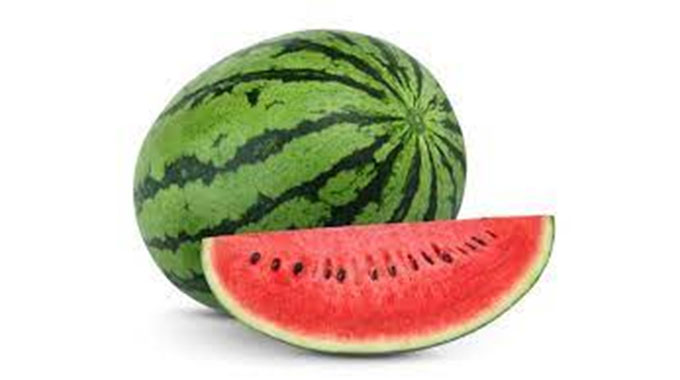
Edgar Vhera Agriculture Specialist Writer
WATER melon production is emerging as an important source of income for farmers in the dry agro-ecological region 5 districts of Chiredzi and Muzarabani among others.
Knowledge Africa Trust (KTA) Chief Executive Officer Dr Charles Dhewa revealed this yesterday during an update on fresh produce trading on mass markets.
“While dry regions are usually associated with drought and poverty, the changing climate is giving communities in these areas a new lease of life through new economic drivers and sources of resilience like water melons. Chiredzi and Muzarabani districts are the leading suppliers of consumers’ most loved water melons,” the KTA boss said.
Dr Dhewa said Muzarabani led in water melon supply from January to March every year while Chiredzi, parts of Beitbridge and Mwenezi dominated supply from end of September to December.
To fill the annual gap, other regions like Murewa, Mutoko, Beatrice, Chivhu, Mhondoro, Shamva and parts of Manicaland province come into the game from April to July, he added.
In terms of grading, he said farmers and traders agreed to classify them into small, medium and large.
A five-tonne truck contains between 700 and 800 large water melons with the medium category comprising between 1 000 and 1 300 while the small ones can accommodate anything spanning from 1 400 to 2 000, Dr Dhewa indicated.
Statistics availed by eMkambo show that an average of slightly over 1 000 tonnes of the product are supplied daily in all the country’s food markets.
Harare leads with 251 tonnes, followed by Bulawayo, Gweru and Masvingo at 110, 54 and 52 tonnes respectively.
Annually, nearly 400 000 tonnes of water melons are traded on the markets.
“Prices range from US$0, 50 to US$6 per each water melon depending on size and location with Bulawayo usually commanding the highest price. Such figures may be meaningless to millionaires but for ordinary farmers, they are worth more than a million dollars in the forest. Many consumers prefer the crimson sweet variety, followed by kito and lastly Charleston grey,” Dr Dhewa said.
He said the past few years had seen water melons becoming a permanent fixture in Zimbabwe’s food systems.
“Due to climate change-induced temperature increases, the human body continues to demand a coolant like water melon. As consumers have started demanding organic water melons, dry agro-ecological regions 4 and 5 will be the main source as they have not been over-contaminated,” he said.
Zimbabwe Commercial Farmers Union (ZCFU) president Dr Shadreck Makombe said he believed areas such as Beitbridge and Gwanda in Matabeleland South province were the hubs of water melon trading.
“Indeed, water melon production is prevalent in drought-prone areas from whence the choicest produce comes from. It is freely traded and many households are deriving their livelihoods from them. Due to increased production, there is need to explore the export market for foreign currency earnings,” he said.
The final crop, livestock and fisheries report (CLAFA 2) shows there was an 11 percent increase in water melon hectarage from 1 941 in the 2021/22 season to 2 152 hectares last season. Yields rose 19 percent from 36 tonnes per hectare to 43. There was a 32 percent rise in total production from 69 876 to 92 53 tonnes, said the report.



 Online Reporter