admin
admin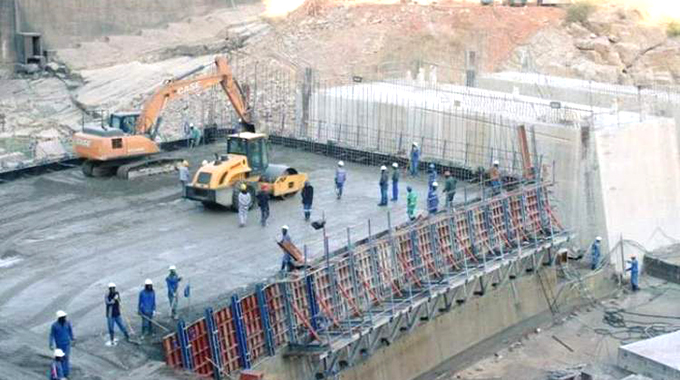
Richard R Mahomva
Correspondent
Today, President Mnangagwa marches back into history and affirmatively posts his legacy to posterity by officiating at the Gwayi-Shangani water pipeline and commissioning the Epping Forest boreholes in Nyamandlovu.
The Gwayi-Shangani Dam is found in Hwange District in Matabeleland North and the pipeline will supply water to Bulawayo and districts of Binga, Lupane and communities along the way.
For decades, Matabeleland in its entirety has struggled to realise the dream of the full implementation of the Matabeleland Zambezi Water Project.
Halfway through his tenure in office, President Mnangagwa returns to Matabeleland with an enormous 2018 election manifesto promise.
The commissioning of the Gwayi-Shangani pipeline and Epping Forest boreholes accentuates a clear trajectory of tackling the unfinished development tasks in the whole of the Matabeleland region.
The inaugural dual water projects launch underscores the effective continuity of the discontinued Matabeleland Zambezi Water Project.
Today, President Mnangagwa substantiates the existential pragmatism of the Second Republic as a conduit for policy continuities and rectifying some key misconceptions on policy delivery in Matabeleland.
The uptake of the Epping Forest boreholes project follows a lump sum Treasury injection of more than $200 million.
This project had been stalled since 1992 and its revival is set to alleviate the current water problems, which have affected Bulawayo over the years.
Through this rehabilitative investment by Government, the perennial water problems which have affected the southern region’s economic growth are destined for permanent arrest.
In all this, Bulawayo is a major beneficiary of this policy outcome.
This specific focus on the Matabeleland water question foregoes the conventional political dimension of vote campaigns, as some may want to look at it. The two water service delivery projects inaugurate a new governance paradigm shift.
This approach does not only give a sanguine motion into the short-term, but this policy substantiates the State’s quest for holistic human livelihood development interests.
Water politics as a public governance approach advances access to water as a fundamental human right. Hydro-politics assumes that all human life in any given society must have unfettered access to water.
Reciprocally, access to water by all sectors of society fuels commerce and human livelihood.
Apart from the politically discursive, the human anthropological of water cannot be over-emphasised: Water is life!
Water has no enemy
The nexus between water and politics is as old as the history of mankind.
If Africa is the cradle of mankind and the birth-place of human civilisation, then the River Nile becomes the starting point of conceptualising hydro-politics as an integral part of human existence.
This historical fact gives life to Nigerian Fela Kuti’s musical proverb that ‘‘Water has no enemy’’.
As such, water’s significance in sustaining social policy and the political-economy becomes the locomotive for human development.
In the same vein, public policy formulation detached from the politics of water is self-destructive.
The policy prioritisation of water access by the Second Republic is critical in addressing the practical fundamentals of development.
Based on this perspective, local authorities failing to supply clean water to their rent payers, especially in urban areas are enemies of human life security.
With the launch of the Gwayi-Shangani pipeline and the Epping Forest water pumping infrastructure to feed into the Bulawayo water grid, President Mnangagwa is reaffirming his love for the people of Bulawayo and the whole of Matabeleland.
Water and the
struggle for being
Through water, the Trans-Atlantic slavery took its route, culminating in the Anglo-American obliteration of Africa.
After slavery, water facilitated the missionary peregrinations — it was through water that colonial barbarism found its way into Africa.
Decades later in Zimbabwe, water was used to annihilate our colonially decimated dignity.
The ZIPRA battles fought in Matabeleland North’s Wankie and Sipolilo battles were enabled by the veins of the might Zambezi.
Through the Zambezi’s quiet flows, ZIPRA conscripts found their way to and from Zambia.
Today, as President Mnangagwa walks back the history of the critical water projects of the Matabeleland region, he is also walking himself back to his Chimurenga pilgrimage.
The eagle-eyed reader of this country’s history would remember that after his release from prison, President Mnangagwa walked the Victoria Falls Bridge after being deported to statelessness by the Smith regime.
Thanks to the Victoria Falls Bridge, he found himself among his political-kind in Zambia — thereon until independence, President Mnangagwa pursued his anti-colonial journey.
Today, he comes back to that very same province of Matabeleland North. This time his shoulder is not only loaded with the cumbersome burden of history, but he embodies the mantle of prosperity — as he fulfils his nationalist assignment of old.
Such consistency kambe Vodloza? Wow!
It is no mistake that such a noble initiative adheres to President Mnangagwa’s keen attention to implementing a long list of resolutions emerging from progressive region-centred development initiatives such as the Matabeleland Collective.
This further fulfils President Mnangagwa’s promise of promoting integration and toppling the stumbling blocks of national unity.
Rightfully speaking, the launch of twin-hydro projects in Matabeleland North today monumentalise the success of the Matabeleland Collective and reinforces President Mnangagwa’s frank commitment to national dialogue.
The delay in the delivery of the objectives of the Zambezi Water Project due to the policy weak-will of the old is among some of the major reasons which gave birth to the Matabeleland Collective.
Therefore, the launch of the Epping Forest water scheme and the Gwayi-Shangani pipeline heralds the implementation of the key concerns of the region.
Today, the nation is not only set to witness the launch of two significant water access relief projects, but Zimbabwe is being assigned to audit some key promises to the national healing agenda.
The Gwayi-Shangani project is set to advance a hydro greenbelt to sustain agriculture and heighten access to water. Through such a huge investment, industrialisation has been put into motion — if not even accelerated. Employment will be created and eventually, livelihoods will be preserved in the process.
The recurrent water problems in Bulawayo will soon be history.
What matters now is that the first citizen has taken a bold step to give life to two projects which will salvage Matabeleland and Bulawayo from inherent water problems.
This alone reassigns us to an awakening that we are all Zimbabweans.
Thanks to President Mnangagwa for re-establishing the unifying effect of the politics of water, indeed, ‘‘water has no enemy’’. Amanzi ebantwini (Water to the people).
Richard Runyararo Mahomva (BSc-MSU, MSc-AU, MSc-UZ) is a political scientist with an avid interest in political theory, liberation memory and architecture of governance in Africa. He is also a creative literature aficionado. Feedback: Twitter: @VaMahomva; Email [email protected].



 Online Reporter