Online Reporter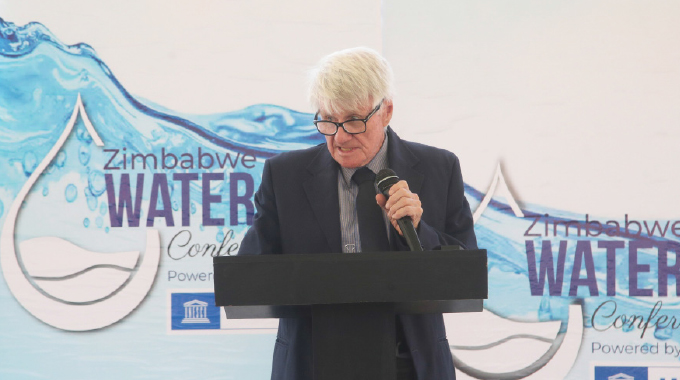
Rumbidzayi Zinyuke, Senior Reporter
THE need to safeguard water resources to build a water-secure Zimbabwe, a resilient Africa and a sustainable future for generations to come took centre stage at the Zimbabwe Water Conference held in Harare on Friday.
The event, held at Mukuvisi Woodlands, ran concurrently with the joint commemorations of the International Day of Forests, World Water Day and World Meteorological Day, drawing stakeholders from across the environment and climate sector.
Participants highlighted the urgent need to protect water sources amid growing threats from climate change, deforestation and unsustainable land-use practices.
Discussions also focused on strengthening water conservation strategies, promoting sustainable forest management and enhancing climate resilience.
Guest of Honour and Environment Patron First Lady Dr Auxillia Mnangagwa, whose speech was delivered by Deputy Minister of Primary and Secondary Education Angeline Gata, underscored the strategic importance of water on the continent.
“Water sustains our ecosystem, our economies and our people. The world is sounding a clear warning. The United Nations University has described our situation as one of global water bankruptcy, a crisis where humanity is consuming water beyond sustainable limits.

“At the same time, the African Union has declared 2026 the Year of Water, anchored in the vision of ensuring sustainable availability of water and sanitation for all. This is not by coincidence, but because water has become the defining development issue of our time,” she said.
Dr Mnangagwa called for urgent action, saying Zimbabwe must respond through coordinated and science-based approaches.
“Here in Zimbabwe, we are not isolated from these realities. We face increasing pressures from catchment degradation, wetland encroachment, pollution of water bodies and climate variability.
“These challenges require coordination and cross-sector action across Government, communities and partners,” she said.
Dr Mnangagwa said the country’s challenges should not overshadow the resilience and determination of Zimbabweans in safeguarding the nation’s natural resources.
Zimbabwe is the current president of the Ramsar Convention and is using that platform to champion wetlands protection globally.
The First Lady called on Zimbabweans to take responsibility for safeguarding the environment.
“You are the custodians of our natural resources and your voice, participation and future matter. The solutions are within our reach. We must strengthen collaboration across the Government. We must listen to communities.
“We must embrace science and innovation. We must invest in sustainable infrastructure, and we must protect our ecosystems. Because water connects everything, it connects forests to rainfall, it connects climate to agriculture, it connects policy to people, and it connects today to tomorrow,” she said.
As Environment Patron, Dr Mnangagwa continues to champion initiatives that promote environmental stewardship, community resilience and sustainable livelihoods.
Representing the Minister of State for Harare Provincial Affairs and Devolution, Mr Charles Tawengwa, deputy director for Environmental Planning and Management Mrs Gloria Denhere said the commemorations underscored the strong link between ecosystems and development.
“Water does not exist in isolation. It is sustained by forests, safeguarded by climate science and is essential for the functioning of our economies. This conference is, therefore, more than a dialogue on water; it is a platform to tell the full story of how ecosystems, economies and societies are bound together,” she said.
Mrs Denhere said Zimbabwe was at a critical point, taking on global leadership roles while addressing domestic challenges.
She also said the country’s development agenda, Vision 2030 and the National Development Strategy 2, rested on secure and well-managed water systems, industrialisation, food security, climate resilience and inclusive growth.
Meteorological Services Department director Mrs Rebecca Manzou said there was a need to understand the strong link between forests, water and weather systems.
“Think of forests as the lungs, water as the lifeblood and weather and climate as the heartbeat. These systems are interconnected and together form a life-support system,” she said.
Mrs Manzou said meteorological services now went beyond weather forecasting to supporting national development.
“We are now doing more than predicting the rain. We are the architects of the data that prevents economic and hydrological collapse. So you need that data because it is important and vital for the socio-economic development of our country, especially as we go towards 2030. We need to understand hydrometeorology in Zimbabwe,” she said.
Mukuvisi Woodlands director Mr Terry Buckley said environmental protection required collective action.
“Forests protect our catchments. Wetlands secure our water systems. Weather patterns influence our agriculture, infrastructure and our daily lives. These systems are all interconnected and so must our responses be.
“This year’s combined theme, ‘Sustaining economies, advancing equality and protecting the future through forests, water and weather’, reminds us that the environment is an economic driver and an ecological asset. Protecting it requires collaboration across Government, the private sector, communities, conservation organisations and young people,” he said.
Mr Buckley said the warning of global water bankruptcy was a challenge for everyone to act with urgency.
Director in the Ministry of Lands, Agriculture, Fisheries, Water and Rural Development Mr Nesbert Shirihuru said water security was central to national development.
“Water is a constitutional right. It is an economic enabler as well. Participants in this economy have to be active contributors to Zimbabwe’s economic resilience.
“As a ministry, we have mooted several programmes under Rural Development 8.0. Among these is the Presidential Rural Development Programme, which seeks to provide a borehole per village and a safe water source for each village, school and institution. We also want villagers, schools and communities to be active economic participants,” he said.
Mr Shirihuru said that through these business units, evidence showed that communities and households could earn between US$40 and US$70 per month from various economic activities.
Representing Harare Mayor Councillor Jacob Mafume, Environmental Management Committee chairperson Councillor Termany Utete said the city was already feeling the effects of water challenges.
“We must be honest about the challenges we face. The illegal invasion of wetlands for settlements and industrial activity has compromised our natural water purification system. Protecting the Mukuvisi, the Monavale and the Cleveland wetlands is no longer just an environmental option; it is a matter of the city’s survival.
“When we destroy a wetland, we increase the cost of water treatment at Morton Jaffray, and we move one step closer to the water bankruptcy that the UN (United Nations) is talking about,” he said.
Forestry Commission operations manager Mr Lewis Radzire said forests were central to water security.
“Forests play a pivotal role. But the way in which forests are disappearing has reached an alarming rate. Many times, forests are not being accorded the value they deserve. That is why forests are now taking centre stage, as we seek to unlock their value. There is a need for us to protect our forests,” he said.
Mr Radzire warned that deforestation was occurring at an alarming rate, threatening both water sources and livelihoods.
The conference was also marked by learners who recited poems and delivered speeches on climate change and water preservation, highlighting the importance of youth participation in environmental discussions.
Dr Gata also led a tree-planting exercise by delegates at the conference, in line with the First Lady’s drive to promote environmental conservation.
The event provided a platform for stakeholders to exchange knowledge, share best practices and reaffirm their commitment to protecting Zimbabwe’s natural resources in the face of climate change.