Chronicle Editor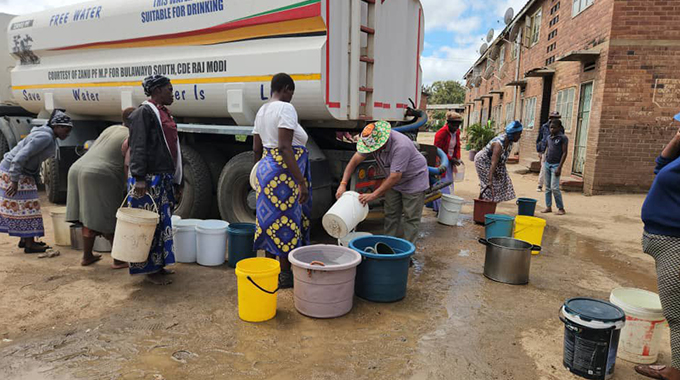
Raymond Jaravaza, [email protected]
If the villagers of Mopane, Ward 16 in Bulilima, Matabeleland South Province were to choose a local hero based on selfless acts of service and goodwill that have positively impacted their lives, many would likely nominate the man who provided them with a vital lifeline — water.
Heroes come in different forms, and for Ncube, the adage “water is life” comes to mind when she tells the story of how a local farmer saved the lives of Mopane villagers by giving them free access to water.

In the midst of one of the driest droughts that the country is experiencing in recent history, Mopane Village, like the rest of the communities in the Matabeleland region, has not been spared from a crippling water crisis that has left water sources from dams, rivers, and boreholes dry as a bone. Humans and animals are reeling from the effects of the El Niño-induced drought in equal measure.
Getting water for drinking and household use is a daily struggle. But for the villagers of Mopane, a local farmer, who is in the cattle fattening business, has turned out to be a hero they all love after he allowed them to fetch water from his boreholes, through a 5 000-litre tank installed at the entrance of his farm.

Ncube shudders to think what the villagers would be going through had the farmer denied them access to the water and only reserved it for his workers and cattle.
“He literally saved our lives. We are allowed to fetch water from a tap that he installed at the gate of his farm, and he doesn’t charge us. The farmer keeps cattle that he fattens and then slaughters in his abattoirs, so he has a lot of cattle, but he chose to be humane and share the water with villagers as well,” said Ncube.

Even livestock such as donkeys, goats, and sheep have found a drinking spot from some of the water that spills and flows into a small stream when villagers are fetching the precious liquid.
Saturday Chronicle spoke to one of the workers who said his bosses decided to install a huge tank at the farm entrance for easy access to water for villagers after realising that water sources in the area are drying up.

“It’s just that today (yesterday) the villagers are receiving food aid at the Mopane shops; otherwise, they would be here fetching water using scotch carts and wheelbarrows. The villagers are allowed to fetch as much water as they want, but we encourage them to do it during the day for security reasons,” said the worker, who only identified himself as Mehluli.

The few boreholes in the area have dried up as a result of the water table sinking deeper and deeper, worsening an already dire situation that can only improve when the rainy season starts and the region records normal to above-normal rains.
In Bulawayo, legislator and Deputy Minister of Industry and Commerce, Raj Modi, has also emerged as a hero amid the water crisis.
Every day, his team fills a 10 000-litre bowser before heading out to the hardest-hit areas in the Western suburbs to fill up water kiosks so that residents can fetch the precious liquid.
The Bulawayo City Council (BCC) recently further tightened the city water loading schedule following the decommissioning of the Upper Ncema Dam as the local authority tries to conserve depleting water resources.
Bulawayo was under a 120-hour weekly water shedding programme but is now effectively under a 130-hour weekly shedding regime. This means residents will only receive water for less than two days per week.

“The programme to distribute water to residents is still on, and we do it every day. Each morning, 10 000 litres of water is taken to water kiosks, not just in my constituency but all suburbs, especially the ones where residents would have gone for a long time without water,” said the Member of Parliament for Bulawayo South.
The Deputy Minister said resources permitting, he will arrange for the water bowser to make two trips a day so that more residents can benefit. Bulawayo is experiencing acute water challenges due to low water levels in the city’s supply dams, as the latest data showed that the city’s water bodies were 28 percent full.
In Luveve suburb, local businessman Brian Samuriwo has a truck on standby to supply residents at funerals with water, an act of goodwill that also assists in stopping the spread of water-borne diseases such as cholera, which spreads fast when people gather in one place without water. The water is distributed to residents of Emakhandeni and Luveve suburbs.
A residents’ chairman in Emakhandeni, Enos Mlilo, said the water supplied by Samuriwo is a lifeline to residents, especially amid prolonged water shedding.
“His team brings a Jojo tank to the home of the bereaved, and it’s replenished with water every day until the deceased is buried. Residents really appreciate the assistance, given that funerals cannot be avoided because the city doesn’t have water,” said Mlilo.
In Nketa, a local nutrition garden with a borehole that was rehabilitated with the assistance of development partners is sometimes the only source of water for local residents when council taps run dry for days. Ward 24 Councillor Tavengwa Zidya said two taps were connected to the borehole so that residents could fetch water just outside the perimeter fence of the nutrition garden.



 Online Reporter