Online Reporter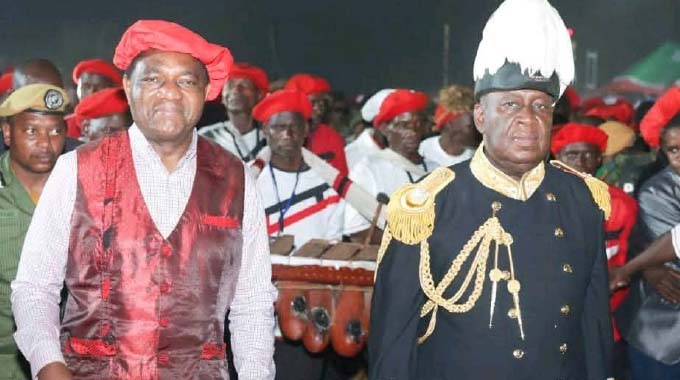
Bruce Ndlovu, Sunday Life Reporter
EVERY year, on the eve of winter, the Kuomboka ceremony is held in Mongu, the capital of the western province of Zambia.
Every year, the Lozi people wave goodbye to winter and greet summer with the Kuomboka ceremony, a flurry of vibrant colours, beating drums and chanting voices.
This procession marks the transition of the Litunga (Lozi King) from his summer residence to his winter residence, which is located on higher ground away from the seasonal floodplains.
In the early morning hours, before dawn has broken across the plains, a drum is beaten to signify the imminent departure of the Litunga from the Lealui Palace, his summer residence. When the sun finally rises above the horizon, the Mwenduko drum is set leaning against a pole facing east, signifying that all is ready. When this happens, the ceremony proper is about to begin.
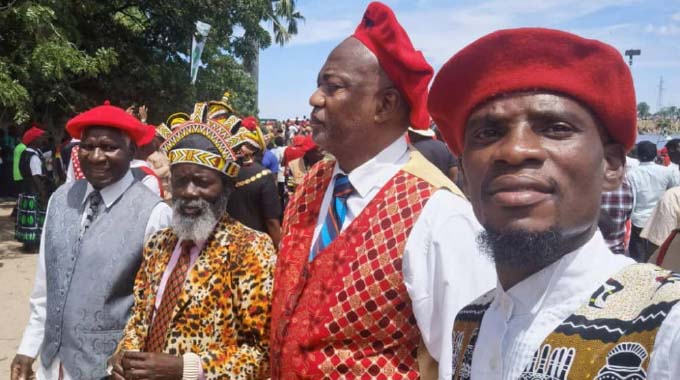
First to appear and board the nalikwanda (the great dugout canoe) are the 180 royal paddlers, clad in traditional siziba attire that features red, the colour of warriors. A magnificent sight, the nalikwanda is painted with bold black and white stripes — black for the Lozi people and white for spirituality. Representing authority of power, a towering statue of an elephant sits atop the first barge, complete with movable ears.
Finally, once everyone else has boarded, the Litunga makes his way onto the first boat, as great praises are sung and chanted about his name.
Once settled, a chorus of drums begins playing a song called the Ifulwa, which marks the official start of the journey to the palace. With the sound of song and beating drums all about them, the Lozi make their great annual pilgrimage.
For the Lozi, this procession is important not only for its rich historical and cultural significance but also as an affirmation that they have not lost touch with their roots.
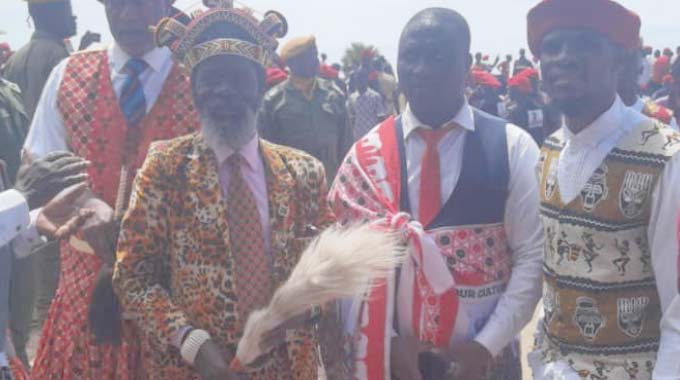
For Kgosana Sindile Mdhlongwa of the Batlokwa clan of Zimbabwe, the ceremony has provided him with an opportunity to reconnect with his kinsmen from across the Zambezi.
It is said that King Sebetoane led his tribe over nearly 5 000 kilometres across the Kalahari on a zigzag course, heading west, then north, then west again as far as Ghanzi, before turning northeast, crossing the Zambezi River and venturing far into Barotseland (now part of Zambia).
For three years, Mdhlongwa has journeyed into the heart of Zambia’s western province, searching for seeds that were left scattered by Sebetoane. He found a tribe that, although leads a secluded life, carries many of the customs and traditions cherished by the Batlokwa.
“After taking time to read our African history, I took time to engage with different people and discovered many tribes and clans that are only separated by borders,” Mdhlongwa told Sunday Life.
“It’s so amazing that we have many common names and traditions. I visited Western Mongu to meet my brothers and sisters who moved with Sebetoane. It’s so amazing how rich our traditions and culture are. Although we are from different countries, our languages are similar and we are identical to each other. At some point, we had different tribes who once settled in one place, for example, the Batlokwa and Bakwena ba ga Sechele, and it was difficult to distinguish between the two groups. We are one extended big family, and so I have spent the last three years trying to reconnect with my brothers and sisters.”
This year’s ceremony was particularly significant for Mdhlongwa, who used it not only as a springboard to explore his own roots but also to muse on the importance of unity with Africa Day on the horizon.

“It’s time that we, as Africans, come close together. I think it’s time for us to be proud of being African and learn to think, stay and work together as one. Our leaders can only do so much because I believe that everyone has a responsibility to do his or her part. There is no Africa without Africans, we have no other Africa to go to besides Africa, which is our home. We belong to Africa and we must relook at our history and rewrite it.
“It’s time we, as Africans, take over and lead in the economic growth of the continent. Back in ancient times, we had the likes of Queen Mantatisi, who was renowned as the best warrior of her time. She was a leader feared by men. I think it’s time we have leaders of that ilk again who will be pioneers of growth in business for Africa. We should live life to its fullest and have no reason to feel inferior to anyone. On Africa Day, we thank those who are working tirelessly to help us achieve our shared vision of a secure, peaceful and prosperous Africa.”