


 Online Reporter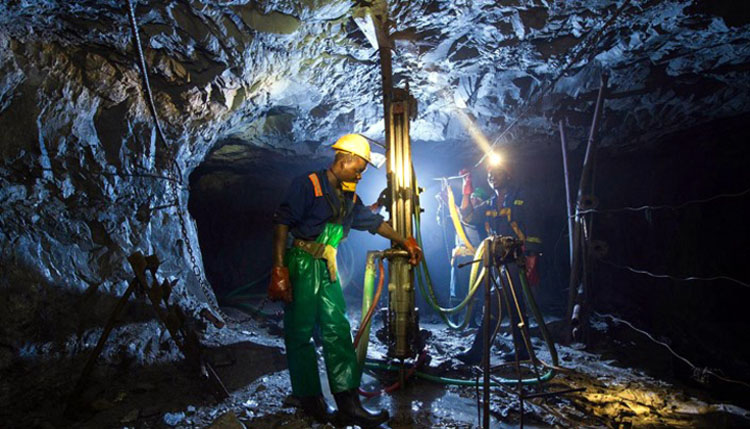
Minister Edgar Moyo
WORKERS’ DAY or May Day, as it is internationally recognised, holds profound significance for Zimbabwe.
Rooted in the global struggle for fair labour practices, workers’ rights and decent working conditions, this day offers Zimbabweans a moment to reflect on the tireless efforts, dedication and resilience of workers across all sectors of the economy.
It is a tribute to those who championed the rights and protections workers benefit from today, achievements secured through collective struggle and unwavering resolve.
Workers are the backbone of our economy and the architects of our nation’s progress.
From mines and farms to factories, schools, hospitals and offices, their innovation, productivity and unrelenting hard work drive us towards realising Vision 2030, Zimbabwe’s aspiration to become an upper middle-income economy.
We are acutely mindful of the current economic challenges and hardships faced by many.
The Government remains steadfast in its commitment to fostering an environment where every worker earns a fair living wage; operates in safe, healthy workplaces; and accesses robust social protections.
Constructive engagement with trade unions and employer organisations remains pivotal to forging sustainable solutions to these challenges.
Our objective is to nurture a harmonious industrial relations climate that enhances productivity while safeguarding the rights and dignity of every worker.
Evolution of workers’ rights
The history of workers’ rights in Zimbabwe is closely tied to the country’s broader socio-political development.
In the era before independence in 1980, the majority black workforce faced significant discrimination and exploitation under the colonial system.
Labour was often cheap, working conditions were harsh and legal protections were minimal.
Trade unions emerged as crucial platforms for workers to organise, voice their grievances and fight for better wages, improved conditions and fundamental rights such as the freedom of association and collective bargaining.
These labour struggles were an integral part of the nationalist movement and the fight against colonial oppression.
Following independence in 1980, there was a deliberate effort to reform labour laws and enshrine greater rights and protections for workers.
Legislation was introduced to regulate employment conditions, establish minimum wage standards, provide for benefits like leave and sick pay and improve workplace safety.
Zimbabwe has seen the strengthening of institutions, for example, the establishment of the Tripartite Negotiating Forum (TNF) marks a critical milestone in institutionalising social dialogue.
Formed to foster collaboration among Government, employers and workers, the TNF serves as a platform for negotiating policies that address labour rights, economic challenges and equitable workplace practices, and at sectorial level, national employment councils (NECs), which administer and regulate collective bargaining agreements (CBAs) in various industries.
Challenges facing workers
Job insecurity and precarious work: The rise of gig work, short-term contracts and informal employment has led to reduced job stability, with many workers lacking benefits such as pensions, health insurance and paid leave.
Wage stagnation and inequality: Despite economic growth in some regions, wages for many workers have remained stagnant or even declined in real terms, while income inequality continues to widen.
Automation and technological disruption: Rapid advances in artificial intelligence (AI) and robotics are displacing routine jobs and reshaping industries, creating a mismatch between existing skills and emerging job requirements.
Lack of access to skills development: Many workers struggle to access affordable, flexible and relevant training opportunities, especially in low-income or rural areas.
Mental health and work-life balance: Increased workloads, job insecurity and blurred boundaries between work and personal life (especially due to remote work) have contributed to rising stress and mental health issues.
Amended Labour Act
The Act emphasises protection against forced labour, reiterating its prohibition.
A key highlight is the clear directive for equal remuneration, mandating employers to pay male and female employees the same for work of equal value, free from sex or gender discrimination.
A significant addition is robust protection against violence and harassment in the workplace, including gender-based violence and harassment.
This protection extends to various work-related locations and communications, and engaging in such acts is specified as justifiable grounds for dismissal.
The amendment also regulates the termination of employment contracts, detailing the specific, lawful ways employment can end for both employees and employers.
Furthermore, the Act provides detailed procedures and requirements concerning retrenchment.
They include entitlement to a minimum retrenchment package, mechanisms for negotiating better terms and provisions for the enforcement of payments.
It also includes measures to address situations of non-payment, particularly if linked to fraudulent or negligent conduct by the employer.
Regarding leave, the amendment removes the prior requirement of a minimum service period for an employee to be eligible for maternity leave.
The Act also introduces the possibility of negotiating paid educational leave through employment councils.
It addresses the regulation of contracts for hourly work, prohibiting their use under certain conditions that could disadvantage employees, such as restricting other employment or leading to earnings below the minimum wage over a two-month period.
Significant portions of the amendment focus on the rights related to trade unions and collective bargaining.
This includes regulations for the formation, registration and operation of these organisations, as well as the procedures for collective bargaining agreements and their binding nature, reinforcing the right of representation in employment councils.
The Act outlines the framework for dispute resolution, detailing the powers of labour officers to attempt conciliation and refer matters for arbitration.
Additionally, it mandates the regular review of registered employment codes of conduct and addresses liabilities related to unlawful collective action
Fair wages
In Zimbabwe, we have 48 NECs, and their governance is structured as a bipartite arrangement between workers and employers.
Within these councils, the two parties come together to negotiate and agree upon the minimum wage for their specific sector, taking into consideration factors such as productivity, the concept of a living wage and industry relativity.
Persons with disability in the workplace
Disability is a cross-cutting issue in Government and private sector policies and legislative frameworks.
There are efforts to promote employment opportunities for people with disabilities, guided by the Disability Policy and relevant legislation.
This approach is part of a strategy to ensure that the rights, requirements, concerns and experiences of persons with disabilities are integrated into the design, implementation, monitoring and evaluation of policies and programmes in all political, economic and societal spheres.
This mainstreaming aims to ensure that persons with disabilities benefit equally and that inequality is not perpetuated.
Also, as a Government, we are creating livelihoods projects to empower them.
All new buildings must be designed for accessibility.
This includes the review of current infrastructure, such as sanitary facilities and the installation of ramps to ensure ease of movement.
We are also providing assistive devices to persons with disabilities.
Dispute resolution
Faster and more efficient dispute resolution processes mean workers whose rights have been violated can get their cases heard and resolved more quickly.
This is crucial, as protracted legal battles can be financially and emotionally draining for individuals.
Furthermore, to ensure compliance and prevent disputes from escalating, the ministry has also intensified inspections and conducted joint operations, integrated with key and relevant ministries, departments and agencies.
Future of work
As technology and AI reshape the job market, continuous upskilling and reskilling will be vital for worker adaptability and competitiveness.
Implementing effective strategies requires a multi-stakeholder approach:
Government’s role
National skill strategies: Develop and fund national strategies that identify future skill needs based on technological trends and industry demand.
Reforming education and training: Update vocational training and higher education curricula to focus on digital literacy, STEM (Science, Technology, Engineering and Mathematics) skills, critical thinking, creativity and socio-emotional skills that are less susceptible to automation and promote lifelong learning frameworks.
Funding and incentives: Provide financial support (subsidies, grants, tax incentives) for individuals and employers undertaking approved training programmes.
Robust labour market information: Improve data collection and dissemination on labour market trends and skill demands to guide workers and training providers.
Employer’s role
Internal training programmes: Invest significantly in internal training and development initiatives tailored for the specific technologies and roles being introduced in their workplaces.
Tuition reimbursement and partnerships: Offer tuition reimbursement for external courses and form partnerships with educational institutions or training providers.
On-the-job training: Structure roles to include learning opportunities and mentorship, allowing workers to acquire new skills while performing their jobs.
Creating learning cultures: Foster a workplace culture that encourages continuous learning and provides employees with time and resources for skill development.
Educational institutions’ role
Flexible learning options: Develop modular courses, micro-credentials and online learning platforms that offer flexible and accessible upskilling opportunities for working adults.
Industry collaboration: Work closely with industries to ensure course content is relevant and aligned with current and future job requirements.
Focus on foundational and transferable skills: Emphasise strong basic digital literacy, problem-solving, communication and adaptability, which are essential for learning new technologies.
Workers’ role
Proactive engagement: Workers need to embrace a mindset of continuous learning and actively seek out opportunities for skill development, taking advantage of available resources.
Identifying skill gaps: Be aware of how technology is impacting their industry and roles, and proactively identify skills they need to acquire.
Edgar Moyo is the Minister of Public Service, Labour and Social Welfare. He was speaking to The Sunday Mail’s Theseus Shambare following last week’s Workers’ Day commemorations.



 Online Reporter