

 admin
admin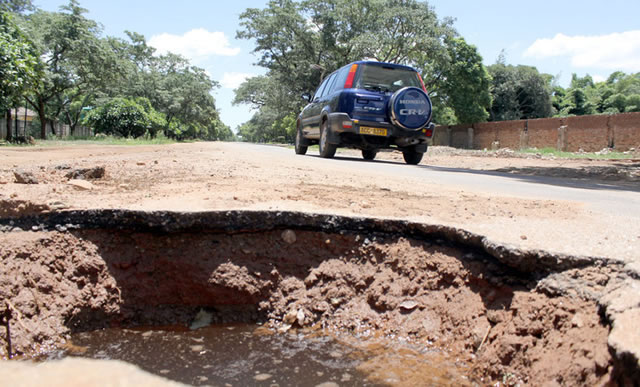
Government, just before the July 31 harmonised elections, ordered all councils to write off debts owed by residents following complaints by residents’ associations. Morris Mkwate (MK) speaks to City of Harare, which is one of the cities that cancelled debts, director of business development Cosmos Zvikaramba (CZ) on this and other issues.
MK: Government recently scrapped debts for ratepayers dating from Feb 2009 to June 30, 2013. Has the city complied with the directive and what has been the impact on council cashflows?
CZ: The city has complied with the directive. We have not really established the impact, but one would hope that after that alleviation things should improve in as far as payments are concerned.
MK: How did the huge debt accumulate in the first place? Why was it necessary to convert the Zimbabwean dollar debt into US Dollars when it was common knowledge that most residents lost all the local currency they had when we adopted the multi currency system as a country?
CZ: I will take that in two parts starting with when you say that there was a conversion of the Zimbabwean dollar to the American dollar. That is not the correct position. The correct position is that come Feb 2009 the Zimdollar amounts were all written off and we started on a new slate.
The accumulation was because of the hardships that were being faced by most residents. It is not as if we were sitting back waiting for the accumulation to go on and on. We were taking debt collection actions through notices, final letters of demand, summons and disconnections and so forth.
MK: How much has been written off in terms of the debt?
CZ: We have written off US$250 million in respect of domestic or residential individual arrears.
MK: How many account holders?
CZ: Roughly about 158 000 individual households have benefitted from this exercise.
MK: Of this amount, how much was uncollectable?
CZ: It is rather difficult to state but I would say about 10 percent would have been uncollectable in respect of some properties where you would find child headed families and in some cases absentee landlords.
MK: After writing off all these debts, the City of Harare has to remain on its feet in terms of service delivery and other services as well. Already I have noticed that the Consumer Council of Zimbabwe has been encouraging residents across the board to now pay up whatever has been charged by the City Council. What measures are you putting in place to ensure that debts do not accumulate again?
CZ: There are strategies which we are coming up with. First and foremost we want to make people aware that after this write off, if at all there is any accumulation we then proceed to take measures to recover, be it illegal or otherwise ( litigation) because we do not want to be in the same situation again.
We urge all ratepayers to settle their bills on time and in full. For those whose debts have been scrapped, the July bill has been sent out and people should settle that portion indicated as current. The debt writing off does not apply to corporates so they are urged to settle bills in full and on time (that is for those that are up to date).
Those that are not up to date are free to come to our offices for payment arrangements. We have also come up with a 30 percent discount on current bills for those corporate whose accounts are up to date. For those in arrears, the 30 percent is applicable on the arrears portion. This window is open until December 30. The discount also applies to individual or domestic ratepayers who are current and have not benefitted from the write off.
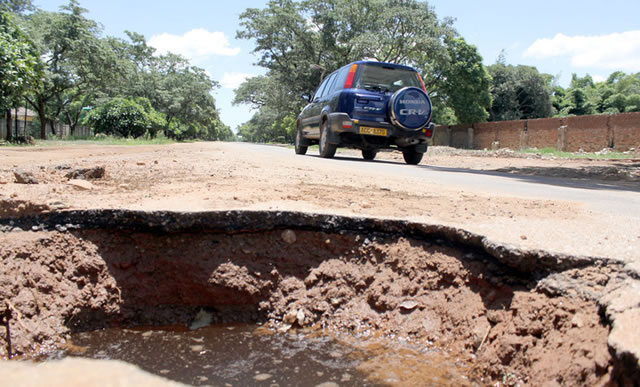
MK: Some residents argue that they were not paying their bills because the money they were supposed to deposit with council was not in tandem, with service delivery. Many cited potholes across the roads and garbage being not collected and yet the city council was demanding that they pay bills on time. What is your response to that?
CZ: This is an egg and chick situation. In the first instance, yes admittedly we were not up to scratch, but of late we have boosted our refuse collection fleet to 47 meaning every ward has a vehicle which are going out biblically to collect refuse – that is an improvement. We know that roads are in a bad state but we are trying by all means to ensure that they are at least passable.
We can achieve a 100 percent pothole filling if people pay timeously all the bills they receive. Our efforts should be complemented by the residents and other rate payers when they pay so that they we are able to get materials which are necessary for us to continue rendering the service.
MK: The Harare City Council has some twining arrangements with some international capitals as well, how have these arrangements assisted apart from seeking funds from ratepayers? Have these arrangements been critical in terms of generating revenue for service delivery or for filling potholes and rehabilitating the road infrastructure?
CZ: We have twinning arrangement with Durban, South Africa, Munich in Germany. It is not as if there is direct funding as it were but we get best practices or benchmarks so that we will be in a position to improve.
Durban for example is assisting us in coming up with a Geographical Information System (GIS) which will enable the city to monitor all activities – potholes, water bursts, sewer blockages across the city. It is still in a developmental stage though. After it has been fully realised it will assist the city in speeding up taking any remedial action which is necessary.
MK: Apart from ratepayers I know that council also has other streams of income for instance we have businesses in various places across the capital, we also have vendors, market stalls in different parts of the city. How effective is your revenue collection in that area so that you boost any efforts that you might be undertaking to improve service delivery and rehabilitate infrastructure in the capital?
CZ: In as far as business ventures are concerned, it is a new development which we embarked on after we realised that we cannot totally rely on the ratepayers’ money particularly when things are so hard.
The performance of some of the business ventures we have established, for example City Parking which is responsible for the street parking in the city, is doing fairly well. With the passage of time it should be able to contribute in a relatively significant manner to the coffers of the council so that at the end of the day if all business ventures flourish there should be a commensurate reduction in the rates and other tariffs which are charged to the ratepayers.
MK: It appears that many who want to recover any outstanding payment opt for punitive measures. Has there been any action on the part of council to engage stakeholders in some form of dialogue or awareness campaigns to ensure that there is this common understanding rather than there being a militant or some combative approach so that everyone is in the same picture and understands that the city needs to stay on its feet and everyone has to play a part by paying any outstanding amount?
CZ: We would not say it is a combative approach as it were. We do have consultative meetings with the ratepayers and residents associations even though they may not be frequent enough. But, whenever we hold them we tell the ratepayers exactly what we should be doing and what they should be doing, the part they are supposed to be playing so that the city is able to deliver.
In the papers we have also said ratepayers are free to come to council offices to make payment arrangements when they are not able to settle their bills in full. Some have taken it up while some have just ignored the call.
MK: There have also been concerns that the scrapping of debts would most probably affect the bank lender function in terms of confidence. So far what has been the market response to this measure?
CZ: In as far as our partners in the financial services sector are concerned, I would say there have not been any effects whatsoever. They are still confident of the city meeting its part, for example, if there is an overdraft they have not withdrawn those instruments. We are still partners and they understand our position, and are very confident that the city will honour its part.
MK: How much are you expecting to collect each month after writing off of debts? Will this amount be enough to meet your financial obligations like paying salaries, catering for service delivery and other costs like loan repayments?
CZ: The potential income on each and every bill is plus or minus US$20 million if people play their part by paying the bill on time and being current every month. That amount should suffice all those requirements such as salaries, running of refuse fleets, road mending repairs, fleet for water, water treatment procurement and many other things.
Therefore the US$20 million which is the potential revenue every month should suffice. Moreover we are also talking of arrears in respect of the corporate where we are saying that if they pay they get a 30 percent therefore it should be around US$21 million.
MK: What exact figure do you require to cater for all your monthly costs or any other monthly financial obligations?
CZ: Sometimes when things are tight you have to tighten your belts. If we want to do everything in one goal we would require about US$30 million, but we are saying it is one step at a time so that we do things in a systematic manner. The US$20million should suffice. Yes we could do with more so that we can cover more ground faster than at the current pace.
MK: What are your last words to residents most of whom have been beneficiaries of this debt writing off?
CZ: I urge all ratepayers to settle their bills in time and in full. In as far as the July bill is concerned look at the current portion and settle that portion.
We are in the process of coming up with the August bill which will reflect the write off but people should not wait to receive the August bill for payment of the July one. All I am saying is pay up, play your role so that the city is able to provide the required services.


 Online Reporter