Online Reporter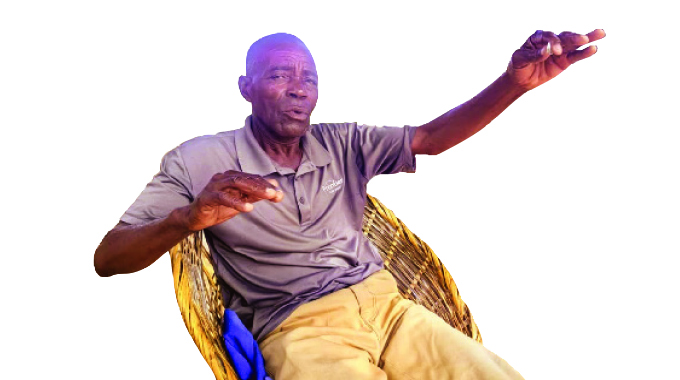
Chronicles from the Second Chimurenga
LAST WEEK, CDE CHIONE CHIMUKOSI, whose Chimurenga name was Cde Peter Tichatonga, revealed how he survived raids by the Rhodesian Security Forces in the Musana area, Mashonaland East province. One of the raids, which saw him suffering serious injuries, led to the killing of members of the povo. This week, he chronicles a daring mission that he was involved in to capture a notorious enemy soldier in the Chikwaka area, Murewa. He reveals startling details of the outcome of that mission.
***************
Q: You were seriously injured during raids in Musana but decided to solider on in the fight. Where you fit enough to engage in combat?
A: During the war, at times the will to fight overcame any physical pain or ailment.
Remember, the liberation struggle was also driven by our spirit mediums, like Mbuya Nehanda. Their spirits were the ones that pushed us to go the extra mile.
My section commander also encouraged me to soldier on.
I also recovered progressively because the medics constantly attended to me. When I then relocated to the Chikwaka area, I had recovered and was in pretty good shape.
Q: Tell us about some of your memorable missions in Chikwaka.
A: The one that easily comes to mind was our attempt to capture a notorious Rhodesian Security Forces (RSF) soldier. This was sometime in late 1978.
This RSF soldier, who was oddly named Gandanga, had unleashed a reign of terror in and around the Chikwaka and KwaBhora areas in Murewa.
He was well-known for riding roughshod over everyone.
He killed our fighters who were captured by throwing them into ditches and leaving them to die.
Our war collaborators and other members of the povo were not spared, as he tortured them to reveal information about our whereabouts. He also subjected his farm workers to gross abuses and inhumane treatment. All this gave us the urge to capture him.
We got intelligence about where he resided and we decided to make a daring attempt to capture him at his farm.
The farm was located around the Kwa-Bhora area.
Q: How did you execute this plan?
A: The crux of the plan was to capture him and take him to Mozambique. We went to his house numbering about 11. The detachment security commander was Cde Garikai, the same comrade who had helped me to soldier on after I was injured, whilst the platoon commander was Cde Dzimbunu. At that time, I was the section commander.
We directly headed to his farmhouse. It was the third farm from the main road, off KwaBhora.
We arrived there when it was just getting dark, after 5pm. We had received information that Gandanga was at the farmhouse.
When we entered, we found his wife in the kitchen. We asked her to tell us where his husband was hiding.
She strenuously denied that he was in the house. We searched the house.
We decided that we could not leave empty-handed. Instead, we decided to capture his wife.
Her name was Yvonne. Terrified, she pleaded with us for her life.
She asked, “Where are you taking me?”
We told her not to worry, as we just wanted to take her to our headquarters in Mozambique, where she would meet Cde (Robert) Mugabe.
After we reassured her, the tension drained from her body — her fear giving way to fragile trust.
She believed us when we told her we would not harm her.
Q: So, you applied the code of war not to harm civilians?
A: Precisely. The principle was enshrined in our liberation struggle. This is what that part of the popular song “Nzira dzemasoja” teaches us when it says, “Tisanetse vasungwa vatinenge tabata (Treat your captives with dignity).”
You see, the creed of war is that you do not harm such kind of people.
Our purpose of capturing her was to make a statement to his husband, Gandanga, to stop his evil ways, which went against the code of war.
Q: Where did you take her?
A: We used the Uzumba route and walked with her throughout the night, heading to Mozambique.
Q: Did her husband and other RSF forces not follow you?
A: They did the next morning. We saw planes hovering above us, obviously hunting for us. But using our guerrilla tactics we avoided detection. Many helicopters passed us.
Q: How did you manage to evade the helicopters?
A: We knew that they assumed we wanted to use the Mutoko route to get to the border with Mozambique. This was a common route used by the comrades.
However, we were able to elude them by using a route that they were not aware of, which meant going via Uzumba and Pfungwe, then heading to Mt Darwin, where we crossed into Mozambique.
We later learnt that the enemy soldiers beat up many members of the povo, inquiring about our captive’s whereabouts.
Q: How did you treat your captive during the course of the journey?
A: During the trek to Mozambique, she expressed fears that we would rape her. However, we assured her that she was in safe hands. When we got to our chimbwidos and mujibhas who gave us food, we gave it to her to make sure she didn’t starve. We never ill-treated her in any way and as the journey progressed, she began to understand that we would not do any harm to her.
Q: Did she manage to cope walking from Murewa to Mozambique?
A: We went to great lengths to assist her. For instance, whenever we reached a homestead where our mujibhas or chimbwidos had bicycles, we would borrow one for her to use. She would ride it to the next homestead, leave it there and be given another bicycle to continue her journey.
We did this because she struggled with the gruelling journey on foot from Murewa to Mozambique. After just a few kilometres, her feet would swell. She endured this pain for much of the journey.
Despite the hardship, we pressed on, and after some days, we finally reached Tete.
There, she received medical care for her swollen feet before being taken to our leaders.
Her story soon made international headlines, shattering Rhodesian propaganda that painted us as mere terrorists.
How we cared for her proved that we were disciplined soldiers fighting for a cause — the liberation of our country — not mindless violence.
She became a living testament to the world that ours was a just struggle.
If Yvonne is alive today, she would surely tell you: We treated her with dignity and compassion.
Next week, Cde Chimukosi ends his account by telling us some of the successful battles he was involved in and the last days of the liberation struggle.