Online Reporter
Thupeyo Muleya, Beitbridge Bureau
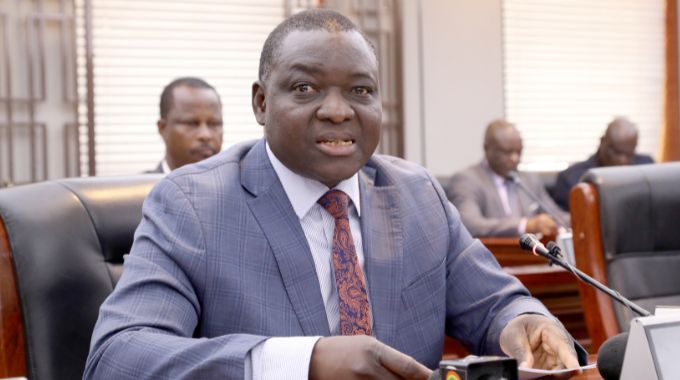
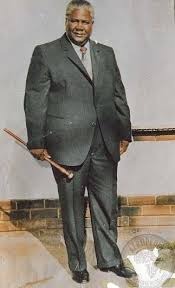
Matabeleland South’s Minister of State for Provincial Affairs and Devolution, Albert Nguluvhe, has revealed that Matobo District was chosen to host the 46th National Independence Celebrations as a tribute to the late Vice President, Dr Joshua Mqabuko Nkomo, affectionately known as Father Zimbabwe.
In an interview, the Minister said when they were advised about the province being the host of the celebrations this year, the committee then sat down to evaluate possible venues until they settled for Matobo due to its connection to Dr Nkomo.
“Every one of the seven districts was interested, but Matobo came up as ideal after evaluations,” Minister Nguluvhe said.
“We wanted to recognise Father Zimbabwe’s contributions to the country’s liberation and unity.”
The Minister emphasised that hosting the celebrations in Matobo is a great honour that reflects Dr Nkomo’s vision of a united Zimbabwe.
He said, in line with how the late nationalist viewed Zimbabwe, they had spread legacy projects which are being implemented across the province.
These include high-impact infrastructure development — road construction and the building of a stadium, dozens of houses, a cultural village, boosting internet connectivity, extending radio and television coverage, a vocational training centre, civil registry offices, piped water schemes, monuments and village business units, among other community initiatives.
“To us as Matabeleland South, we never expected that, as a province, we would be given an opportunity to host national Independence Day celebrations. True to his mantra, we were told we are hosting the celebrations this year,” said Minister Nguluvhe.
“So, as a province, we then sat down as the leadership to decide on the venue and we settled for Matobo District, the home of the late Father Zimbabwe, a nationalist and then Vice President.
“Every one of the seven districts was interested and Matobo came up as ideal after evaluations, as we all agreed to have it there in recognition of Father Zimbabwe.”
He continued: “In fact, we were ready to host the event. However, in hosting the national events, a lot has to be done and we were tasked to carry out legacy projects in the build-up to Independence.”
The Minister said the committee’s approach was that it is not only Matobo that will host the national celebration, but the province as a whole, hence they decided to spread the legacy projects across the seven districts, which include Gwanda, Beitbridge, Insiza, Umzingwane, Mangwe, Bulilima and Matobo.
He said they had built 40 science laboratories across the province, which are at wall plate level and will be equipped by the Government when civil works are complete later this year.
Other projects include road construction — key among them the Bulawayo to Maphisa, Maphisa to Brunaburg and Gwanda to Maphisa roads, among others, which had been on the cards for years; schools; internet connectivity; borehole drilling in each of the 12 constituencies in the province (solarised); construction of civil registry offices in Filabusi, which is now 98 percent complete; and the 16 civil servants’ garden flats in Beitbridge, whose Phase One is complete, with electrification remaining.
“We have managed to make the Gwanda to Maphisa road accessible, cutting the travelling distance for people from many districts in our province to Maphisa. This project will be completed soon,” he added.
“In addition, in the home district of Father Zimbabwe, we had Kezi Hospital, which was outstanding and is almost complete. We have also renovated Maphisa Hospital and expanded an aerodrome to 1,5km at Kezi to carry small planes. We have also worked on a school of nursing at Maphisa, and the Dr Joshua Mqabuko Nkomo Vocational Training Centre, which will be ready by September.
“We are also monumentalising the site where Commander Mpini was killed with his troops and some children, where we have already built a clinic, a standard stadium at Maphisa with an improved drainage system, a new cultural village, and the construction of Mahetshe Primary and Mahetshe Secondary schools.”
Minister Nguluvhe said, working together with another non-governmental organisation, they were setting up a piped water scheme for 100 homesteads in Father Zimbabwe’s home village.
He said they were also building a large house at his homestead to be used as a museum.
The Minister, who also worked closely with Dr Nkomo in the period pre- and post-Independence, said he had learnt a lot from him and this has contributed significantly to how he conducts business in the province.
“I wish Father Zimbabwe could wake up today and realise that when the people of Zimbabwe called him Father Zimbabwe, they meant it,” he said.
“As an honour, it is something which everyone feels proud about, including his children. As someone who has worked closely with him, I am happy to say that whatever I am doing today, I am doing it because I had to learn from him how he looked at Zimbabwe.
“To him, Zimbabwe was one; there was no tribe. He believed that we were one people born in one big house built of stones — that is Zimbabwe. I am happy that we have honoured him, and the greatest honour we can give him is that we remain united, focused and develop this country.”