Online Reporter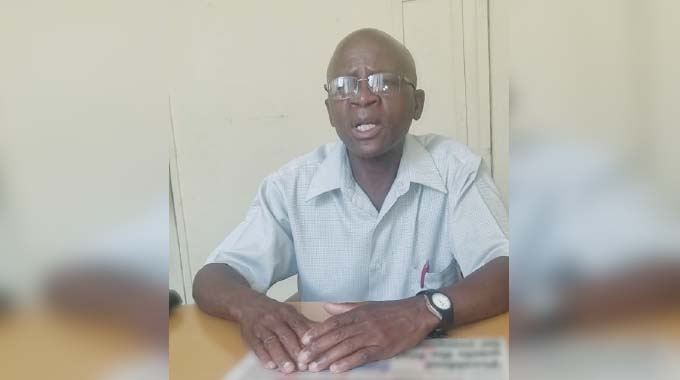
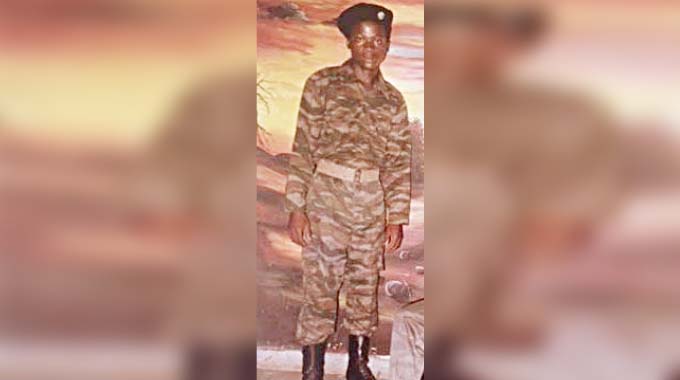
WE conclude our interview with Cde Charles Makhuya, pseudonym Cde Njabulo Moyo, a survivor of the brutal Rhodesian bombing of Boma Camp in Angola in 1979. Over the past few weeks, Cde Makhuya has shared insights into his journey through the armed struggle: how he joined the liberation war, underwent training at Boma in the second group, and was later deployed there as a medic instructor. Below, he concludes his narration with our Assistant Editor, Mkhululi Sibanda (MS). The following are excerpts from the interview. Read on . . .
MS: Last time we ended the interview when you were discussing the aftermath of the bombing at Boma. Take us through what happened during that period.
Cde Makhuya: We left the original camp but didn’t proceed to Malanje immediately. Instead, we set up temporary bases around the old camp as a security measure. At the time, part of the third group had started arriving when the bombing occurred. The new arrivals, who were about 300 in number, completed their training at those makeshift bases. Once their training was complete, a platoon-sized group was selected and deployed into various roles — some into camp security, others into communications, the training team, and so on. The remaining members of the third group were transported back to Zambia for deployment. They travelled by road. These 300 cadres were the last to be trained at Boma. After their training, the camp was relocated to Malanje, which is in a different province of Angola.
MS: Tell us more about Malanje.
Cde Makhuya: A new group arrived there, numbering about 1 600. The majority of them were from Hurungwe District and its surroundings, having been recruited by our units operating in Mashonaland West Province. They had previously been based at Solwezi.
These comrades formed what became known as the fifth group to undergo training in Angola. The Cubans organised the relocation of the training camp in secrecy, they never informed us that we were being moved. We passed Luso and continued on towards Luanda, and it soon became clear that we weren’t returning to Boma. As I said, the Cubans planned and executed the relocation without giving any indication beforehand.
At Malanje, the training programme underwent significant reorganisation.
MS: In what way?
Cde Makhuya: The camp was reorganised into companies, Company One to 10, a departure from the previous groups arrangement when we had 12 companies. That was because the numbers were larger as the first three groups were made up of 2 000-plus men. Companies One to Six were infantry units. Company Seven was artillery, specifically handling Gun-75s. Company Eight specialised in mortars.
Company Nine was engineering, and Company 10 handled communications. From among the recruits, a platoon was selected and trained in reconnaissance. These were mostly young cadres, chosen with the intention of deploying them to operational areas in Mashonaland West, which they knew well.
Training was also intensified with the introduction of new weapons such as Zegues and SAM-7s (also known as Strella), which are surface-to-air missile launchers. These weapons were brought in by the Cubans to fortify the camp. Fifteen ZPRA cadres were trained in the use of the Strella — the same weapon used to shoot down the Viscount aircraft. These 15 joined another nine who had been trained previously.
This meant that each of our anti-aircraft batteries was equipped with three Strellas. The Angolan Defence Forces also brought in more Zegues. In fact, before Boma was bombed, both the Cubans and Angolans had already deployed some Zegues, but they were later withdrawn. The increased focus on air defences was partly influenced by the South African Defence Force attack on Kassinga in Angola.
MS: How long did you remain in Angola?
Cde Makhuya: The fifth group that trained at Malanje was the last, as the ceasefire was eventually announced. However, training continued for six months. As for me, I remained in Angola until July 1981, although the rest of the fifth group had returned earlier in March 1981. They were flown back in batches to Bulawayo Airport, now Joshua Mqabuko Nkomo International Airport.
MS: Why did you stay behind until July?
Cde Makhuya: We were left behind to look after party property and war matériel. I stayed with cadres like Cde Sijabuliso Dabengwa, the younger brother of Dumiso Dabengwa, who was the quartermaster. We were responsible for about 40 vehicles, mostly trucks used during the war. As for the military equipment, we donated it to our comrades from Umkhonto WeSizwe (MK), whose camp was nearby. When it was finally time to leave, we drove in a convoy through Zambia, returning to Zimbabwe via the Chirundu Border Post. We then proceeded to Harare, and from there to Bulawayo.
We drove the trucks to a Zapu house in Bellevue where they were parked. From there, I went to my parents’ home in Old Pumula. Although I had sent messages through fellow comrades, my family wasn’t certain I was still alive. It was an emotional reunion with my parents and siblings. After that, I was integrated into the Zimbabwe National Army and posted to Four Brigade Headquarters in Masvingo, where I served as a signals operator. I retired from the army in 1992. During my time at Four Brigade, I served under a number of commanders and, due to the nature of my work, interacted with them directly.
MS: Who were the commanders of Four Brigade during your time?
Cde Makhuya: I served under Generals Mike Reynolds (real name Charles Grey), Tjile Nleya, Mike Nyambuya, and Philip Valerio Sibanda.