admin
admin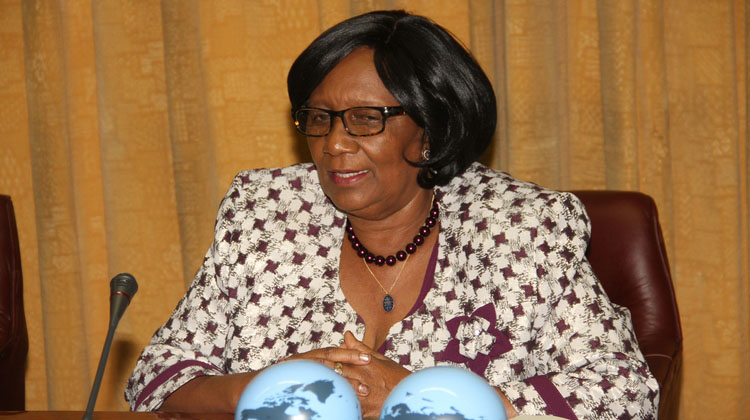
The tourism sector, largely considered an economic low-hanging fruit, has been quick to respond to the cocktail of new reforms by the new political administration.
Fittingly, Environment, Tourism and Hospitality Industry Minister Prisca Mupfumira was recently awarded the Tourism Minister of the Year for Africa at the International Tourism Bourse (ITB) in Germany.
The rich pickings in the industry are expected to help smoothen the country’s path to become a moderately prosperous economy by 2030.
Our Chief Reporter Kuda Bwititi sat down with Minister Mupfumira to reflect on the achievements made thus far and the journey ahead.
*****
Q: Tell us about the awards which you recently won and their significance?
A: Zimbabwe won two awards, which were the Sustainable Destination of the Year Award, as well as the Tourism Minister of Year Award for Africa. These awards were in addition to others we recently won, including being voted the third must-visit destination after Sri Lanka and Germany, as well as the award of a must-visit destination in the world by National Geographic.
I am very excited, but I believe these awards were not only for myself, but for the team that I work with at the ministry as well as at the Zimbabwe Tourism Authority (ZTA). These awards will most certainly continue to put Zimbabwe on the map as a prime tourism destination.
Q: Can you outline some of the achievements that merited these accolades?
A: The year 2018 was a positive year for the tourism industry in Zimbabwe. In terms of arrivals, we registered a 6 percent growth from 2 422 930 in 2017 to 2 579 974 in 2018.
Of note was a sharp increase of 49 percent in arrivals from the overseas markets. This is very important to the economy, as overseas arrivals are high spenders who bring in the much-needed foreign currency.
In terms of tourism receipts, the sector earned close to US$1,4 billion (US$1 385 736). It is important to note that Zimbabwe is still to finalise setting up the Tourism Satellite Account that will further enhance the measurement of the tourism revenue into the national economy.
The setting up of Satellite Account is 65 percent complete.
Q: Given the successes of 2018, what are the targets for 2019 and what mechanisms are in place to achieve these targets?
A: In 2019, our target for tourist arrivals is 3,2 million and we expect to earn US$1,6 billion in terms of receipts. Factors to drive performance are many, and I will dwell on five. Firstly, there is the issue of regional tourism growth trends.
According to the United Nations Tourism Organisation (UNWTO), Africa is expected to grow at an average rate of 6,8 percent per annum for the next decade in tourism arrivals.
Zimbabwe is expected to ride on this positive trend. It is also assumed that the indicative growth in the first quarter of the year will be maintained.
Secondly, after more than a decade of negative publicity, Zimbabwe is slowly recovering from the negative image as seen by the current media coverage of the destination, especially after Operation Restore Legacy, including the cut back on police roadblocks.
The third issue is continued marketing efforts and destination awareness, painting a positive picture about the destination as safe and secure.
Number four, the expected economic recovery of the country is a positive development necessary for the growth of tourism in Zimbabwe.
Lastly, an improvement in the service delivery by the tourism sector and other enabler sectors such as transport, electricity and water is expected to promote growth in the country’s tourism performance.
Q: There has been growing interest from new airlines that intend to fly to Zimbabwe. Can you unpack this phenomenon?
A: Airlines are in business and they follow traffic volumes or potential business. Since the new dispensation and the “Zimbabwe is open for business” mantra, there has been increased interest on Zimbabwe from the investment, conferencing and leisure perspective.
There has been a growing interest and profiling of Zimbabwe as evidenced by the awards the destination is receiving. Airlines are seeing the untapped potential of Zimbabwe as a destination; hence, the interest in providing access to destination Zimbabwe.
Q: This being Women’s Month, please give us an update on the implementation of the Women in Tourism programme?
A: The Zimbabwe Women in Tourism (ZWIT) was launched by the First Lady of the Republic of Zimbabwe, Cde Auxillia Mnangagwa, on 25 February 2019. ZTA is already working with ZWIT in formulating a strategy that will guide the operations of the ZWIT. The fundamental issues being focused on include: advocating for policies that empower women in tourism, guided by our already launched tourism policy and creating an enabling environment for women’s participation in tourism at all levels.
We are also looking at facilitating networking platforms for women to share knowledge and information and experiences on tourism businesses, lobbying for funding opportunities for women in tourism, as well as capacity-building for women to effectively participate in strategic tourism businesses and creating partnerships with the private sector and NGO’s.
Q: Can you also give us an update on the Command Fisheries Programme that is earmarked to benefit communities that live close to water bodies?
A: Funding for Command Fisheries is still being mobilised, but at present, the ministry, through the Zimbabwe Parks and Wildlife Management Authority (Zimparks), has been rolling out a Livelihoods Support Fisheries Project.
A Command Fisheries Taskforce Team was set up in the Office of the President and Cabinet to spearhead implementation.
The team is supported by Zimparks and other members are from Zinwa (Zimbabwe National Water Authority), Command Agriculture Centre, Veterinary and Livestock Department.
The team is currently consulting with all the stakeholders in the fisheries industry value chain in preparation for implementation.
The team is also consulting with possible financiers of the programme since no funding has been secured.
Command Fisheries registration, contract and stop-order forms were developed.
To date, 253 registration forms have been submitted for processing.
A total of 40 dams were stocked with 1 980 799 fingerlings, 292 self-funded individual ponds were stocked with 360 490 fingerlings, 112 self-funded cages in dams were stocked with 1 278 130 fingerlings.
A total of 1350 people have been trained on fish farming and management of dams.
Lake Tugwi-Mukosi and Mtshabezi Dam were each stocked with 100 000 kapenta fry from Lake Kariba.
Q: We understand that a census on the country’s elephant population was conducted recently. What is the population of our elephants and what does it signify going forward?
A: The overall national elephant population in Zimbabwe stands at 84 000, which is higher than the 81 000 recorded in the last census in 2014, but down from 87 594 recorded in the survey done in 2001.
It is important to note that the population performance of Zimbabwe’s elephants has been different for the four landscapes. There is localised over-abundance of elephants in north-west Matabeleland and in south-eastern Lowveld.
North-west Matabeleland has an ecological carrying capacity of 15 000 elephants and is currently having 54 000, which is almost four times the carrying capacity. Similarly, southern-eastern Lowveld has a carrying capacity of 3000 elephants and is currently holding 11000 elephants, which is also 4 times the carrying capacity of the area. This is causing serious ecological problems both on habitats and other animals.
In Hwange National Park and Gonarezhou, the habitats are heavily modified by the elephants, causing considerable population dynamics of other animals.
There is, therefore, competition for critical resources such as water.
Resultantly, animals are forced to migrate and disperse to other areas. In some instances, the animals move out of the estates; thereby, causing conflicts with communities.
On the other hand, elephant range areas such as Sebungwe and Mid-Zambezi Valley have experienced population decline.
The varying population trends and performances of the different range areas call for different management measures. In areas where we are having localised over-abundance, strategies such as translocations, hunting and live sells can be employed to try and contain the ecological damages.
In desperate situations, measures such as culling can be called for.
Q: What has been the success of the National Clean-up Campaign spearheaded by President Mnangagwa?
A: The National Clean-up campaign is an all-inclusive approach that was embraced and adopted by Government.
It was spearheaded and launched by the President on the 5 December 2018 under the theme “Zero Tolerance to Litter- My Environment, My Pride.”
The major outcome of the launch is the increased participation by all sectors and leadership from industry, commerce, churches, education, among others, in dealing with the waste management challenge in the country.
There has also been an increase in adoption of open spaces by corporates, effectively increasing aesthetics for our cities.
The National Clean-up programme has resulted in tremendous increase in the number of clean-ups undertaken by stakeholders nationwide from 396 in January to 5 819 and 9 804 in February and March, respectively.
The monthly clean-ups also increased from the initial 73 in January to 105 and 344 in February and March, respectively.
Another milestone achievement has been the adoption of waste separation at source by individuals at household level, institutions and companies.
This has provided an opportunity from some potential investors both locally and from abroad to invest in the recycling industry with potential to create green jobs for our people, while promoting a clean, safe and healthy environment.
Q: There are concerns that authorities are not fully enforcing penalties for littering. What is your take?
A: The first strategy has been the capacity building of all local authorities’ municipal police in waste management regulations by the ministry.
This has seen the formulation and review of old waste management by-laws by local authorities. This process is ongoing and will increase the capacity of councils in enforcing waste management by-laws throughout the country.
The ministry has engaged owners of public-transport vehicles to ensure their participation in waste management so that littering is reduced along our roads and highways. Following the engagement of 955 public transporters, a total of 137 orders in terms of the Environmental Management Act compelling them to provide waste receptacles in their vehicles have since been issued since the beginning of February.
Follow-up inspections to check on compliance have revealed 82 percent compliance to the orders.
This process is ongoing along all the major highways.



 Online Reporter