Vusumuzi Dube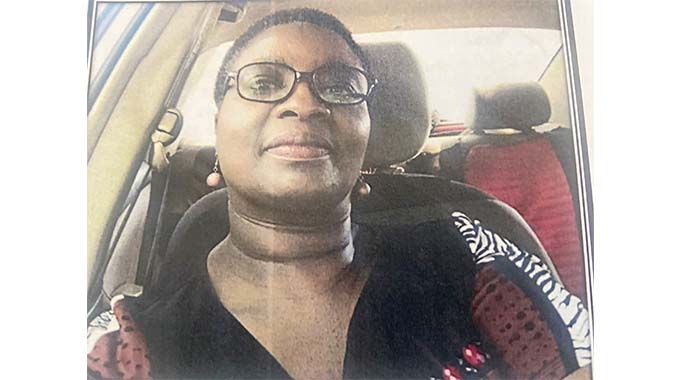
MY name is Queen-Elizabeth Diketso Dube. I was born in Gwanda District at Mapate in an area called Matulungundu.
I grew up staying with my aunt and uncle. These are the two people that brought me up together with the other two sisters of mine. I went to war when I was 13 years old. This was in 1977. For my education I went to Gungwe and Mapate schools in Gwanda.
The journey of going to the war started when I was doing my daily routine with my sisters. This was when we were herding livestock in the bush together with other children from the community.
At the time, I was no longer going to school as my parents had stopped me from going to school as there were rumours that there were people called “amalw’ecatsha” who were kidnapping, raping, and torturing children. I had stopped going to school as my parents feared the worst especially rape.
While herding livestock, conversations of going to the war among my peers had already gathered momentum. Each day, when we were herding livestock, talks of such nature intensified as this was at the height of the war.
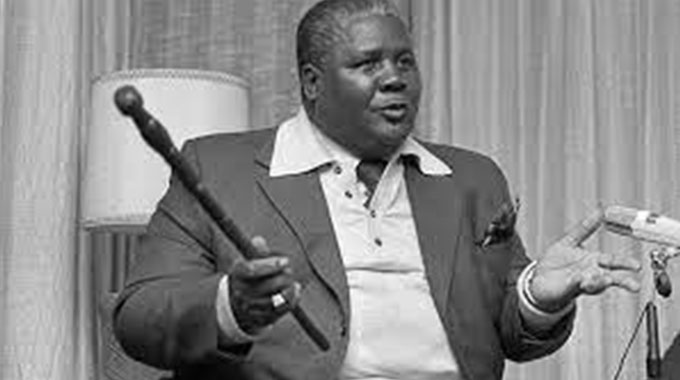
One day when we were herding our livestock, three sisters of mine who I stayed with at home decided that they were joining the struggle to fight. Believe me, I didn’t know whatever they were alluding to, fighting Smith, and joining Joshua Nkomo.
I was very young, but I merely wanted to go because this is what my sisters wanted. That very day, they told me that we are going to the war. One reason why they took me with them was that they did not want me to return home and begin telling our parents where they had gone to the war. This is the reason why I was dragged in and joined the war.
I was co-opted and went to the struggle as four of us. My sisters were inspired by the teaching of our parents that there was a need for them to join others to go to the struggle.
Such thinking was perhaps inspired by the fact that other children from some households had gone and it had become fashionable for a family to send their children to war.
Remember political consciousness of the people and especially of Joshua Nkomo increased. Already in the area, there was talk that a country should be fought for to realize emancipation of the people. In our community, it became popular to say that, relwela boipuso, (going to fight for freedom).
It became so popular that naturally, children decided to join the war. But on my part, I used to hear all those stories but it couldn’t make any sense at [all] because I was too young. What I knew was that whatever my sisters wanted I followed.
No wonder I was able to join them in the struggle. I was 13 years old. Little did I know that I was going to train, fight and become a soldier at the end of the day. I wanted to go to the war but I never knew what it all entailed.
They had told me not to tell anyone as to where we were going. My sisters feared that if I stayed behind, they would be exposed, that my aunt would want to know where they had gone and I would have said it as it was.
My sisters told me to take one of the beautiful dresses that I had worn at the last Christmas celebration. However, I failed to take it along as my aunt was watching my moves on the eve of our departure. Worse still, I travelled barefooted to Botswana.
The journey had started, I was following what they were saying, and I mean my sisters. We went to cross Shashe River over to Botswana. That time the river was almost in flood. One of my sisters crossed over alone. I managed to cross with the other two who were holding me while instructing me to drag my feet in the sand so that I don’t lose balance and traction.
We managed to cross and when we crossed over, we began to ululate and started singing in celebration of crossing the river. When we got there, our first stop was at Mtabeng. The responsible people at Mtabeng took us to Gobajango where we were taken to a kgosi (traditional leader or chief) who welcomed us. The kgosi was responsible to take us to Selibe-Phikwe Prison where all recruits were taken to.
Thus, we stayed for almost a week before we were taken to Francistown.
Life began to change at Selibe-Phikwe Prison where we used to stay the whole day in the cells. We used to stay in the cells with prisoners eating popular food called “stampa”.
My life changed drastically and I did not enjoy or like that at all. But I had no choice. I had taken that route already. I did not have any regrets about my choices but I found the change depressing. I was young.
We were later moved to Francistown. We stayed in the cells for quite some time. There was no training. The new setting appeared much better as we began to meet other female recruits there who were taken from Manama Mission School. It became clearer to me that I needed to grow up and become responsible and not rely on the fact that I had sisters.
I realised that since I had my sisters I was supposed to be mature as military-level training knew no relative or sister. This was a painful truth hence I needed to adapt and qualify to the new lifestyle.
Where there was scramble for food, I needed to be there and not wait for anyone to do that for me.
I’m not saying there was any scramble, it’s just an example of what it was to be.
At Francistown, there was a woman who was responsible for the recruits. But mostly the command of the camp was male-dominated but I no longer remember their names.
We stayed at a house within the camp which was like a dormitory with bunk beds. Food was well cooked and there was tinned fish which was mostly supplied by the Russians. The kind of fish had a lot of oil.
We used to bath, eat, share stories, and sleep. There was no military training at Francistown, neither did we receive any lessons. We just repeated this daily as I have narrated.
A week or so later on we were taken to Zambia at a place called Victory Camp (VC).
When we arrived at the Zambian airport and saw the glittering lights of the City of Lusaka, we thought maybe life has changed for the best for us as we kept admiring the splendour and beauty of the city. In no time, vehicles came and took us to Victory Camp.
VC was a transit camp away from the city life where everyone or recruits were taken to. We managed to stay there at VC from February up to September 1977. While it was a transit camp, it was also a training camp, unlike Francistown. We got our first training there. We used to go out for some toyi-toyi.
While at VC I remember some male instructors and commanders who were there. There was Cecil, Makanyanga, Sylvester, and Theodophilus among others. Later we were joined by trained female instructors who had trained in Morogoro like Bvundzai Tawona, Grace Mutshatshi, Jane, Alice, Belinda, Audrey, and the other Alice, who we used to call “Shorty”. These I remember very well because they trained us together with the male instructors.
Still, at VC another group of trained female instructors from Mwembeshi was deployed [to] train us although we were almost about to leave VC for Mkushi. Those instructors included Ingrid, Sakhile, Sithandekile, and Phathi.
The two groups of trained females collaborated to inspire and instill discipline in us. However, when we moved to Mkushi the female instructors like Jane, Alice, Sithandekile, Audrey joined us and were elevated and became company commanders of our time.
Extracted from a book titled Yithi Laba written by Methembe Hillary Hadebe.
To be continued next week


 Online Reporter