Online Reporter
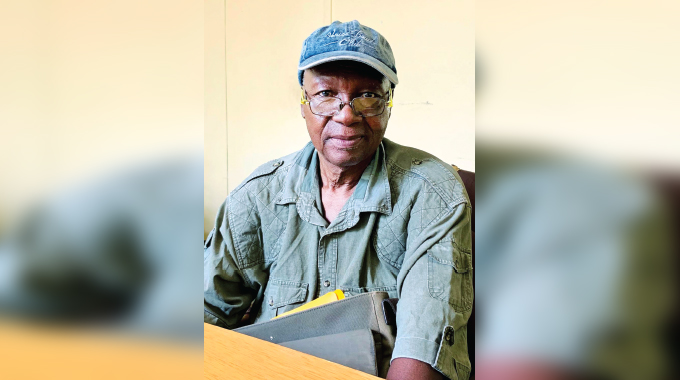
WE continue our interview with former freedom fighter, Cde Cecil Banda (Dingani Ncube). During the armed struggle in the 1970s, Cde Banda was at some point the camp commander of Victory Camp in Zambia, a military facility that housed female combatants. In the first interview with our Assistant Editor Mkhululi Sibanda (MS) carried out in our last edition, Cde Banda spoke about how he left the country to join the armed struggle in Zambia via Botswana. Today he picks up the conversation by giving an account of his training at Morogoro in Tanzania. Below are excerpts from the interview. Read on . . .
MS: You spoke about being one of the cadres Jason Ziyapapa Moyo thought were too young to undergo military training, let us resume our conversation about you going for training.
Cde Banda: From Mwembeshi in Zambia we were driven to Morogoro in Tanzania for training where we found the now late Cde Sam Mfakazi as the camp commander with Cde Jordan Gampu as Chief of Staff. Instructors there included Enoch Tshangane (Jevan Maseko), Stanley Doko Gagisa, Tshaloba, Eddie Sigoge and now Brigadier-General Tjile Nleya, uDubhu.
MS: Last time you spoke about low numbers among the recruits, so how many were you in your group?
Cde Banda: We were only 50 as we were the second group to train following the upheavals in Zapu which went on to be known as the Chikerema Crisis when the party split. During that crisis Chikerema went on to form Frolizi and some comrades followed him. Others just left the struggle. Zapu was therefore left with a few trained comrades and had to restart building its military wing whose name changed from the Special Affairs Department to Zimbabwe People’s Revolutionary Army (ZPRA) with Rogers “Alfred Nikita” as its commander. So when we got to Morogoro we found only seven recruits who were about to complete their training.
MS: Just seven people?
Cde Banda: You heard me right. Yes, when we got to Morogoro, ZPRA was training only seven men. We found ZPRA depleted with a few trained personnel. Among the seven whom I still remember was Zvafa Moyo, the elder brother of the former commander of the Air Force of Zimbabwe, Chief Air Marshal (Rtd) Elson Moyo, Makanyanga, Sithole, Matiwaza, and Mdaka Omnyama. When we got to Morogoro, it was their last day, and the following day, they returned to Zambia as they had finished their training.
MS: Tell us about your training.
Cde Banda: Our training was very tough, we were woken up at 5am every day to do a road run of 10 kilometres, toyi-toying. While doing road runs we would be wearing tracksuits and after the road run, we would go to the shower. From there we would change into combat gear and then have breakfast. We will then assemble at the parade square and then moved to do military drills such as crawling, obstacle crossing and so on. The instructors would be on us until lunch time which was at 1pm. We were well supplied in terms of food by the then Organisation of African Unity (OAU). After breaking for lunch between 1pm and 2pm, we would then return to the field for drills such as the bayonet charge.
MS: Among your instructors who stood out for you?
Cde Banda: The Chief of Staff, Cde Jordan Gampu was a tough man and we all thought he was very cruel. At times he would wake us up in the middle of the night and he expected us to be vigilant all the time. His argument was that the enemy could launch a raid anytime, so a guerilla was supposed to be alert all the time. Then there was Sigoge and Gagisa, very fit guys who could do anything. These two were very strong physically and were fond of demonstrating to the recruits when taking us through drills. As for Tshangane (Maseko) and Dubhu while very brilliant with time we started outpacing them while running or doing some exercises. Naturally, they had big bodies, sort of fat guys. However, these two exhibited leadership qualities, no wonder why they ascended the ladder to become senior commanders.
MS: From your side as recruits who were the outstanding ones?
Cde Banda: Gilbert (Nicholas Nkomo) was gifted both physically and during lessons, so was now Colonel (Rtd) Marshal Mpofu and Bhubhudla. There was also Bhobho One who had a terrific pace as he could outpace everyone. Unfortunately, he was killed in combat near Livingstone. However, during our training one of the recruits who could not withstand the rigours of the training regime fled from Morogoro. So when we finished we were 49.
MS: How did your fellow recruit run away from Morogoro?
Cde Banda: That comrade was recruited by Zapu in Zambia. He had been employed as a truck driver and could not cope with the rigours of the training, so he decided to run away. He was discovered missing the following day and a search party was launched to apprehend him. We combed the area around the camp and the manhunt was then spread to the routes leading to Zambia.
He was found trying to hitch-hike back to Zambia and brought back to the camp. The comrade was not done as he ran away for the second time and was later captured by the Zambians. I do not know what happened to him after that. We just heard that he was apprehended by the Zambians. We then completed our training after six months and that was in 1973. Cde Nikita Mangena attended our pass-out parade in the company of Cde Ackim Ndlovu, who had been succeeded by Mangena as the commander of the Zapu military wing. Cde Ackim Ndlovu was the commander of the Special Affairs Department as the Zapu military wing was called before being renamed ZPRA. In his address, Mangena told us that since we had completed our training we were going to be deployed to the front.
MS: And after your training where were you deployed?
Cde Banda: We were taken back to Zambia where we were sent to different departments. Myself I was deployed to the logistics department which was headed by the now late former Vice-President, Cde Phelekezela Mphoko, whom we called Report. Cde Mphoko was the ZPRA Chief of Logistics then. So what happened is that on our arrival in Lusaka from Morogoro, myself, Themba, Misheck, Nxumalo and Zidla were driven along Kafue Road at night to a forward base whose occupants were in charge of logistics.
MS: Who took you to the base?
Cde Banda: We were taken by Cde Mphoko himself in his allocated vehicle, but the car was driven by his driver. When we got there we found the now late national hero, Masala Sibanda, Manyokopo, Gumede and Mpondo Khumalo. Our arrival boosted the numbers. That was purely a supplies camp.
The role of those comrades there was to supply the guerillas who were at the front. Like I said before during that time the numbers in ZPRA were depleted, so the fighters were mainly using landmines. After staying at that camp for three months, Cde Mphoko came back and said he wanted to test our abilities and weapons that were at our disposal. He wanted to see whether we were able to use them with precisions. Among the weapons we used were bazookas and M175, a heavy weapon that is used to hit installations such as buildings. After that, Cde Mphoko left for the headquarters. However, I did not stay long as I was recalled to the rear.
MS: Take us through that.
Cde Banda: One day the Chief of Operations, John Dube (JD) came to the base and took me to Lusaka. I am not sure why the commanders settled on me. When I got to Lusaka I was told that I had been chosen to go for further training in the Soviet Union. Tshangane that is Jevan Maseko was appointed the leader of our group with Kelly Malaba as his deputy.
The commissar of the group was Cde Moses Phinda, real name Farai Lawrence Makwarimba, who died a few years ago in Harare. Phinda was also to rise through the ranks in ZPRA. When Mkushi, the girls’ camp was heavily attacked by the Rhodesians in 1978 he was its camp commander.
To be continued next week with Cde Banda talking about his training in the Soviet Union and deployment to various camps in Zambia.