Online Reporter
Judith Phiri, Business Reporter
THE Zimbabwe Media Commission (ZMC) has called on traditional media to develop innovative business models to reclaim their position in the advertising market, while urging advertisers to rethink their strategies for reaching consumers.
Like global trends, Zimbabwe’s media landscape is grappling with shrinking revenue from the sale of marketing space, impacting television networks, radio stations and newspapers that have long relied on advertising income.
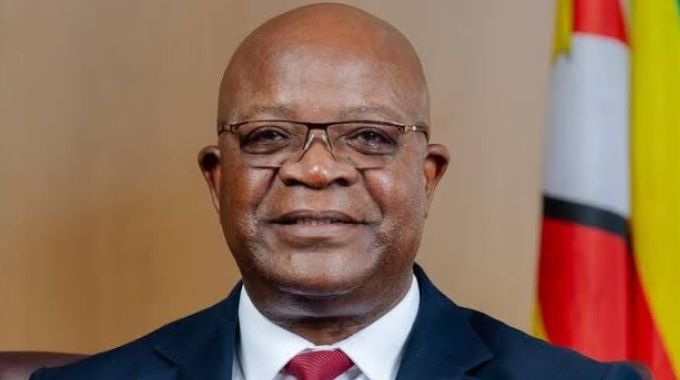
Speaking on the State of the Media and Advertising in Zimbabwe at the 2025 Bulawayo Marketers Business Review Conference on Friday, ZMC executive secretary Mr Godwin Phiri emphasised the urgent need for media outlets to adapt to the changing dynamics of the industry.
“Traditional media has to adapt in order to regain its prominence in the advertising market. This means new business models away from dinosaur plans. Advertisers also need to rethink how they can access markets (traditional thinking will not work anymore),” he said.
“We need to rewire how we view markets, products and audiences. Audiences cannot be taken for granted anymore, in a global world, audiences know so much more, they are exposed to so much more, they know trash when they see it and they know quality when they see it.”
He said over the years, the sector has broadened with 14 community radio stations and six campus radio stations having been licensed.
Mr Phiri said this was in addition to the transformative changes that took place between 2011 and 2018.
“These include licensing two national commercial radio stations (Star FM and ZiFM), eight metro commercial radio stations and seven free-to-air television stations (3K TV, ZTN, NRTV, Kumba TV, Ke Yona TV and Channel D),” he added.
“The print media in Zimbabwe has 11, Government has interest in and 15 privately owned newspapers and several online newspapers, some registered and others not.”
He said of the 26 above, 17 are published in Harare, five in Bulawayo, two in Masvingo, one in Kwekwe and one in Mutare.
Mr Phiri said of the total number of community publications in Zimbabwe, only 54 are registered and owned by 23 companies.
“These operate across the country in all 10 provinces. Most of them operate from provincial capitals and urban areas such as Harare, Masvingo, Gweru, Mutare, Bindura, Chinhoyı, Bulawayo, Kariba Victoria Falls and Zvishavane. Of the 55 community newspapers above, 15 have stopped publishing because of viability challenges,” he said.
He said most of the new television stations are struggling to generate revenues to sustain operations.
Mr Phiri said television stations were struggling and that was primarily because the country has not been able to roll out digital terrestrial transmission.
“Apart from ZBC, the other new stations have to ride on platforms like Multichoice, which people have to pay DSTV. So, the majority of people are not able to access those television stations.”
He said the growth of digital platforms has also created challenges for traditional media while presenting opportunities for advertisers to explore other platforms for advertising. “Influencers for instance are a growing platform for advertisers and they present many advantages such as lower cost of doing business.
All they need is a smart phone and data to post on social media.
“On the other hand traditional media houses are saddled with licensing fees, cost of procuring and maintaining equipment, rentals and labour costs among others,” he said.
Mr Phiri said content creators can demonstrate the rich of their content while traditional media cannot, which has resulted in a reduction in advertising budgets hard hitting traditional media.
He likened that to the cake getting smaller but the “diners” increasing in number.
“Audience consumption habits are changing with growing preference for content on demand as opposed to scheduled content, while there is dwindling newspaper print runs and fixation with advertising in the hard copy and not online,” added Mr Phiri.
The conference was hosted by the Marketers Association of Zimbabwe (MAZ), a membership driven body whose major mandate is to uplift the marketing profession.