Online Reporter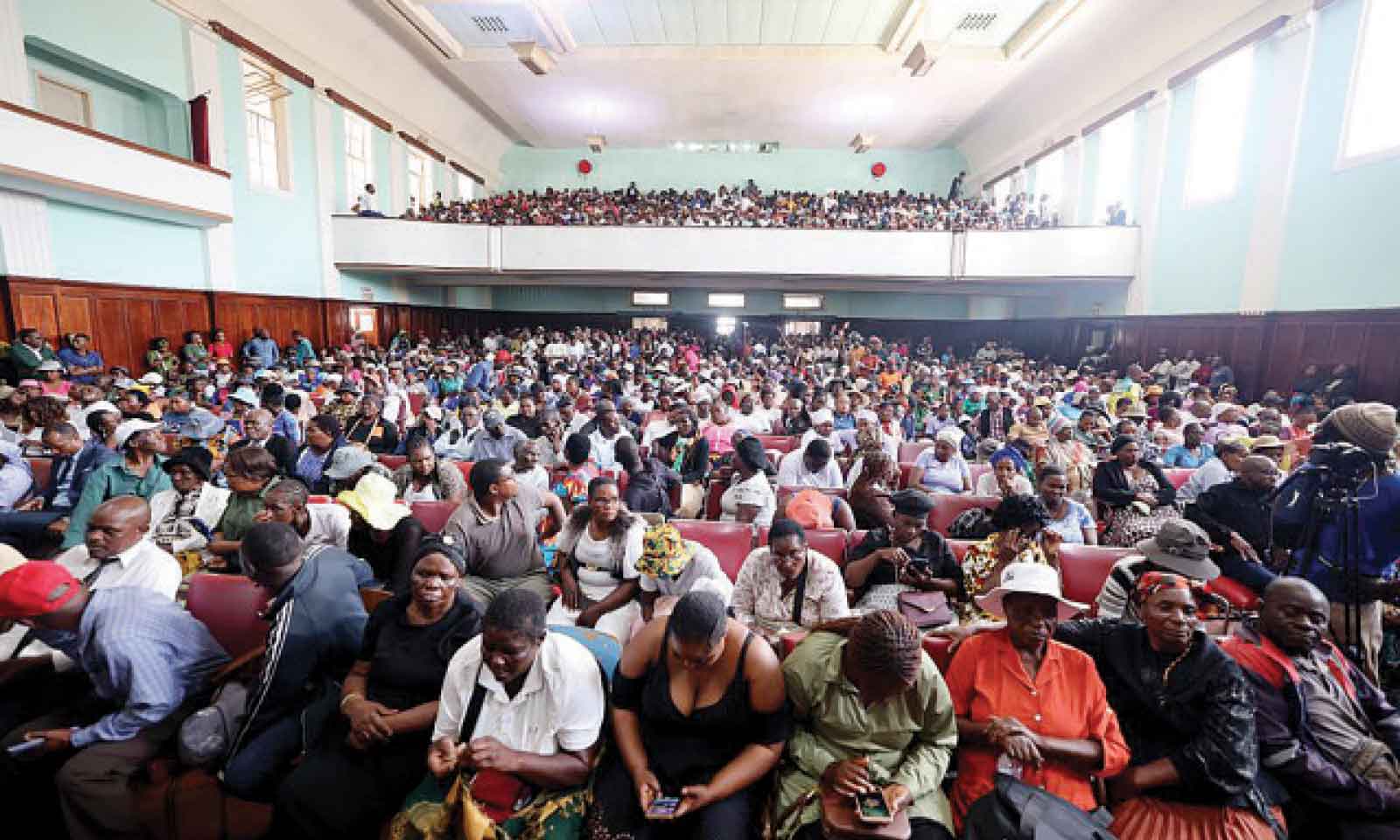
Gibson Mhaka/Raymond Jaravaza
Zimpapers Writers
PUBLIC hearings on the proposed Constitution of Zimbabwe Amendment (No. 3) Bill drew hundreds of people across the Matabeleland region, where the majority voiced support for the changes.
The hearings in Bulawayo, Tsholotsho in Matabeleland North and Esigodini and Filabusi in Matabeleland South drew participants from across the spectrum, reflecting growing public interest in the proposed constitutional changes.
The gatherings are part of a nationwide consultative process aimed at gathering citizens’ views on the proposed constitutional amendments.
It was not business unusual in Bulawayo for multitudes of vendors who operate along the busy Fifth Street selling second-hand clothes, blankets, groceries, among other wares, who temporarily left their vending bays to attend the public hearings.
On a normal day, Fifth Street becomes a hive of activity as early as 7 AM with vendors setting up their merchandise on vending bays, selling all sorts of wares and business is conducted until late into the evenings.
Yesterday, the area resembled a mini ghost town as virtually all the vendors left their bays and headed for the Large City Hall to make their views on the proposed changes heard.
A majority of the vendors only returned to their business stations later in the day when proceedings at the Large City Hall came to an end.
Mr Hope Sendamai from Entumbane said he supported Clause 3, which proposes that the President be elected by Parliament through a joint sitting of the Senate and the National Assembly.
“I fully support Constitutional Amendment Bill No. 3. The extension allows the current Government time to work on long-term projects. The leader will have more time to complete what he or she has started,” he said.
Residents said continuity in leadership was critical for national development, noting that frequent changes in administration often disrupt long-term programmes and delay service delivery.
Others expressed confidence that giving leaders adequate time in office would enable them to fully implement their development agenda, particularly in sectors such as infrastructure, health and education, which require sustained planning and execution.
Members of the public largely supported various clauses contained in the Bill, citing the need for efficiency in governance, policy continuity and institutional strengthening.
“The public hearings will decide the direction that our country will take going forward. So, as vendors, we decided that it was worth attending the event even if it meant losing business for at least half a day.
“Our leaders here along Fifth Street encouraged us to attend the public hearings and make our voices heard,” said Mrs Priscilla Mlilo.
Mr Mayibongwe Ncube of Luveve supported Clause 15, which proposes simplifying the judicial appointment process by allowing the President to appoint judges in consultation with the Judicial Service Commission.
He said the amendment would ensure the appointment of competent and experienced legal practitioners.
“This will streamline the process while maintaining professionalism and accountability. It will help ensure that only individuals with integrity, experience and proven legal expertise are appointed to the bench, strengthening public confidence in the judiciary,” said Mr Ncube.
At the Nketa Hall, scores of residents started trickling into the venue of the public hearings as early as 8 AM.
By mid-morning, the venue was filled, forcing some residents to follow proceedings through windows and several doors of the huge structure.
Some even sat outside as there was no space for them in the hall, but they did not lose hope of making their voices heard when the public hearings started. Mrs Simiso Dube stood up in the packed hall to express her wishes on why the bill must stand.
“We have all seen the good work that President Mnangagwa is doing, and I humbly submit that he must be afforded another two years to complete all the projects that he started,” said Mrs Dube.
Twenty-two-year-old Mr Godknows Makucheti, a Nketa suburb youth, said he fully supports the Constitution of Zimbabwe (Amendment No. 3) Bill, 2026, as young people stand to benefit from it.
“Five-year presidential terms are too short for any Head of State to bring meaningful change that will benefit the youth. We are suffering from drug abuse and limited business opportunities.
“So I think that the bill will benefit the youth as the President will have more time to implement policies that will turn around our lives,” said Mr Makucheti.
Mr Thando Shambira of Burnside suburb also backed Clause 3, arguing that Parliament already embodies the will of the people.
“Universal suffrage is exercised when we elect parliamentarians. These representatives act on our behalf and therefore, when they elect the President, they are expressing the will of the people,” he said.
Residents said the model was not new, noting that countries such as South Africa and Botswana, as well as a majority of Commonwealth nations, use similar systems with success.
On the issue of voter registration, Mrs Priscilla Tendai Mashave of Mahatshula North supported Clause 2, which seeks to transfer the responsibility from the Zimbabwe Electoral Commission (ZEC) back to the Registrar-General’s Office.
She said consolidating voter registration under one institution would enhance accuracy and efficiency.
“This is a good move because the Registrar-General already manages national identity records. They have information on who is being born and who is dying.
“It ensures that once someone turns 18, they are seamlessly added to the roll, while those who have passed on are removed promptly. This leaves ZEC to focus solely on conducting elections,” she said.
Mr Livingstone Chikuni also supported the Bill, particularly Clause 4, which proposes extending the presidential term from five to seven years.
“Building a nation takes time. A seven-year term allows leaders to fully implement development programmes without disruptions caused by frequent election cycles,” he said.
Others said longer terms would reduce policy inconsistencies and allow the Government to focus more on delivering results rather than campaigning.
“Major infrastructure and economic projects require continuity. Extending the term will ensure policies are seen through to completion, bringing tangible benefits to communities,” said another resident.
However, disability rights activist Mr Tsepang Mike Nare raised concerns over accessibility at the venues, saying the set-up did not adequately cater for people with disabilities.
“The set-up did not allow people with disabilities to fully participate and express their views,” he said, calling for more inclusive arrangements in future hearings.
Pelandaba-Tshabalala legislator, Cde Joseph Tshuma, led the Parliamentary team in Tsholotsho and commended the impressive turnout and smooth proceedings. He said his team will be proceeding to Hwange today.
Similar proceedings went smoothly in the Midlands Province at the Gokwe Community Hall and Kwekwe Theatre, while the Nembudziya Council Offices in Gokwe will host the hearings today.
The same hearings will be held today in Bulilima and Mangwe Districts, at the Nyele Community Hall and Sanzukwi Community Hall, respectively. In Matabeleland North, public hearings will take place today in Hwange Town at Adamant Hall and in Bubi at Tatazela Hall.



 Bongani Ndlovu