


 Online Reporter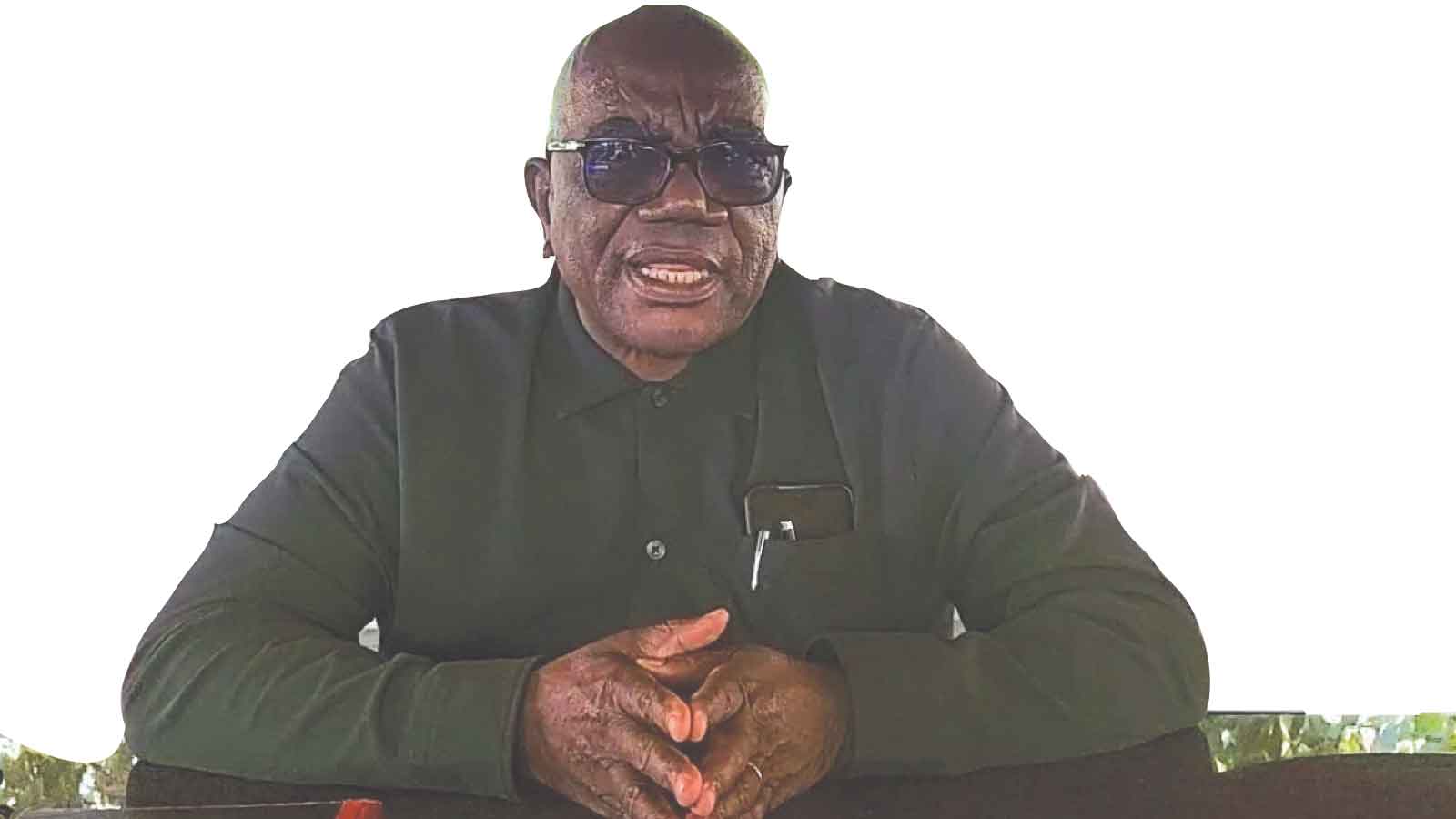
In his first instalment last week, Lieutenant-General (Retired) MICHAEL NYAMBUYA, whose Chimurenga name was Mike Mutare, recounted how he was part of 16 learners from Hartzell High School (then known as Old Mutare High School) who were moved by the assassination of ZANU chairperson Cde Herbert Chitepo to abandon their studies and travel to Mozambique to join the liberation struggle. The distinguished politician, military officer and liberation war fighter continues his chronicles by telling our Society Editor PRINCE MUSHAWEVATO how they evaded the search by their headmaster and the Rhodesian Special Branch, who frantically pursued them into Mozambique.
***************
Q: In our discussion, you told us how Mozambican authorities informed you that a delegation from Zimbabwe, then Rhodesia, was searching for you after crossing the border. Can you pick it up from there?
A: After we learnt of the presence of our Hartzell High School headmaster, Dangarembga, and the Rhodesian Special Branch in Vila Manica, we automatically knew we were no longer safe and had to vacate the area.
That night, we were smuggled out of Vila Manica and went to Chimoio, this time entering a FRELIMO camp.
Again, the following day, we were told that someone had sold us out and that the Rhodesians knew we were in Chimoio.
Dangarembga came looking for us once more. This time, the Mozambicans decided to take us very far away.
They took us to Tete the following day and housed us at a place called Bataliao.
This was a FRELIMO camp in Tete along the river frontage, where there were lots of mosquitoes that bit us.
Q: What happened while you were still there?
A: While we were there, the late Cde Josiah Tongogara arrived, having escaped from the Zambian police who wanted to arrest him, accusing him of killing Cde Chitepo.
He tried to explain to them that it was the work of the Rhodesians, but they would have none of it. Anyway, we stayed at Bataliao, in Tete, for about two to three weeks.
We met Cde Tongogara.
He told the Mozambicans that we were the leaders of tomorrow because it was not normal for people to go and join the war without being recruited.
The normal modus operandi was for people to be recruited by comrades.
So, we were the first group to go there on our own accord, going voluntarily.
However, this raised a lot of suspicion and we were interrogated continuously and incessantly on suspicion that we had been sent by the Rhodesians.
Anyway, after Bataliao, we were taken to Tembwe and there we actually created the first Zimbabwe African National Liberation Army (ZANLA) camp. We were joined by some other comrades who had come from Zambia.
Q: Can you tell us what happened at Tembwe after creating the ZANLA camp?
A: Mostly, one of the people I remember who was involved in our training was the late John Chimbande. He was very good at orientation.
We were trained at Tembwe.
After about four months of training, I was appointed as base security officer and then later on as base commander of Tembwe Base 2, which was the base that housed trained personnel.
In January — by which time the Zimbabwe People’s Army (ZIPA) had been formed to try and resuscitate the armed struggle — I was taken to Chimoio, where we established Mapinduzi Military Base.
I was appointed base commander of Mapinduzi and we started training other comrades.
By this time, there was an avalanche of people leaving Rhodesia to come and join the armed struggle, so we trained many recruits at Mapinduzi. Some of the people I trained included Cdes Matemachani, Twaraitipone, Tino and many others. In June or July of 1976, I think, I was deployed to the front for the first time. I went to the Tangwena Sector with the late Cde Pascal Ndarega.
There was also the late (Morrison) Nyathi, who later sold us out.
Initially, I was appointed detachment commander of Hwedza and later of Svosve.
Q: What happened next?
A: I remember very well that Nyathi later deserted us and went to join the Rhodesians. He is the one who led the Rhodesians to massacre innocent refugees at Nyadzonya; his full name was Morrison Nyathi.
I fought at the front and my first combat experience was around August/September.
I think it was around September when we were attacked at what became known as the Battle of Hwahwazira. Hwahwazira is a mountain next to Honde Mission, and that battle lasted from 6 o’clock in the morning up to 6 o’clock in the evening — from six to six.
The Rhodesians were using Ruda Camp, which was very close by, so they could easily refuel their helicopters and bring in jets.
For anyone skilled in map reading, Hwahwazira is a very prominent feature in the Honde Valley, making it very easy to direct jets and other aircraft onto their targets.
We suffered some casualties because we had reinforcements that had come from Mozambique, but we also inflicted damage on the Rhodesians.
A helicopter was shot down and we targeted ground troops.
According to our count, we killed at least 15 enemy soldiers at that site.
That was our first encounter.
Following that, we advanced and opened up the Chiduku, Hwedza, Svosve, Charter (now Chikomba), Mhondoro and Chihota detachments. Those are the detachments I actually managed to help open.
By that time, I had been promoted to sectoral medical officer.
Q: You can carry on.
A: One of the most spectacular operations we did was at a place called Chisasiki, where we ambushed Rhodesian soldiers who were escorting district assistants (DAs).
We assaulted them using an array of weapons, including bazookas and mortars.
One of their vehicles was burnt in the ambush area. I remember we assaulted them and captured two FN rifles and a 303 rifle, which we sent to Mozambique as evidence that we had succeeded in inflicting heavy damage on the enemy.
We were also involved in the Battle of Choto. If you go to Choto village in Hwedza, people will tell you about it; that is where we were sold out.
This time, enemy jets came in numbers to the extent that we were surrounded.
We fought our way out and shot down one jet. That battle became widely known as the Battle of Choto.
Some people started calling me Mdhara Two Jets at the time because they thought we had downed two, though in reality we had downed one. Those were some of the battles we fought.
Lt-Gen (Retd) Michael Nyambuya will next week continue his narration, highlighting why the masses were a vital cog in the quest for independence.


 Bongani Ndlovu