

 admin
admin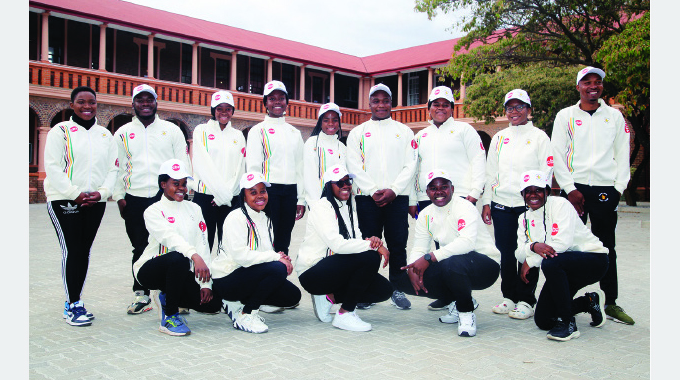
Ranga Mataire Writing Back
SOMETHING wonderful is happening in Zimbabwe. Despite the yoke of over two decades of economic sanctions, Zimbabwean nationals continue to raise the country’s flag high by excelling at the international stage.
Not so long ago we had Major Winnet Zharare receiving the 2021 United Nations Military Gender Advocate of the Year Award after completing her assignment with the UN Mission in South Sudan.
Major Zharare became the first Zimbabwean peacekeeper to receive such prestigious award. Born into a family of five girls and two boys in Mhondoro, Major Zharare was raised with the same expectation of opportunities as her siblings regardless of gender.
This motivated her to become a fierce advocate for others to enjoy the same right. In 2006, she joined the Zimbabwe Defence Forces as a Second Lieutenant, determined to boost the participation of women in the predominantly male-dominated military sector.
The same aspiration inspired her to seize the opportunity to join UN Peacekeeping Mission in 2020.
Today, her efforts for her outstanding efforts to integrate gender perspectives into peacekeeping have been recognised with the prestigious United Nations Military Gender Advocate of the Year Award making Zimbabwe proud.
UN Secretary-General Antonio Guterres commended Major Zharare for her award saying: “Major Zharare is a role model and trailblazer. Through her service, she has demonstrated the invaluable role that women play in building trust, advocating for change and forging peace.”
Major Zharare’s feat of being recognised among many is something worthy of celebration. Something really good and inspiring is happening in Zimbabwe.
Barely weeks after Major Zharare had raised the national flag high, we had a group of Zimbabwean students making their own piece of history by being crowned World Champions at the 2022 International High School Moot Court Competition.
The competition is for high school learners and is aimed at encouraging an engagement with international (criminal) law. The competition is open to learners from all countries and is hosted in The Hague, Netherlands. Zimbabwe was the only country representing Africa in the event with a team of nine girls and two boys.
The students were selected from different schools around the country. This was the first time that Zimbabwe competed in the prestigious competition. The team’s coach was Nqobile Dube and some of the team members were Palesa Sigauke, Kuziva Khuleya, Hazel Chiige, Tadiwa Choto and Chiyevo Mukonoweshuro.
President Mnangagwa who donated US$30 000 to the team before it left for the Netherlands, said the team had done the country proud.
“Another victory for the pride of Zimbabwe. Another victory for the pride of Zimbabwe. These are the faces of the champions of the 2022 European Moot Court. The first African country to compete and the first to win,” said President Mnangagwa.
Who would have ever thought that a small landlocked country in southern Africa would be crowned champions at an international competition?
Zimbabwe is a highly-favoured country and surely something right is happening in the education sector where nationals continue to soar high in various fields.
And still in education, Tynwald High School in Harare qualified in a global robotics competition at the Pan Africa Competition in Dakar, Senegal. The final is slated to Switzerland in October this year. The robotics competition provides an opportunity for science and artificial intelligence students to showcase their skills and innovation.
Head of Tynwald High School, Mr Kennias Matimba said the school had invested in artificial intelligence and science in line with the 5.0 education system introduced by the Government.
“We believe the future of any nation depends on science,” said Mr Matimba.
While Zimbabwean education products are highly sought after world-wide, it is also true to say that President Mnangagwa’s new education thrust is bearing fruit.
It is known that science, technology and engineering play an important role in the development of a nation and forms the backbone of industry in developing economies.
Through the Ministry of Higher and Tertiary Education, Science and Technology, the country is making significant strides in adopting Education 5.0 model which seeks to replace the less effective Education 3.0 model.
The 3.0 model is made up of three core areas, teaching, research and outreach and was inherited from a colonial system which was structured to produce a pool of labourers to service the settler economy.
In contrast, the new Education 5.0 model ensures production of goods and services, and has added two more areas of focus; innovation and industrialisation to teaching, research and outreach. So all the naysayers who are quick to label Zimbabwe as stagnant must be cautioned to consult history and draw something from the Asian experience.
Besides the remodelling of the education sector, Zimbabwe is more endowed with natural resources than many countries and has the capability to grow and become even more prosperous as envisaged in Vision 2030.
Economic history informs us that the performance of nations is cyclical. While initially being underdeveloped, Singapore and Hong Kong rose to be far ahead of Britain, its colonial master. Singapore was second on a list of 20 nations with Britain on the 17th.
The reasons for citing the above example are to show that the mantra that Africa has no future is wrong. There are abundant reasons for believing in the African renaissance.
The reason for this hope is rooted in the understanding that the continent is taking its destiny in its hands shattering the old stereotypes peddled as evidenced by Zimbabwe’s recent exploits on the international stage.
We must never get tired of writing our own stories. The stories must act as springboards to inspire future generations. Zimbabweans must think about what they can do for themselves and not rely on the benevolence of foreigners.
In the words of David Abdulai, “We must be committed to creating a better future for the next generations. No one is going to do it for us. If Africa is to realise its renaissance, frankly it is totally and entirely up to us.”


 Online Reporter