peter
peter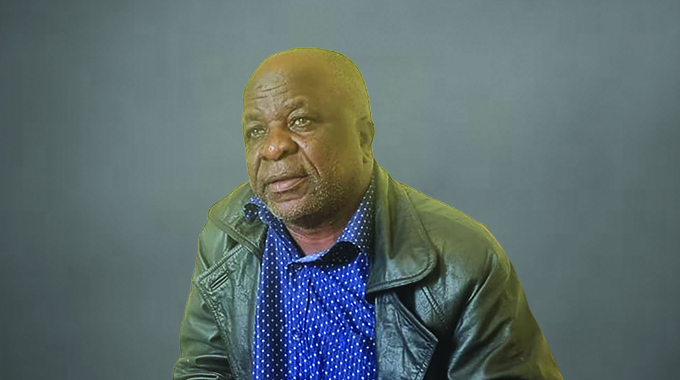
THE five-day battle between ZPRA’s First Battalion commanded by now Major-General (Retired) Stanford Khumalo pseudonym Cde Madliwa and the Rhodesian forces near Kariba, but across the Zambezi River in Zambia is arguably one of the fiercest contacts during Zimbabwe’s armed struggle.
One of the combatants who saw action during that battle is the now newly elected Councillor for Ward 23 under the ruling Zanu-PF ticket in Bubi District, Matabeleland North Province, Cde Miller Mlilo pseudonym Cde Masotsha Nkiwane. Cde Mlilo was not an ordinary combatant in the First Battalion as he held a critical rank, that of Battalion Medical Officer. It meant that he was responsible for taking care of the injured and had to make critical decisions during a tense situation against a tricky foe.
In an interview with our Assistant Editor Mkhululi Sibanda (MS) on Thursday, Cde Mlilo, now a resettled farmer in Bubi, says he is proud to have been part of the First Battalion as he believes if there was a time when the Rhodesians were taught a lesson in battle it was during those five days of October 1979. He says they stunned the Rhodesians not only during the battle, but even during the build-up towards those five epic days. He says the fact that ZPRA guerillas were able to deploy without detection including digging trenches and setting up communication equipment was a clincher. Even the Rhodesians in their assessment of the battle agree with Cde Mlilo’s view.
In his book, Winds of Destruction, former Rhodesian combat pilot, Peter JH Petter Bowyer said of that famous battle: “Yet, even though the Rhodesians were outgunned and could not move forward, ZPRA preferred to remain in their defensive position, fearing to expose themselves to the jet-strikes we could not have made so close to our forces. Attempts to outflank enemy gun positions on the eastern ridge resulted in a number of RLI (Rhodesia Light Infantry) soldiers being wounded.
On the western ridge, an RLI trooper had been killed. Hunters limited to 30mm cannons and 68mm mortar rockets, were employed on numerous occasions, but no strike was really successful. Zipra simply dived under cover when a Hunter turned in, accepted the explosions above them and immediately emerged to continue firing at anything that moved. The Rhodesians were at a distinct disadvantage. They were exposed and only had light infantry weapons, whereas Zipra were dug in with vastly superior weapons.”
SAS biographer Barbara Cole posited: “It was the first time in Zambia that (ZPRA) terrorists were determined to hold their position against an equally determined attack. They were well disciplined, knew how to use their weapons and were fairly happy about their defence.” She added: “The enemy had undoubtedly won that round.” Below Cde Mlilo opens up with his account of the armed struggle and today he narrates how he joined the armed struggle.
MS: Councillor Mlilo let’s start by you telling us about your background.
Cde Mlilo: I was born on 19 January 1957 in the Gwelutshena area of Nkayi District, Matabeleland North Province at an area called Gampinga. For my education I went to the local school, Gampinga after which I came to Bulawayo. After school I got a job at Monarch where I was employed in the department that was manufacturing belts. It was during my working stint at Monarch that I came across racism. The white bosses were very harsh against black employees. While working at Monarch I became active in the Zapu Youth League with comrades such as Gwizi, Baron and so on. As a result of my political activism as a youth that is when I felt the need to leave Rhodesia and cross the border to Zambia via Botswana to join the armed struggle.
MS: Take us through your journey to Botswana. How did you get there?
Cde Mlilo: While working at Monarch there was a guy called Themba Ndlovu. We then planned our journey with Themba on how we were to travel to Botswana. Other guys also came on board and we ended up being a crew of six. Some of the guys were not working at Monarch but we knew each other as youths. In fact, some of the people whom we were active together in the Zapu Youth League had already left the country to join the armed struggle. Then came a Friday that was early 1977. During those days buses plying the rural routes would leave the city in the evening to cater for those who would have knocked off at work for the weekend. So we went to the Renkini Long-Distance Bus Terminus, which is close to Monarch. We boarded a Pelandaba Bus Service that was plying the Bulawayo-Kezi route. We were confident of beating the roadblocks because we had some form of identification that showed that we were employed by Monarch. The problem that we were going to encounter like myself was the fact that my ID card showed that I came from Nkayi. However, Lady Luck was with us as we did not encounter any roadblock until we reached the final destination of the bus, lapho ibhasi eyayicina khona.
MS: Then after disembarking from the bus, what was your next move?
Cde Mlilo: After being shown the direction towards Shashe River, which separates Zimbabwe and Botswana by the bus crew we moved on. It was deep into the night. We walked and when we got to Shashe River we removed our tops as we had been told that the Rhodesian security forces usually waylaid those who were going to join the armed struggle at the river. However, we managed to cross without any incident. When we were on the Botswana side we spit on the ground and said “goodbye Rhodesia, we are going to bring Zimbabwe soon”. We then continued walking till day break and from there we were following some paths which were made by cattle. Finally we arrived at some homesteads and by that time it was in the afternoon. We were nicely welcomed by the Botswana people who took us to the local traditional leadership. It was from there that transport was organised to take us to Selibe-Phikwe.
MS: How did you find the situation in Selibe-Phikwe?
Cde Mlilo: Kwakusesabeka, umuntu owayelapho. There were too many people. We were taken to the local prison where tents were pitched. We were being given food by the Tswanas there. However, I was chosen to be part of the logistics team that would collect money from other recruits in the event that we wanted to buy food from outside the prison.
MS: How long were you at Selibe-Phikwe?
Cde Mlilo: We were there for around three months. We were then flown to Zambia in a group of between 60 and 70 recruits. We arrived at Lusaka International Airport in the afternoon, but we were kept there until in the evening by trained ZPRA comrades. Zapu trucks then picked us and we were driven to Nampundwe Transit Camp where we arrived at night. The ZPRA security details avoided delivering recruits to Nampundwe during the day. So they would delay at the airport until dusk and then drive there so that one could not tell how he got to the camp. So we got to Nampundwe at night and we were shown where to sleep which was just egangeni nje (just a bush). That’s when it dawned on us that the situation had changed. As new recruits we were told that the following day we would go and meet the Zapu President, Dr Joshua Mqabuko Nkomo.
•To be continued next week


 Online Reporter