

 Online Reporter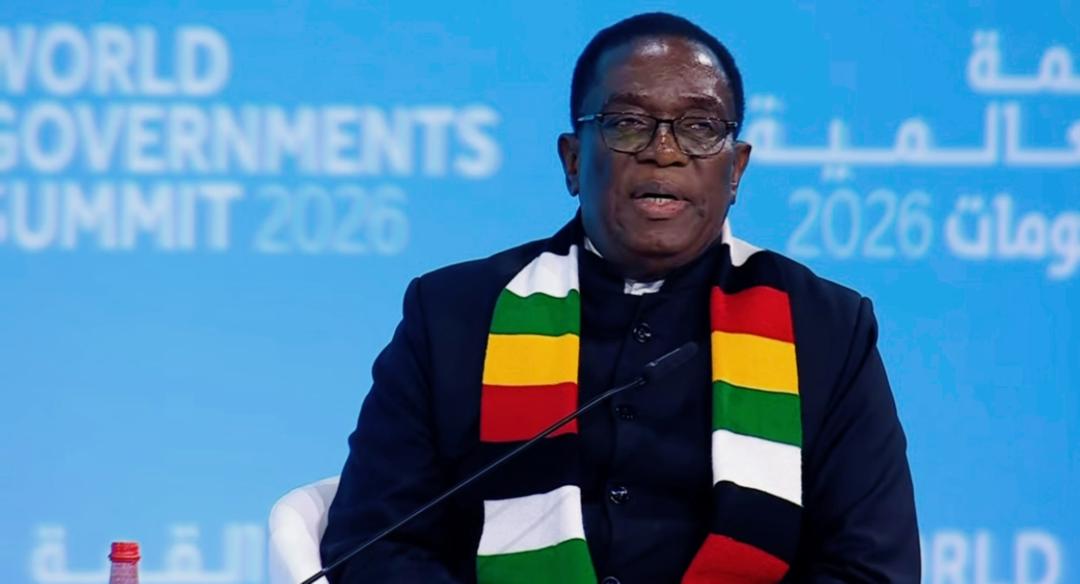
Elias Mambo
Zimpapers Group Editorial Executive
PRESIDENT Mnangagwa’s declaration that Zimbabwe must “please ourselves” rather than the West or East captures both a historic assertion of national autonomy and a deliberate foreign policy reorientation that aims to balance Zimbabwe’s external engagements around sovereignty, self determination and economic self-interest.
Made during his high-profile address at the World Government Summit in Dubai this week, President Mnangagwa’s remark carries resonance well beyond Harare it epitomises a worldview that rejects subservience to traditional power blocs and asserts a more self-centric, multipolar approach to international relations.
Contextualising the Statement
President Mnangagwa’s comment comes at a time when Zimbabwe and other African nations are rethinking their diplomatic positioning after decades of colonial legacies, structural adjustment programmes, and geopolitical competition between global powers.
He argued that Zimbabwe’s foreign engagements be they with Western nations or Eastern partners like China should be judged by their outcomes for Zimbabweans rather than the political narratives of external actors.
“What is primarily important is what we ourselves as Zimbabweans are satisfied with,” he said, insisting that the country’s sovereign choices must be made independently of great-power pressures.
This sentiment resonates with a broader African desire for agency in an international environment where geopolitical rivalry (especially between the United States, Europe, China and Russia) has often pressured African states to choose sides, sometimes at the expense of local priorities.
In stating that Zimbabwe must “please ourselves,” President Mnangagwa underscores a core philosophy of African sovereignty a rejection of external dictates and a commitment to pursue policies that directly benefit Zimbabweans.
This assertion is not merely rhetorical; it reinforces Zimbabwe’s historical experience with colonialism, sanctions, and the redistribution of land as acts of self-assertion.
Defining Zimbabwe’s Foreign Policy Philosophy
Underlying President Mnangagwa’s statement is the guiding foreign policy principle that “Zimbabwe is a friend to all and an enemy to none.”
This approach has been formally embedded within the country’s diplomatic doctrine — reaffirmed in speeches and Government policy documents — which positions Zimbabwe as an independent, sovereign state that engages globally without being beholden to any single bloc or ideology.
This philosophy comprises several core precepts:
1. Sovereignty and Non-alignment: At its heart, Zimbabwe’s foreign policy prioritises sovereign decision-making and non-alignment. The principle “friend to all and enemy to none” reflects an intention to maintain cordial relations with all nations without tying Zimbabwe to exclusive military, political or economic blocs.
This echoes the Non-Aligned Movement’s ethos that emerged during the Cold War, but in the 21st century it has adapted to a multipolar world, where influence comes through trade, investment and diplomatic cooperation rather than strict ideological camps.
2. Economic Diplomacy: Economic engagement not political patronage as become central to Zimbabwe’s foreign policy.
The Government seeks to attract investment, infrastructure partnerships, and trade, while managing foreign relations in ways that serve domestic development objectives. Zimbabwe’s “open for business” posture, repeatedly articulated in President Mnangagwa’s addresses, balances economic cooperation with the imperative of retaining control over national resources and laws.
3. Respect for Mutual Benefit: The foreign relations doctrine emphasises mutual respect, mutual benefit and mutual responsibility principles intended to frame diplomacy not as a zero-sum game, but as cooperation that supports all parties without domination or exploitation.
This is linked to Zimbabwe’s constitutional guarantee of sovereignty and territorial integrity, a core pillar of international law and Statecraft.
President Mnangagwa’s statement and diplomatic philosophy contribute to a broader African movement for reinvented sovereignty in the 21st century.
Across the continent, leaders increasingly call for an Africa that is self-determining, economically integrated and free from external coercion.
Whether through the African Continental Free Trade Area (AfCFTA), efforts to resolve regional conflicts autonomously, or pushes for technological and industrial independence, African states are shaping a new sovereignty narrative grounded in collective agency rather than dependency.
Zimbabwe’s assertive rhetoric about pleasing itself rather than external powers mirrors this continental zeitgeist.
It symbolises an aspiration not to be beholden to Western conditionalities or Eastern geostrategic imperatives, but to define success on African terms.
It aligns with movements in Africa that champion not just political independence, but economic sovereignty, cultural self-determination and diplomatic equilibrium.
President Mnangagwa’s declaration that Zimbabwe will “please ourselves” and not bow to Western or Eastern pressures is emblematic of his administration’s foreign policy philosophy — one rooted in sovereign autonomy, economic diplomacy and non-alignment.
Coupled with his doctrine that Zimbabwe remains a friend to all and an enemy to none, this posture projects an Africa-oriented assertion of self-interest within a dynamic global environment.
While this stance undeniably reframes Zimbabwe’s — and by extension Africa’s — engagement with the world.
In an era of intensifying global competition, the insistence on self-determination upends old paradigms of dependency, offering a vision of diplomacy that privileges indigenous priorities, African leadership and the dignity of sovereign choice



