Chronicle Editor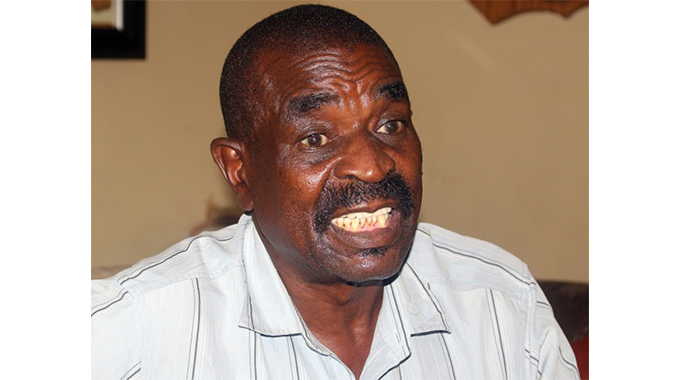
OUR stories on the deployment of battalions by ZPRA late in 1979 as stated in our last instalment have generated a lot of interest with several people coming up with different opinions. While some marvelled at what they called a “brilliant piece of history”, there were others who felt that a guerilla outfit such as ZPRA couldn’t have been so daring to engage the Rhodesians in an open duel when the First Battalion commanded by now Major-General (Rtd) Stanford Khumalo aka Cde Madliwa was attacked near Kariba, but across the Zambezi River in Zambia towards the end of 1979. Not to be left out is former ZPRA commander for the Northern Front One (NF1), Colonel (Rtd) Waison Tshipa pseudonym Cde John Nyamupingidza. NF1 was a ZPRA operational area that covered Bulilima District in Matabeleland South Province and Hwange, Tsholotsho and to a certain extent Umguza in Matabeleland North.
On Thursday last week, Col (Rtd) Tshipa spoke to our Assistant Editor Mkhululi Sibanda (MS) from his Hwange base and said he wanted to put things into perspective about the deployment and change of operational strategies by ZPRA. Col (Rtd) Tshipa said it was unfortunate that the long-held view that ZPRA had only deployed four battalions along the Zambezi River with the Madliwa one being the only one coming under attack was not correct. He said in fact, ZPRA managed to infiltrate a whole battalion into then Rhodesia under the command of now late Colonel (Rtd) Smile Madubeko Moyo pseudonym Cde Middle. Col (Rtd) Moyo, father to prominent journalist Phathisani Moyo and elder brother to former Speaker of Parliament Lovemore Moyo moved with his battalion from Mlungushi in Zambia to Tsholotsho District in August 1979 without being detected by the enemy forces and settled in the Butabubili area, narrated Col (Rtd) Tshipa. Below Col (Rtd) Tshipa gives his narration of the situation then. Read on…..
MS: You were one of the senior field commanders during the armed struggle. When the battalions were deployed you were already on the ground, so what was the idea?
Col (Rtd) Tshipa: Let me give a background of my career as a guerilla first. I joined the armed struggle in 1973 as a locally trained cadre by comrades like Matshimini (Roger Ncube) in the Livingstone area and areas around Hwange and Victoria Falls before being sent for full military training at Morogoro in Tanzania. After that, I was deployed to Mozambique under the Zimbabwe People’s Army (ZIPA) and we are the ones who opened the now-known Zanla operational area called Gaza. When things didn’t work out in Zipa we moved back to Zambia and then I was deployed in what later on became NF1 with a section of eight guerillas with our regional commander being Matshimini. I operated in Bulilima and Tsholotsho. In 1977 I was recalled to the rear so that I could go for an officer cadet training at Kohima at the Zambia Military Academy. I am talking about this so that people will understand how things were to shape up later on. After completing the 18 months officers cadet course and being commissioned by then Zambian President, KK (Kenneth Kaunda), the ZPRA commander, Nikita Mangena died and Mafela (Lookout Masuku) took over. It was during that time that a ZPRA think tank was set up to review our operations and come up with recommendations on the way forward. It was through that think-tank that the agenda to transform into what it later on became and is known about ZPRA was laid down.

MS: Tell us about that think tank.
Col (Rtd) Tshipa: It was composed of six members and I was part of it. Gen Masuku set it up immediately after some of us emerged from Kohima as commissioned officers. We completed our cadet officers course in September 1978. The think tank was chaired by Mike Reynolds (Brigadier-General Charles Grey) with other members besides myself being Rodwell Nyika (Brigadier-General Collin Moyo), Carlos Mudzingwa, Baberton Mzwambila (Irvine Sibhona), who is now living in the United Kingdom. My memory is failing me on the sixth comrade. However, the secretary to the committee was now Major-General Emmanuel Matatu. Maj-Gen Matatu’s role was to minute the proceedings and come up with write-ups that were presented to Gen Masuku and members of his High Command. Maj-Gen Matatu, myself, Carlos, and Baberton had trained together as cadet officers at Kohima. Without patronizing him, Maj-Gen Matatu wrote impeccable reports that were loved by the High Command. I wonder whether Maj-Gen Matatu is still as bright as he was during the armed struggle. He was our intellectual.

MS: So at the end of the day what did you come up with?
Col (Rtd) Tshipa: You might be aware that ZPRA operational areas were known and divided into regions such as BL1, BL2, and so forth. Our committee which we called the think tank then sat down and divided the country into two fronts, that is the northern and southern. The northern front stretched from Bulilima in Mat South to Guruve in Mash Central while the southern front was between Mangwe and Mutare in Manicaland. We further divided the two fronts into three regions, while the regions were divided into three sectors. We went further and suggested that all senior commanders should have staff officers working in their offices. For example the commander, Gen Masuku got a dedicated Personal Assistant (PA), not an ordinary soldier but someone of high calibre. That applied to all senior commanders such as the Chief of Operations, Chief of Training and so forth. They had to have a fully-fledged secretariat and at the end of the day, our recommendations were adopted. All the subsequent developments were as a result of the works of the six-member think tank, of course with the approval of the commander, Gen Masuku and members of the High Command.
MS: You said Gen Masuku got a dedicated PA, who took that strategic position.
Col (Rtd) Tshipa: It was given to the now late Brigadier-General Todd Mpala. Todd Mpala was also one of the young officers who had gone to Kohima on the basis of their education when they joined the war.
MS: Let’s talk about the deployment of the battalions. Tell us more since you were on the ground.
Col (Rtd) Tshipa: I had been deployed back to the front as the regional commander for NF1, which covered Bulilima, Hwange, Tsholotsho etc. I used to move to all those districts assessing the situation and directing operations as the commander, but I had established my Headquarters in Livingstone Town. You have written about the four battalions that were deployed along the Zambezi River waiting to burst into Rhodesia. Those four were deployed around October 1979, but in my region a battalion under the command of now late Col (Rtd) Smile Madubeko Moyo had long been deployed in August 1979. The battalion with an assortment of military hardware sneaked into Rhodesia undetected. As the regional commander with guerillas operating in my region, the battalion came under my command. When they crossed they did so under my watch. As regional commanders we held the rank equivalent to that of a brigadier, so battalion commanders were under our command as well.
MS: Which part of Tsholotsho did they move to?
Col (Rtd) Tshipa: They moved to an area called Butabubili where they were deployed. They were dug in there and the Rhodesians never made an attempt to attack them.
To be continued next week with Col (Rtd) Tshipa narrating the role played by a haulage truck company, Coley Hall Transport in moving the Col (Rtd) Madubeko battalion to its deployment area. He also speak about how the battalions were to be positioned during the Zero Hour.


 Online Reporter