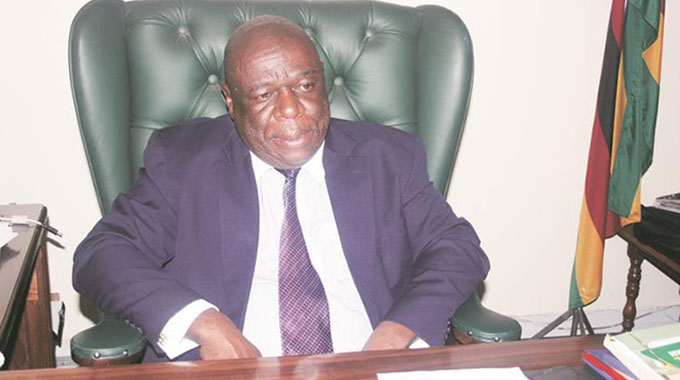
malvernmugadzikwa
Learning from the past can help in understanding the present and divine the future.
There is a reason leaders of newly independent African states agitated and even legislated for one-party states, which were closer to traditional governance models in many jurisdictions on the continent, where chiefs, who governed with a representative council of elders, used to be the sovereign authority in communities.
Some say this time-honoured and time-hewn model was designed to be representative; therefore, efficient and effective in managing community affairs.
So, it was thus not surprising that the idea of a one-party state found favour and resonance in countries such as Malawi, Tanzania, Zambia, Mozambique and not least in our teapot-shaped Republic.

Yes, you heard right.
At one time in the 1980s, we, too, mulled and entertained the idea of establishing a one-party state.
In Malawi, when founding president Kamuzu Banda became president on July 6, 1966, Malawi declared a one-party system.
While Banda believed and admired the governance model of the West, which he argued was best suited to deliver prosperity for Africa, he ironically advocated and adopted a one-party system as handy in realising his agenda.

His allies in the West did not care much about how Banda governed Malawi, as long as he was part of an alliance meant to counter the influence of the USSR-led Eastern bloc during the Cold War.
With the collapse of the USSR in December 1991, which marked the end of the Cold War, the West, however, turned the heat on Banda to adopt multi-party democracy.
In 1993, donors froze US$74 million in aid to Malawi, while the United Kingdom and the World Bank similarly withheld financial assistance and balance of payment support to the Southern African country, whose budget was mainly undergirded by Western aid.
A cornered Banda relented and subsequently amended the constitution to pave the way for multi-party politics on June 29, 1993, which culminated in the May 1994 elections that were won by Bakili Muluzu of the United Democratic Front.
Zambia
It was the same in Zambia, where UNIP president Kenneth Kaunda, who was the country’s founding president, declared a one-party state in 1972, arguing that a multi-party political system could only engender political instability and underdevelopment at a time when the country needed stability and cohesion to move forward.
Incidentally, the creation of the one-party system gave rise to the intensification of the liberation struggle in Zimbabwe, Mozambique, Angola and Namibia, as Lusaka became the hotbed, sanctuary and launchpad of regional revolutionary liberation movements.
As had happened in Malawi, including elsewhere on the continent, the tide turned on this model of governance in the 1990s.
In Zambia, Kaunda was later pressured into agreeing to the country’s first-ever multi-party general election on November 2, 1991, which swept former trade unionist Fredrick Chiluba of the Movement for Multi-party Democracy to power.
Political structure of a totally dissimilar society
But it is not Bishop Lazi’s intention to give you another lecture on history, but to highlight the essence and reasoning behind this governance model, which help to better understand the pitfalls of multi-party democracy, especially when it is misunderstood, as it often is in this part of the world.
Tanzania’s founding president, the erudite Julius Nyerere, was perhaps the most eloquent advocate of a one-party system, who clearly enunciated how it could better serve African communities.
Tanzania became a one-party state when a new constitution came into force on July 10, 1965, a year after Tanganyika, which was under Nyerere’s TANU, and Zanzibar, under the Afro-Shirazi Party, united to form a sovereign republic on April 26, 1964.
Nyerere mainly argued that the peculiarities of African societies and systems made the Western model of multi-party systems ill-suited to local contexts and communities.
“The European and American parties,” he opined, “came into being as the result of existing social and economic divisions — the second party being formed to challenge the monopoly of political power by some aristocratic or capitalist group. Our own parties had a very different origin. They were not formed to challenge any ruling group of our own people; they were formed to challenge the foreigners who ruled over us. They were not, therefore, political parties, for example, factions, but nationalist movements. And from the outset they represented the interests and aspirations of the whole nation.”
He also added that, as there was “no monopoly of political power by any sectional group which could give rise to conflicting parties”, there was, therefore, only one reason for the formation of such parties in a country like Tanzania — “the desire to imitate the political structure of a totally dissimilar society”.
Most importantly, a two-party system and trying to import the idea of a parliamentary opposition into Africa, according to Nyerere, was likely to lead to violence and trivial manoeuvring of “opposing” groups, whose time would be spent in the inflation of artificial differences into some semblance of reality “for the sake of preserving democracy”.
Dear reader, you need to reflect on these wise words in order to interrogate the efficacy of contemporary political systems on the continent.
You see, conflict and rancour are antithetical to development.
The exasperation that comes with chaos led French enlightenment writer and philosopher Voltaire to once remark: “I would rather obey a fine lion, much stronger than myself, than two hundred rats of my own species.”
Jesus, in Matthew 12:25 says: “Every kingdom divided against itself is brought to desolation, and every city or house divided against itself will not stand.”
A pervasion of opposition politics
Here in Zimbabwe, Cde Robert Mugabe, who had pushed for a one-party state, resulting in the adoption of the resolution at the second ZANU PF Congress held in August 1984, had to circumspectly abandon the idea in January 1991, due, in part, to changes that were happening around the world, including Africa, particularly after the collapse of the Soviet Union.
Fast forward to 2024, the multi-party system is now pervasive on the continent — of course, with the exception of parts of the Sahel region, where military regimes currently hold sway in Mali, Burkina Faso and Niger.
But far from enriching our societies, opposition political parties have led to the degeneration of socio-political systems through creating and accentuating divisions as a staircase or ladder to political power.
They always inflate artificial differences and just oppose for the sake of opposing without materially contributing to the country’s development.
Perhaps most regrettable is their belief in the primacy of parochial self-interest over the national interest.
As we prepare to host the 44th SADC Summit of Heads of State and Government next month, which ordinarily should advance the national interest through promoting Brand Zimbabwe, among many other benefits, some elements in the opposition are working tirelessly to throw spanners in the works.
It is not fortuitous that “Wiwa” (Job Sikhala) and Jacob Ngarivhume convened a press conference on July 5 to inexplicably offer themselves to lead Zimbabweans to protest — not sure for what exactly — against the Government.
“If the masses clamour for protests we will only just be the conveyers of the messages that come from the people that the masses have asked us to protest; we are here at your service,” said Ngarivhume.
“We are going to be part and parcel of what you have asked us to do.”
Of course, all this will come to naught, but it betrays the behind-the-scenes scheme to spoil the indaba.
Surely, these outliers represent the pitfalls of the multi-party system.
But there is still hope.
Some in the opposition — not least Douglas Mwonzora, who has been pushing for “rational disputation”; and Welshman Ncube, who has always been advocating “constructive engagement” — are slowly maturing by realising that, as a people, there is more that unites than divides us.
China, which has been able to show the world an alternative political and economic system to development and prosperity, believes in cooperating parties, not opposition political parties.
Even the much-vaunted political systems in the West, particularly in the UK and the United States, are underpinned by political parties that are more ideologically similar than they are dissimilar.
In his book “The New Rulers of the World”, the late journalist and activist, John Pilger — may his enlightened soul rest in eternal peace — claimed that democracy in the West is just a ritual marked by “competition between indistinguishable parties for the management of a single-ideology state”.
And this is key.
It means we have to reinvent opposition politics.
Opposition politics and political parties need not be part of the problem but the solution.
Bishop out!



 Online Reporter