malvernmugadzikwa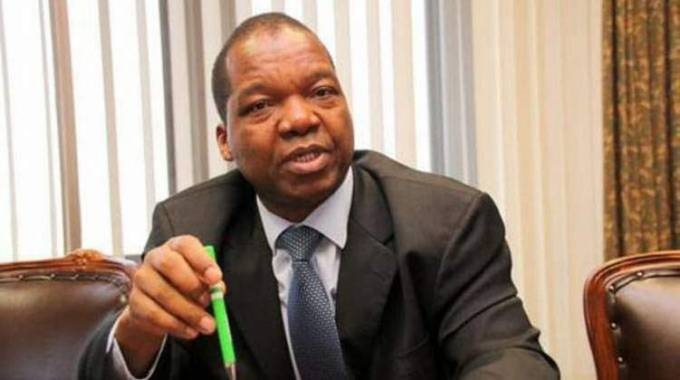
THE Mutapa Investment Fund recently commenced operations following its establishment in September last year. Our reporter DEBRA MATABVU sat down with Mutapa Investment Fund chief executive officer and former Reserve Bank Governor DR JOHN MANGUDYA for a wide-ranging interview on its operations and importance for the future of Zimbabwe
*********************
Q: Please give us an overview of the Mutapa Investment Fund and its significance.
A: In 2014, the Government established the Sovereign Wealth Fund (SWF) of Zimbabwe through an Act of Parliament (Chapter 22-20). From its inception, it was supposed to be funded from the surplus on the balance of payments. Unfortunately, we did not have surpluses on the fiscal side for the SWF.
In September last year, the Government then refined the source of funds. Instead of coming from the balance of payments’ surpluses and surpluses from the fiscus, the Government decided to ensure that the investments under its portfolio, which are called State-owned enterprises, become investments into the SWF.
We are now capitalising the SWF by Government assets, which means the State-owned enterprises. They become assets into the SWF. This fund was thus named Mutapa Investment Fund.
The significance comes from the fact that it is the Sovereign Wealth Fund of Zimbabwe. Mutapa is significant in that it is supposed to be the transformation strategy. It is laying a foundation for the long-term growth of the economy.
Q: What is the vision behind the fund?
A: Our vision is to ensure that future and current generations of Zimbabwe are well catered for in terms of value creation. We are laying a foundation for the growth of the economy. We want to ensure that the State-owned enterprises, which we call here portfolio companies or investee companies, safeguard national assets.
So, when you safeguard assets, it means we need to protect the Zimbabwean assets. After safeguarding the assets, we need to sweat the assets so that they become commercially viable. When they become commercially viable, they become profitable. When they become profitable, that profit is now used for investing now and for the future.
Other countries use minerals. For example, if you go to Botswana, they use the pula fund based on diamonds.
In the case of Zimbabwe, we use ours as an investment-based SWF.
It means the investments become brownfield investments (investments in an existing facility). We make money out of them, we sweat them, we assist them to sweat themselves. So, that way, it means our vision is to secure a successful future for Zimbabweans.
When we work together with our portfolio companies, they raise profit. When you invest, you get more returns. Therefore, it means future generations will know their forefathers were serious about the economy.
In other words, biblically, we are trying to be the Joseph of Zimbabwe to ensure that we look after the country’s assets.
Q: What are your plans to resuscitate struggling entities under the fund?
A: Firstly, we are undertaking a diagnostic assessment to evaluate the needs, the corporate governance structures and the strategies that they have been following . . .
We are very clear on what we want to achieve because if you look at some of the entities that are under Mutapa, they are enablers of the economy.
If you look at electricity, we have ZESA (Zimbabwe Electricity Supply Authority); you look at the National Railways of Zimbabwe (NRZ), we have rail and logistics. These are enablers of the economy.
So, when they function well, the economy also functions well. If you have no electricity, the economy cannot function well. So, we need to look at the diagnostic assessment to gauge where they are now so that we can succeed going forward.
Once we have done the assessment, we can now assist those entities that are struggling.
How do we assist them? We have two ways of operation.
The primary mode of operation is at the portfolio company.
We look at ZESA, we look at the NRZ and what they can do by themselves.
We look at the governance; we assist them at their common level. Then, over and above that, we also have a more operational model at the fund level to see how best we can assist those that need some other support from ourselves.
We always start where the portfolio company ends. So, we will chip into their position or into their operations where they end so that we can study them, what they are doing, improve their corporate governance and look at the board composition.
If we are happy with that, then they can continue. When we are not very happy with the way things are happening, it means we then sit down and help each other.
If you look at most of the companies here at Mutapa, I do not think they are struggling, as people might want to say. I think they are stable.
When I look at the recovery, I am very positive that what we have achieved, what we want to achieve, is to secure a successful future for Zimbabweans.
Q: What were some of the results from the diagnostic assessments you conducted?
A: We are done with the diagnostic assessment. Now, we are in the strategy phase. One of the most important issues found by the diagnostics is that we need to improve our corporate governance. Some of the entities do not have enough board members. We need to put in new boards. Where they are acting as managing directors, we need to understand why they keep on acting.
We need people who are accountable for their actions.
As Mutapa, we want to be accountable to the people of Zimbabwe.
We want to be transparent; showing how the funds are being used for the good of the economy. We need to safeguard our national assets. It means we need to be transparently, showing that these things are done in a manner that is, above all, in the best practice.
Then number two is that we are working on how some of the entities can be improved.
We are asking ourselves: How do we enhance the performance of these entities?
It is not more about profitability; it is about how efficiently they can provide their services and how best they can provide the services to the Zimbabwean people.
So, we have done the assessment and we are now coming up with a number of other measures.
Q: Do you see some of these entities being merged after the diagnostic assessments?
A: I see some consolidations, where necessary. For some, we are going to build clusters around them. If you look at Kuvimba Mining House, for example, they are in a similar space. We have gold mines under Kuvimba. So, when you sit down and look at those, you can come up with types of clusters . . .
Q: How do you envisage ordinary Zimbabweans benefitting from the Mutapa Investment Fund?
A: Ordinary Zimbabweans will benefit from Mutapa in many ways. The first way is that, when these companies become sustainable or profitable, they will reduce the burden on the fiscus. It means the resources that were in the fiscal resources will now be deployed elsewhere by the Government. So, instead of now deploying them to the enterprises of Mutapa, it means we have weaned them off.
So, one of our medium-term strategies is to ensure that these enterprises are weaned from the fiscus.
When they are weaned off, it means we are releasing more money to the Government and more money for social amenities.
The second is increasing production. We need to increase production. As I have said before, one of the reasons we find ourselves where we are today is production and productivity. So, once we become more productive, it means more employment. It means stabilising the economy.
So, Mutapa is a long-term strategy for the Government; a strategy to stabilise the economy in the long term. Why? Because, when funds are there, we build a stabilisation fund. A stabilisation fund is used by the Government of Zimbabwe for stabilising the economy. That is why sovereign wealth funds exist.
When things are not going well, like when prices of commodities are going down, you draw down from the SWF and you close the gap. So, if it was an individual, these are savings for the future.
Q: Which natural resources will be placed under the fund?
A: We have almost 28 entities and these are in just about every sector of the economy. We are in mining and there are minerals like lithium, gold, platinum and coal. There is also agriculture. However, the most important issue is that the country benefits from the resources.
We will also ensure that there is beneficiation of these minerals which are under our portfolio. We need to ensure that the export proceeds come back into the economy and play a significant role in providing foreign currency that secures the economy.
Those natural resources are never consumed locally. Most of them are for export. It means, by so doing, we then work very closely with the relevant departments in pursuit of the long-term objectives of the Government.
Q: How does the Mutapa Investment Fund fit into Vision 2030?
A: Our vision is to secure a successful future for Zimbabwe. It means we are saying we are walking the talk towards Vision 2030 so that we do not leave anyone and any place behind by increasing production in the productive capacity base of this economy.
Vision 2030 is about increasing the GDP (gross domestic product). It is about increasing production and per capita income. We increase per capita income by increasing production, and then when the GDP is divided by the population, this is what we call per capita income.
So, we need to increase per capita income in this country through the efforts, vision, statements and work being done by the Mutapa Investment Fund.
So, yes, the fund will complement the rest of the Government and the rest of industry in terms of the economy in achieving Vision 2030.


 Online Reporter