Online Reporter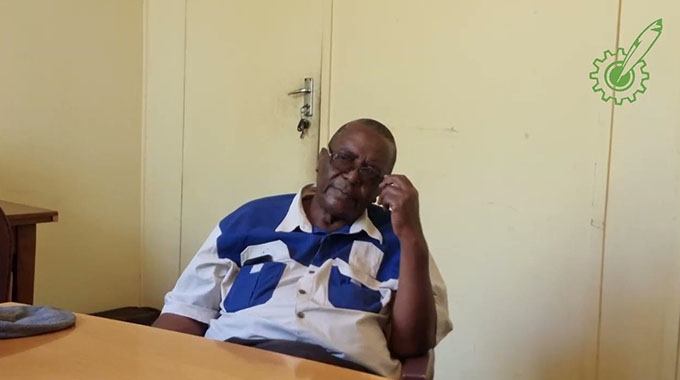
We continue our interview with Cde Mthabisi Sivako, one of the pioneering Zapu cadres to be trained as police officers in Zambia during the armed struggle. This was during a phase when Zapu was preparing for a free Zimbabwe, anticipating that its cadres would serve in various arms of the future Government. In the first part of this interview, published in last week’s edition, Cde Sivako, who operated under the pseudonym Mathias Sangweni, told our Assistant Editor, Mkhululi Sibanda (MS), how he left behind a life of luxury as the son of William Sivako Nleya, a prominent black businessman of the time, to join the liberation movement. His father, who was not only a successful entrepreneur, but also a close associate of the late Vice-President Dr Joshua Mqabuko Nkomo, strongly influenced his path. Cde Sivako also spoke about his journey to Zambia via Botswana and his stay at Nampundwe Transit Camp. Today, the conversation continues with details of his time at Nampundwe.
MS: Last time, you spoke about your initiation at Nampundwe and the prank involving a meeting with Nkomo. Could you tell us more about your experience there?
Cde Sivako: As I mentioned, the military drills at Nampundwe were not easy for those coming from civilian life. The training was designed to transition us from civilians to soldiers.
MS: How did you handle that? Did you ever regret joining the armed struggle?
Cde Sivako: No, not at all. I voluntarily left the country to join the liberation struggle. I wasn’t among those taken across the border by the guerrillas. Some comrades were taken from schools, others while herding cattle and some even from wedding celebrations. I recall stories of grooms being told by the comrades, “Hold off on your marriage; come fight for the country first, you’ll return and complete the wedding after independence.”

Such recruitment incidents were common in many parts of the country,at the armed height of the struggle. Those who attempted to flee rarely succeeded, especially with the Zambezi River posing a significant obstacle and few knowing the way across. Those were difficult times — people made great sacrifices for our independence.
MS: How long were you stationed at Nampundwe?
Cde Sivako: I was there for about one and a half to two months. Afterwards, I was selected in a group of 75, as the pioneering intake to receive police training at Liyali Police Training College in Lusaka. I didn’t go to the guerrilla camps.
MS: What was the selection criteria for the police training?
Cde Sivako: They selected those with secondary education. I had completed my O-levels at Mzingwane High School in Esigodini, the previous year. Others were selected from among comrades who had sustained injuries in battle — injuries that were not too serious. From our group of 75, 25 of us were chosen to train as officers, while the other 50 received general duty policing training. In my group were people like Mafaro, Sucker Puncher and Simo Mpofu, who is still around in Bulawayo. At that stage, Zapu was preparing its cadres to take up roles in the arms of State, under the new Government.
MS: Can you describe the training?
Cde Sivako: It was full police training, conducted by Zambian instructors. We wore Zambian police uniforms and trained exactly like Zambian recruits. The training lasted six months. The facilities were excellent and the Zambians treated us very well — the food was first-class, with breakfast often including bacon and eggs. We were well looked after.
MS: After training, where were you deployed?
Cde Sivako: Initially, we were meant to join the Zambian Police Force for practical experience. But plans changed. From our group at Liyali, 25 of us — all men — were instead recruited into Zapu’s intelligence arm, the National Order and Security (NSO), which was led by the late national hero, Dumiso Dabengwa.
We met senior NSO officers such as Jeckoniah and Madlela and were taken to the NSO Training Depot, known as Moscow, located in Chinyunyu. The camp was headed by Cde Sam Madondo.
MS: Tell us about your stay there.
Cde Sivako: Apart from Cde Sam Madondo, there was also Cde Sihle Thebe, who taught us engineering. His real name was Stanford, and he worked for the Zimbabwe Broadcasting Corporation (ZBC) after independence.
Though we had already undergone police training, we were reintroduced to rigorous military instruction, including weapons handling, obstacle courses and map reading. However, the emphasis was very much on intelligence training. Our group consisted of 30 cadres and the training lasted another six months.
MS: What happened after the training?
Cde Sivako: After completing our training, we were taken to Lusaka, where Dr Joshua Nkomo addressed us.
MS: What was his message?
Cde Sivako: At that time, our intelligence structure was being transformed from the Military Intelligence Department to the NSO. Dr Nkomo told us that since we had completed our training, we were now his ears. We were the chosen few.
To be continued next week, when Cde Sivako will talk about his deployment and joining the police force after independence.


 Bongani Ndlovu