Online Reporter
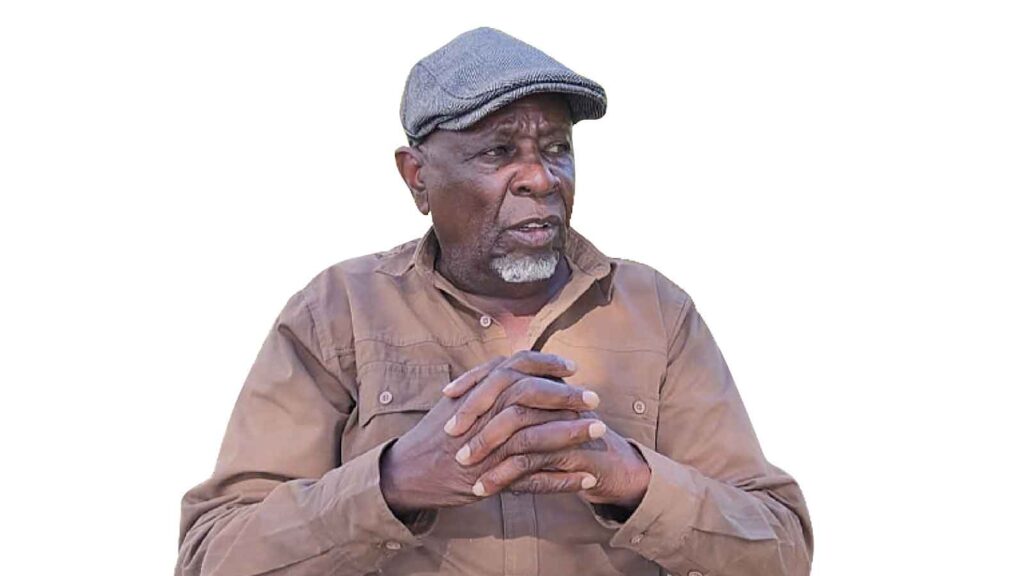
Last week, CDE DAVID MUSHANGWE, who used the Chimurenga name Cde Lobo, recounted to Zimpapers Politics Hub’s KUDA BWITITI how hunger and strife affected the multitudes at Machazi Camp in Mozambique, where conditions became so unbearable that he and a group of recruits fled to Chimoio. Along that gruelling trek, he helped rescue comrades who had been left behind — men who, after days of travelling on foot, had to be treated at Chimoio. Following a period of recovery there, they proceeded to Nyadzonya. This week, Cde Lobo shares what awaited them at Nyadzonya Camp.
*********************
Q: Tell us about the journey to Nyadzonya.
A: We were ferried by FRELIMO lorries from Chimoio to Nyadzonya, arriving sometime in late 1975. We were the ones who built that camp from scratch. The camp comprised makeshift barracks where tree branches and grass were used for thatching.
Q: At that time, had you received military training?
A: Not the full training, no. But we were getting some basics from cadres who had already tasted combat.
These included the likes of Cde Teurai Ropa (who would later become Vice President Joice Mujuru), Morrison Nyathi (who later turned traitor) and others we called matrainido because they had formal military training.
They lived in a section we called the Command, while we remained in the makeshift barracks.
They had guns; we, the recruits, had none. So they advised us to carve makeshift AK-47s from tree branches — carefully weighted to feel like the real thing. We used those dummies for drills, to practise tactics, all the while waiting for proper training. But what I can tell you is this: Life at Nyadzonya was the worst. Worse than at Machazi.
Q: Please tell us more. Why was life so hard?
A: Life was so hard that we resorted to eating snakes — honestly, any creature unfortunate enough to cross our path became a meal. Desperation became our head chef.
We would catch a snake and prepare it with the kind of care and ceremony usually reserved for a Sunday beef braai.
Hunger makes you forget about criticising food.
And the trainidos treated us badly, too — they would beat us. If you were suspected of being a traitor, they would beat you to a pulp.
Bullying was common.
For example, when Webster Shamu arrived with his broadcasting kit, the trainidos asked him, “Is this not a spy kit?” They bullied him.
“What are those radios for? Have you come to record us?” They threw him in jail for having those radios.
That was the kind of thing that happened. Mistrust was common.
If you dressed too smartly, you would be interrogated for that.
Those trainidos were hardcore — a no-nonsense lot.
They beat us often and took our food. It was the law of the jungle.
You had to be very clever, to think outside the box, just to survive. And do you know something? Because of hunger, your skin can become very fatty and soft.
Q: Were you not getting any food supplies?
A: The supplies came in dribs and drabs. You would hear the FRELIMO trucks approaching and feel a surge of joy and tell yourself that maybe this time we would get proper food. But disappointment always followed.
Sometimes the trucks brought only salt. Other times, only beans that were not enough. The biggest challenge was our swelling numbers.
Nyadzonya now held thousands of us. But the good thing about Nyadzonya was that we did not stay long. From there, we were relocated to Tanzania.
Q: How did you travel to Tanzania?
A: We travelled by the Chama Cha Mapinduzi ship. From Nyadzonya, 700 of us were selected to board that vessel. It was a big ship.
But tragically, from our group of 700, about three comrades died during the voyage to Tanzania.
Q: What caused the death of these comrades?
A: It was partly due to the poverty and anguish we had endured at Nyadzonya. Some suffered from malaria. So, when we arrived in Tanzania, we were a worn-out lot. The Chama Cha Mapinduzi took us to Dar es Salaam, and from there we proceeded to Iringa, the province where the Mgagao Camp is located.
The good thing about Mgagao was that it was a proper military camp. Conditions there were excellent, especially when measured against the situation we had endured at Nyadzonya.
When we arrived, the first thing our commanders — Cdes General Constantino Chiwenga and Perrance Shiri — did was to ensure that we were fed with proper meals. This felt like a resurrection.
We were issued with new military outfits, and for the first time in a long while, we looked like soldiers.
Our training began in earnest. It was not just about firing weapons; it was about rebuilding us from the inside out.
We drilled in military tactics, perfected our manoeuvres on the parade square and studied in classrooms.
Those classroom sessions focused on political orientation — why we were fighting, what kind of Zimbabwe we wanted to build and the ideology that would carry us through the bullet-riddled nights. Alongside all of that, we did relentless physical training.
Next week, Cde Mushangwe speaks about his time at Mgagao and his deployment to the front.