Andrew
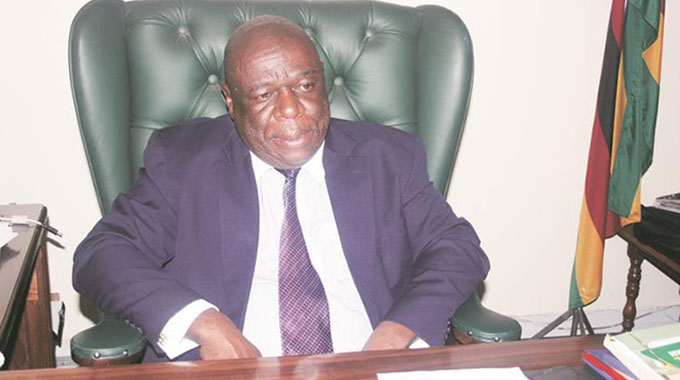
The 27th meeting of the Conference of Parties (CoP27) on Climate Change gets underway next week in Sharm El Sheikh, Egypt. Zimbabwe will maximise on the meeting to aggressively push for developed countries to fulfil their obligations of funding climate change mitigation and adaptation in developing countries. The Sunday Mail’s Tanyaradzwa Rusike (TR) spoke to the Ministry of Environment, Climate, Tourism and Hospitality Industry Permanent Secretary, Ambassador Raphael Faranisi (RF), on Zimbabwe’s plans ahead of the crucial meeting.
*************************************
TR: Zimbabwe is set to participate at the forthcoming 27th United Nations Climate Change Conference in Egypt. Can you outline Zimbabwe’s broad position going to the crucial indaba?
RF: Zimbabwe wants climate change adaptation to be treated with as much importance as climate change mitigation.
This has not been the case over the years and this has seen more resources being channelled towards reducing greenhouse gas emissions than into helping communities being adversely affected by climate change.
Specific funding mechanisms are required for loss and damage scenarios such as the aftermath of Tropical Cyclone Idai in March 2019.
Zimbabwe is against the abrupt phasing out of fossil fuel use, as suggested by some countries at CoP26 held in Glasgow (Scotland) in 2021.
We believe we should be allowed to use our resources to grow our economy and then gradually phase down and transition in a manner and time that do not disrupt our well being, energy supply and the functioning of whole communities.
Agriculture should be given the attention it deserves.
We want the Koronivia Joint Work on Agriculture to transform from scientific studies and workshops into a mechanism that supports and finances proven climate-smart agriculture interventions.
Agriculture plays a central role in broad poverty reduction, improving gender equity and economic growth, and addressing climate change impacts on this sector should be a priority.
TR: What has informed the position Zimbabwe is going to present at the meeting?
RF: Zimbabwe’s position is informed by its development aspirations as expounded by the National Development Strategy 1 (NDS1) and Vision 2030.
To achieve this vision, we will need to use all the energy resources at our disposal, including coal and other fossil fuels, to power economic development, end energy poverty as well as finance the much-needed transition to cleaner green technologies.
In addition, our position is informed by our climate change vulnerability status.
Zimbabwe is ranked 10th on the Global Climate Vulnerability Index and, therefore, needs to have its climate change adaptation efforts, supported by those who have contributed to the climate change problem we are grappling with.
TR: The limited funding by developed nations to developing nations for climate change mitigation and adaptation will be at the centre of discussions during the conference. What is Zimbabwe’s position on the funding for climate action by developed nations?
RF: As a matter of climate justice, and as agreed upon under the United Nations Framework Convention on Climate Change and the 2015 Paris Agreement, developed country parties have an obligation to fund climate change mitigation and adaptation in developing countries.
Developed countries are responsible for much of the historical emissions that resulted in global warming and they should assist to address the damage.
Zimbabwe calls upon developed countries to fulfil their financial obligations, noting that if they don’t, it will be very difficult or impossible for most developing countries to meet their greenhouse gas emission-reduction targets.
TR: What sort of mitigation efforts is Zimbabwe undertaking in light of the real and present dangers presented by climate change?
RF: Zimbabwe has put in place the necessary policy frameworks for climate change mitigation and adaptation, including strategies and action plans. The country’s climate change priorities have been integrated in NDS1.
Ongoing mitigation projects include afforestation, reforestation, sustainable forestry management, fuel blending, renewable energy development such as solar, biogas and hydropower.
On adaptation, the country is implementing water harvesting and supplementary irrigation, climate smart agriculture, small livestock interventions and developing climate-resilient infrastructure, among other measures.
TR: How is Zimbabwe funding its own adaptation and mitigation efforts?
RF: Zimbabwe is funding its climate actions through a number of ways.
The main source of funding for climate change adaptation in the country is through budgetary allocations from the Government.
In the agriculture sector, the Climate-Proofed Presidential Inputs Scheme (Pfumvudza/Intwasa) has produced impressive results and vastly improved household resilience to climate change.
Major dam construction projects, including Lake Gwayi-Shangani, and the pipeline to Bulawayo are a few examples of Government projects aimed at reducing the impacts of climate change.
Government is also investing heavily in early warning systems.
The weather observation system is being modernised through automated weather stations, and this year, a new state-of-the-art radar system was installed to enable the monitoring of extreme weather events like tropical cyclones in real-time.
Government supports climate change adaptation and mitigation projects funded through development partners.
To improve the resilience of the population to climate change, development partners are supporting the Solar for Health Programme, which is aimed at providing solar energy for all health facilities in the country, and, at the same time, eliminating the use of diesel generators, which pollute the atmosphere.
The projects are numerous and are happening in all provinces of the country.
Further support is visible in the revitalisation of smallholder irrigation schemes, making them more water efficient and developing associated product value chains.
The private sector is contributing immensely to the country’s efforts to reduce greenhouse gas emissions by adopting renewable energy.
The past few years have seen investments in solar and mini-hydro energy power production at various sites by independent power producers. Manufacturing and mining companies are also investing in renewables to reduce their carbon footprint, while enhancing their energy security. The Schweppes Harare factory now has one of the largest rooftop solar plants in Africa, informed by a climate change energy audit.
Pretoria Portland Cement launched its solar energy initiative in Bulawayo in April.
Many other private entities are following suit.
TR: Prior to the last conference, Zimbabwe undertook to cut its greenhouse emissions. What measures have been taken so far to reduce emissions and how has the country fared in that respect?
RF: Through its 2021 Revised Nationally Determined Contribution, Zimbabwe undertook to reduce its greenhouse gas emissions by 40 percent per capita by the year 2030.
This does not mean that our absolute emissions are going to be less.
The absolute emissions are going to be more in line with our industrialisation thrust and progression into an upper middle-income society as envisioned by Vision 2030.
However, the emissions will be lower than what you would normally expect because, as our economy grows, we will ensure the use of the best available technology, reduce emissions from veld fires, plant more trees and increase energy efficiency.
The 2021 Revised Nationally Determined Contribution has 17 specific greenhouse gas reduction actions, some of which are already being implemented.
For example, the Zimbabwe Electricity Transmission and Distribution Company is already working towards reducing grid transmission losses, and a reduction from 18 percent to 16 percent has been witnessed, and we are moving towards achieving losses of less than 10 percent by 2030.
For ozone depleting substances with a high global warming potential, import restrictions on refrigeration and air conditioning gases identified under the Kigali Amendment to the Kyoto Protocol are already being implemented at our borders. We are confident we will reach the target of a 10 percent phase down by the year 2029. Cities of Harare and Bulawayo are at various stages of implementing waste-to-energy projects, which will ultimately reduce methane emissions from dumpsites and waste water treatment plants.
More investments are needed from both local and international financiers for us to reach our 40 percent emissions reduction target.
It is also important to remember that this target is a conditional target, which means we will achieve it if international climate finance flows into the country are positive.
This is in line with commitments by other developing countries and in line with the Paris Agreement, Article 9, which states that developed countries shall provide finance for climate action in developing countries.
TR: What else does Zimbabwe stand to benefit from participating in the conference?
RF: The conference brings together more than 20 000 delegates from all over the world.
Firstly, it provides an opportunity for the country to actively engage in discussions and decision-making processes of the United Nations in relation to climate change.
Secondly, it provides a platform for knowledge exchange through the numerous side events that will be running alongside the main conference, providing a chance to learn best practices. Third, the conference is a one-stop shop for bilateral and multilateral climate finance entities to meet with countries that have proposals that require funding.
Zimbabwe takes this opportunity to advance its proposals to multilateral funding mechanisms such as the Green Climate Fund and Adaptation Fund.
Fourth, it provides a platform for Zimbabwe to show its own efforts towards fighting climate change, business investment opportunities available in the country and to drive the country’s re-engagement thrust.
TR: Have African nations agreed on a common position to present going to the conference?
RF: African countries have been meeting throughout the course of the year at the technical and political level to discuss various matters that are on the agenda at CoP27.
The countries agree that climate change adaptation should be prioritised.
They agreed that there is a need to have finance mechanisms that are dedicated to loss and damage caused by the impacts of climate change, as well as dedicated finance for agriculture.
In addition, there is consensus that the phaseout of the use of fossil fuels should not be imposed and countries should be allowed to gradually phase down depending on their national circumstances and respective capabilities. TR: How confident are you that this conference will finally unlock funding for climate action?
RF: We should understand that the conference of parties is a platform for countries to discuss and agree on the key elements in terms of implementation of the Convention and the Paris Agreement.
It is not a platform where financial resources are immediately disbursed to those in need.
Therefore, we are aiming to increase momentum towards increased climate change adaptation finance from multilateral institutions such as the Adaptation Fund and for developed countries to honour their pledges; an agreement on the need for a financing mechanism for loss and damage support; and an agreement on the need for dedicated financial support to the agriculture sector.
TR: Zimbabwe has vast untapped coal resources, what is Government’s position on the exploitation of these resources in light of climate change and the ongoing agitation for transitioning to cleaner sources of energy?
RF: Zimbabwe is a developing country at a stage that requires a lot of energy to transition to the next level of development in the most cost-effective manner possible.
As epitomised by the current expansion of the Hwange Power Station and other private sector investments in coal, we are going to be using coal for some time to come.
The end of coal should not be abrupt.
Zimbabwe acknowledges the need to transition to cleaner sources of energy.
In fact, we have already begun the journey.
The National Renewable Energy Policy is incentivising the development of cleaner sources of power.
We now have solar parks in Seke, Cross Mabale and Nyabira, and more are coming up.
We now have mini-hydro power stations in the eastern Highlands.
On a larger scale, pre-feasibility work and environmental impact assessments are at advanced stages for the Batoka Hydropower Station. At the policy level, a draft energy efficiency policy is being finalised, together with the e-mobility framework.
Government also views the global transition to cleaner energy as an opportunity, and is facilitating developments in lithium mining and in discussions with investors with interests in the manufacturing of lithium batteries to set up plants in Zimbabwe.
This should add impetus to the achievement of our targets in the mining and manufacturing sectors.



 Online Reporter