Andrew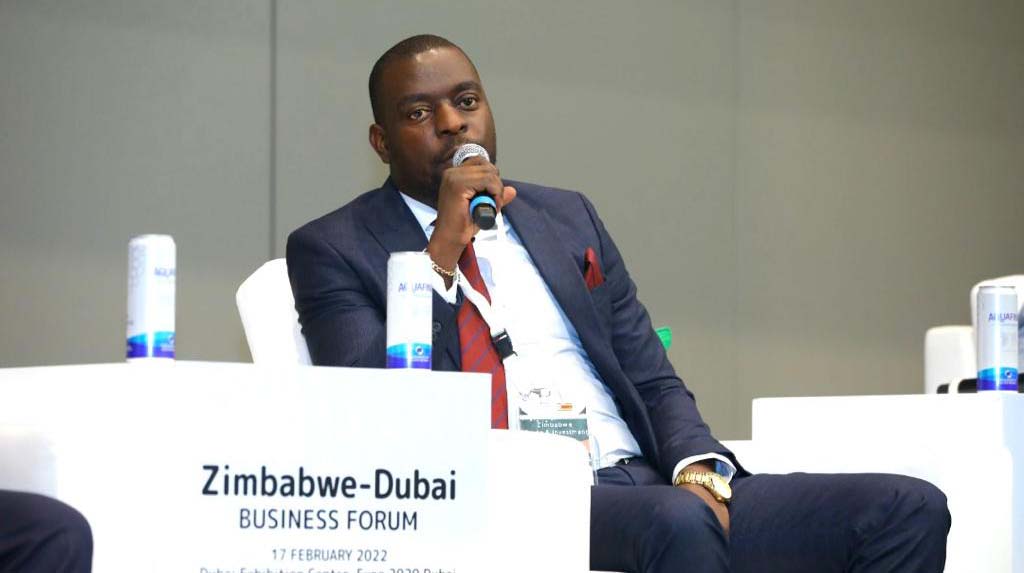
THE Agricultural Rural and Development Authority (ARDA) last week entered into an agreement with giant Indian distilling firm, the NV Group, which will witness the Asian company investing US$250 million in a brewery in Masvingo. ARDA is also involved in a drive to accelerate irrigation development in order to climate-proof production and counter the destructive effects of droughts. The Sunday Mail’s TANYARADZWA RUSIKE (TR) spoke to ARDA chief executive officer, Mr TINOTENDA MHIKO (TM), on developments at the parastatal.
***************
TR: Can you outline the state of ARDA’s 21 estates in terms of productivity?
TM: We have a total of 25 632,74 hectares under various cropping programmes of maize, sunflower, sorghum, cotton, sugarcane, avocados, tea, macadamia, and pecan nuts, across our estates. While some of these estates are under various forms of partnerships, we are currently expanding land and irrigation development to increase the hectarage under production.
TR: What form of support are you receiving to stimulate rural industrialisation and production?
TM: Yes, we have always received invaluable unwavering support and goodwill from all our stakeholders and especially from our principals. We are receiving support for ARDA’s rural development and industrialisation mandate, which focuses on empowering rural farmers with climate-smart technologies to de-risk their enterprises and promote decentralised value addition and beneficiation of produce coming out from rural irrigation schemes and village gardens. This then drives rural industrialisation which in turn spurs rural development. We are also developing industrial activity at our estates so that they become hubs for promoting rural development through creating a hub and spoke model supporting rural communities.
TR: What measures have you put in place to ramp up production at your estates this year?
TM: To enhance production, our focus area is hinged on accelerating irrigation development to climate-proof our production and as a counter to the destructive effects of droughts which have caused poor spatial and temporal rainfall distribution.
We are also promoting the use of precision agriculture, ICTs, technology-driven agriculture and conservation techniques, which reduce costs, promote productivity, improve operational efficiencies and subsequently sustainability.
TR: How have the present weather conditions affected your production?
TM: The current weather patterns have been characterised by poor rainfall distribution which has presented challenges on the production of dryland crops on farmland that is yet to have irrigation infrastructure developed.
We are, however, proactive by taking a phased approach to rehabilitate and establish irrigation infrastructure across our estates and schemes to ensure that we counter the risk of crop failure due to the effects of climate change. We are also focusing on the production of climate-smart and drought-resistant crops such as sorghum and sunflower, taking advantage of internal beneficial synergies with our subsidiary ARDA Seeds, whose mandate is to promote climate-smart varieties.
Furthermore, our rural farmers, through our Rural Development and Industrialisation Unit, have adopted climate-proofed farming methods such as Pfumvudza/Intwasa.
TR: Government under the National Development Strategy 1 has undertaken to leave no community behind in its drive for development. What initiatives have you introduced to ensure that no communities are left behind?
TM: The Vision 2030 Accelerator Model which we are implementing across the 450 irrigation schemes in the country, is basically an enhanced productivity model that focuses on imparting agri-business skills to scheme households to ensure the irrigation schemes are self-sustaining and are run viably and profitably. Household beneficiaries are employees of the scheme during the season and are paid monthly salaries. They are also shareholders of the scheme and are paid dividends upon harvesting and marketing of the produce.
The objective is to transform rural farming from subsistence to surplus-oriented production. The model also employs 900 direct employees, that is, one resident scheme business manager and one resident bookkeeper for each irrigation scheme.
The V2030 Accelerator Model is also being replicated under the ARDA Dairy Development Programme across 23 milk collection points to ensure that they are self-sustaining, viable and profitable. ARDA is also collaborating on the establishment of 35 000 one-hectare self-sustaining nutritional gardens powered by renewable energy to support horticulture development in the rural communities, on the back of a profitable business case.
To this end, we have put together a whole-of-government approach guided by our parent Ministry where we have synergistically collaborated with other agricultural entities such as ZINWA, the department of irrigation, AFC bank and the Agriculture Marketing Authority. ARDA is in charge of the agronomy and business management side of the value chain.
The model creates direct employment for 35 000 local youths who are resident village garden managers. We are also facilitating the decentralisation of micro-agro processing plants for value addition and beneficiation of produce coming out of rural irrigation schemes and village gardens.
Apart from employment creation, this intervention brings about rural industrialisation, which in turn causes rural development and consequently improved rural Gross Domestic Product.
TR: Can you outline how ARDA is investing in research and development?
TM: Research and development is a key anchor for a successful farming enterprise and improving production and productivity.
Our focus areas are on the deployment of technology, efficient irrigation systems and precision agriculture techniques across all our production programmes.
Another key focus area is conservation agriculture to reduce operational costs, improve water and fertilizer use efficiencies and reduce our carbon footprint.
TR: ARDA is a key contributor to the country’s Strategic Grain Reserve. Given the erratic rains we have received this season; what sort of impact will your contribution have on the SGR?
TM: As highlighted earlier, ARDA is pushing for irrigation development, and we believe this will subsequently result in increased crop productivity.
As alluded to earlier, with the support of our parent Ministry, we are taking a phased approach to rehabilitate and establish irrigation infrastructure across our estates and schemes to ensure national food security and contribute to the Strategic Grain Reserve.
We have on board 450 irrigation schemes and developed a high productivity business model to ensure they all produce profitably and sustainably.
Our goal is to ensure that all irrigable land becomes productive and contributes to the Strategic Grain Reserve.
TR: ARDA was one of the many participants at the Dubai 2020 Expo. What sort of benefits did the organisation garner from the event?
TM: ARDA signed a US$250 million deal with NV Group of India to establish a brewery in Masvingo. ARDA will produce sugarcane, barley and red sorghum under a contract farming arrangement as feedstock for the brewery operation. ARDA will also establish a joint venture on the value addition side.
ARDA will also contract irrigation schemes and other rural farmers for market-led production as this dovetails into their rural development and industrialisation mandate for the attainment of Vision 2030.
You will appreciate that the signing of this memorandum of agreement is a culmination of a series of engagements with the NV Group, the latest of which was during our recent visit to the Dubai Expo, and these are the fruits.
Our partners are ready to implement this project immediately, taking a modular and graduated approach.
On our part, we have availed the land to be put under production and work is set to start with regard to putting up irrigation infrastructure and water conveyancing. A vast portion of the 4 000 hectares has already been cleared.
Preliminary indications are that the processing plants will be up and running within 18 months from now.



 Online Reporter