malvernmugadzikwa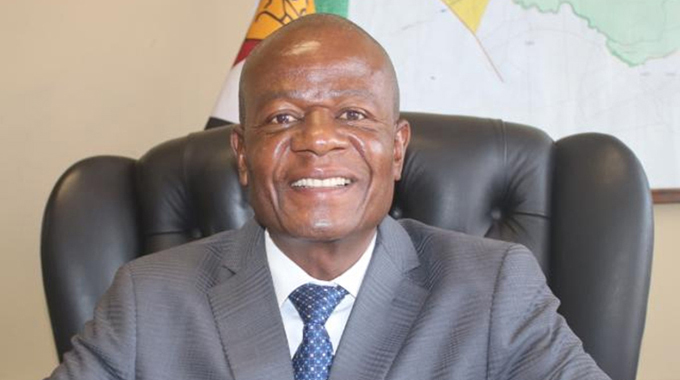
Minister Daniel Garwe
VISION 2030 has set us on a path to attain upper middle-income economy status by 2030.
However, many of our local authorities are outdated, having been established 60 to 70 years ago.
These areas have seen better days and now, under our urban transformation and regeneration policy, we are committed to revitalising and modernising them.
This includes encouraging property owners to join the Government in upgrading their buildings and, most importantly, developing smart cities.
The migration from rural to urban areas, which started a long time ago and continues today, has left our cities densely populated.
People are moving to urban areas seeking jobs and better living conditions.
To address this, we have been directed to develop our rural areas, modernise local councils and encourage reverse migration — motivating people to establish businesses, create jobs and build modern housing, including flats, in rural districts.
Here we are talking about building flats in rural district councils.
At the same time, we are addressing informal settlements around our cities, which lack essential services.
There is no service delivered in the informal settlements. Alongside other ministries, like those of National Housing (and Social Amenities) and Transport (and Infrastructural Development), we are working to regularise these settlements.
This will bring benefits to local authorities through rate collection, and to the Government through taxes.
We are also looking at informal businesses in our urban local authorities.
Currently, the informal sector contributes significantly to the economy. By formalising these businesses and markets, we are incorporating them into the formal economy.
Master plans
To guide this transformation, we have a blueprint launched by the President in November 2023, emphasising that there is no compromise on service delivery.
How do we ensure that there is no compromise to service delivery?
Every local authority, urban and rural, is now required to create master plans aligned with our urbanisation goals.
Of the 92 local authorities, only Harare and Chitungwiza have yet to complete theirs. These master plans will include valuation rolls, detailing each authority’s assets, many of which have not been audited in years. So far, about 70 percent of local authorities have completed their valuation rolls.
Additionally, we want all local authorities to implement enterprise resource planning (ERP) systems to replace outdated manual processes being used by some councils, which are prone to abuse.
This digital transformation, aligned with the President’s call for efficiency, is vital for improving service delivery in areas like water, sewage, waste management and road maintenance. That is the direction that the Government is taking.
Compliance challenges
Despite these efforts, compliance challenges remain. Harare and Chitungwiza have delayed producing their master plans but are now working under strict supervision.
Chitungwiza, with significant water supply issues, has engaged the private sector to address this and other challenges.
By the first quarter of 2025, we expect Chitungwiza to see improvements in water purification, water distribution, market facilities and waste management.
We are also encouraging the privatisation of some services. We have privatised waste management in the Harare City Council.
We want to do the same in Chitungwiza.
We want to also privatise water supply in Chitungwiza because it has serious challenges with water.
We have identified some private sector players that have come in and worked with the Government under the Ministry of Lands (Agriculture, Fisheries, Water and Rural Development) to provide bulk water, which will then be purified and distributed under a metering system in Chitungwiza.
We realise that Chitungwiza, on their own, have no capacity to deal with the water challenges they are experiencing.
So, we engaged a private company with which we have already signed a memorandum of understanding. In fact, we are signing four memoranda of agreement with them.
We are progressing to four specific memoranda of agreement on water purification, water distribution, market upgrading and waste management.
This partnership, which includes bulk water supply managed under a metering system, is expected to relieve Chitungwiza’s water shortage issues by early 2025.
I am sure by the end of the first quarter of 2025, we will see a new Chitungwiza in terms of those four areas that I have mentioned.
Harare’s issues stem primarily from problematic behaviour by some councillors and managers. They had created some companies internally that were now buying water purification chemicals from the main supplier.
These companies would go and buy the chemicals from the city’s traditional supplier and then sell the chemicals to the council at exorbitant rates. So, we have now stopped that and have returned to direct procurement from the traditional supplier.
Also, Harare needs to upgrade its water distribution system to support the growing population.
The city’s water, waste and road networks are all outdated; they were designed for a smaller population than exists today. We are now exploring new solutions to address these infrastructure gaps.
Government and council relations
Relations between the Central Government and local authorities have historically been strained due to political differences, as most councils are led by opposition parties.
Council management, taking direction from these elected officials, often resisted guidance from the Central Government.
However, as the parent ministry, we are stepping in to ensure service delivery to residents. We now direct everybody, regardless of who is running the local authority.
For example, in Harare, due to past misconduct, the President appointed a commission of inquiry to investigate city activities dating back to 2017.
This commission is uncovering various issues in council management, and we expect a full report soon.
Daniel Garwe is the Minister of Local Government and Public Works. He was speaking to The Sunday Mail’s Nyore Madzianike.



 Online Reporter