


 Online Reporter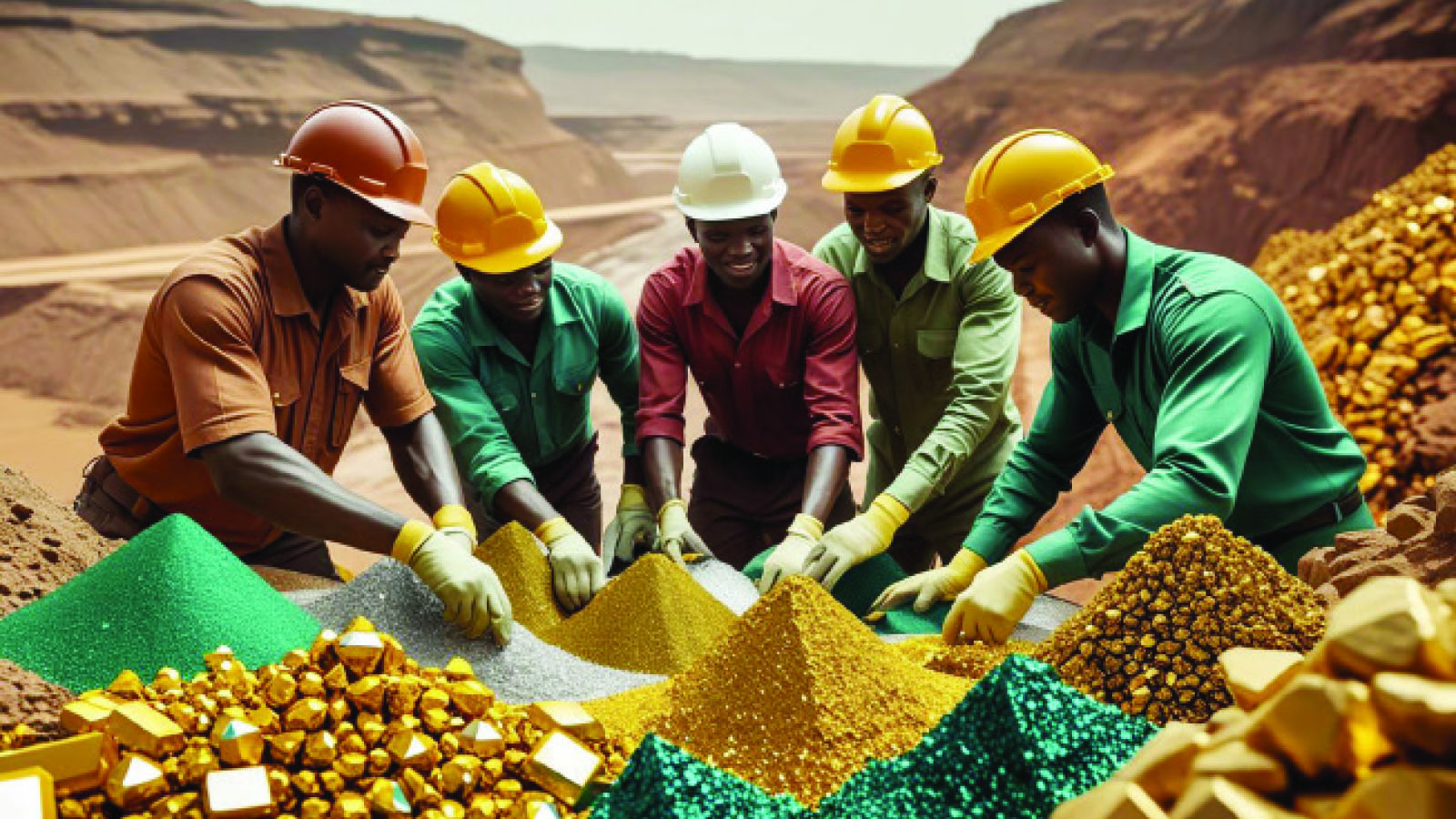
Communion with Bishop Lazarus
The pervasive impact and influence of Greek myths, which are a foundational pillar of Western civilisation, can still be felt to this day.
They evolved over millennia through trade and colonialism — absorbing and adopting myths from different parts of the world — and continue to shape language, stories, the worldview, as well as understanding of the human condition.
So, they essentially became an evolving tradition that blended ancient beliefs and were refined by master storytellers, poets and playwrights.
For ancient Greeks, mythology, which was passed down through generations by a combination of cultural influences and oral tradition, was a bedrock of their religion and integral to their worldview.
It explained the origins and nature of the gods, who were worshipped in rituals, festivals and temples.
Before science, it explained natural phenomena and the origins of the world and geography.
It also sought to explain the origins of rituals, the founding of cities and the legitimacy of ruling families, who invariably claimed descent from a god or hero.
The so-called Alexander the Great, a Macedonian king who they say was one of the world’s greatest commanders, known for his conquests from Greece, Syria, Egypt, Mesopotamia, Persia (modern day Iran), Afghanistan and to parts of India, even believed that he was the son of Zeus, one of the great Greek gods.
And this seemingly defined his invincible warrior complex.
And just like our own traditional folklore and folktales in this part of the world — passed down through oral tradition — myths held didactic value and were often used as a primary tool for education, exploring complex themes such as hubris.
Some of you might remember the tale of Icarus, who flew too close to the sun using wings crafted from feathers and wax.
The result was inevitably fatal.
Sum total, in Ancient Greece, myths were of immense importance and value, helping to make sense of the world, giving authority and legitimacy to ruling elites, creating an ordered society, holding together the constellation of often warring city states and giving them a shared cultural identity.
Naturally, some of these myths and beliefs spread across the world and were brought to these shores by trade, conquest and colonialism, which imposed Western cultures, thought, worldview, traditions, beliefs, education and influences.
Most of the words and expressions we use today — Achilles’ heel, Herculean task, odyssey, echo, narcissist, et cetera — can be traced to Greek thoughts and myths.
The so-called popular culture, as spread and expressed through films such as “Clash of Titans” and “Troy”, are also imbued with these Greek influences.
Some of the global corporate “titans” — pun intended — such as sports company Nike (named after the goddess of victory), Amazon (taking its name from the race of female warriors) and Oracle (a source of prophetic wisdom) deliberately use these mythological names for inspiration and branding.
Overall, the impact of Greek mythology is immeasurable, providing the Western world with a rich vocabulary, timeless stories and a framework to explore the deepest questions of humanity, creativity and existence.
Atlas
For those who might not know, in Greek mythology, titans, who were the 12 children of the primordial god and goddess Uranus (Sky) and Gaia (Earth), were divine beings who ruled the cosmos (universe) before the Olympian gods.
They were, however, eventually overthrown by their own children, led by Zeus, in a great war for the control of the universe called the Titanomachy.
They say Atlas, who was a mighty titan, led the war against the Olympian gods in the Titanomachy.
As punishment for his role in the war, Zeus condemned him to eternally hold the sky, or heavens, on his shoulders at the western edge of the earth.
Paradoxically, though defeated, he became a symbol of enduring strength and fortitude.
His name became associated with the Atlas Mountains (a mountain range in the Maghreb in North Africa), the Atlantic Ocean and the modern word for a collection of maps.
If this fable is to be believed, the world, as we know it today, rests on the shoulders of this titan, Atlas.
You see, Bishop Lazi could not help but reflect on Atlas’ story when thinking about the fate of the African continent, which was initially conquered by imperial powers through colonialism and seemingly condemned to support the world through its critical raw materials and resources.
This limitless wealth of fabulous resources perpetually feeds the world’s industries, yet the continent remains mired in wretched circumstances, trapped in a vicious circle of poverty, underdevelopment, unemployment and misery.
Though plagued by these unenviable circumstances, Africa, like Atlas, ironically continues to be extolled for its “enduring strength and fortitude”.
The figures speak for themselves.
Last year, Africa, which accounts for close to 20 percent of the world’s population, contributed between 2 to 3 percent of the world’s merchandise exports of US$24,4 trillion.
Its exports were overwhelmingly dominated by primary commodities (oil, gas, minerals, agricultural raw materials), as the continent’s share of global manufactured exports remains pitiably low, rarely exceeding 1,5 percent, indicating a lack of industrial diversification and value-addition.
By contrast, the world’s top 10 merchandise exporters — China, the United States, Germany, Netherlands, Japan, South Korea, Italy, Hong Kong, France and Mexico — accounted for half, or US$12,2 trillion, of world merchandise exports last year.
This indicates the vast wealth inequalities that currently exist.
China alone accounts for 30 percent of global manufactured exports, while the European Union and North America together contribute over 40 percent.
This underscores Africa’s marginal role in global industrial supply chains, hence poverty, unemployment and general privation.
In the global village, we still remain hewers of wood and drawers of water.
Africa’s curse lies in the fact that it continues to sell goods of very low value to satisfy its appetite for expensive high-value manufactured goods.
Food for thought: How many tonnes of cotton do we need to sell to buy just one tractor? For the continent, escaping this trap would entail undergoing the process of industrialisation, which will help to translate the continent’s fabulous natural resources into real wealth for its 1,4 billion inhabitants.
No country or region in the world has ever developed without undergoing the process of industrialisation.
Today, all developed nations are the industrialised countries.
Zimbabwe’s wise leadership has been alive to this key reality and over the past decade, it has been crusading for the industrialisation of Africa in general and SADC in particular.
Proverbs 3: 13-18 reads: “Blessed are those who find wisdom, those who gain understanding, for she is more profitable than silver and yields better returns than gold. She is more precious than rubies; nothing you desire can compare with her. Long life is in her right hand; in her left hand are riches and honour.
“Her ways are pleasant ways, and all her paths are peace. She is a tree of life to those who take hold of her; those who hold her fast will be blessed.”
It is under the wise leadership of Zimbabwe that SADC conceived the SADC Industrialisation Strategy and Road Map (2015-2063), which was approved by the Extraordinary Summit in Harare in April 2015.
This resulted in two major developments — the decision to prioritise industrialisation in each year’s SADC summit themes and the introduction of the industrialisation week prior to each ordinary summit.
This has continued to this day, and it is also an agenda that President ED championed during the past year as chairperson of the regional body.
As a region and continent, there is no way we should remain poor.
We have the resources to make ourselves rich.
Apart from a large population of about 363 million people, the SADC region contributes to the world about 18 percent of cobalt, 21 percent of zinc, 26 percent of gold, 55 percent of diamonds and 72 percent of platinum group of metals.
Therefore, we are not poor.
So, our focus, especially as we prepare to introduce the country’s next five-year economic plan — the National Development Strategy 2 — should be on industrialisation.
Without doing so, we will perpetually continue to feel the overwhelming and onerous weight of the world on our shoulders like Atlas.
Bishop out!



