Online Reporter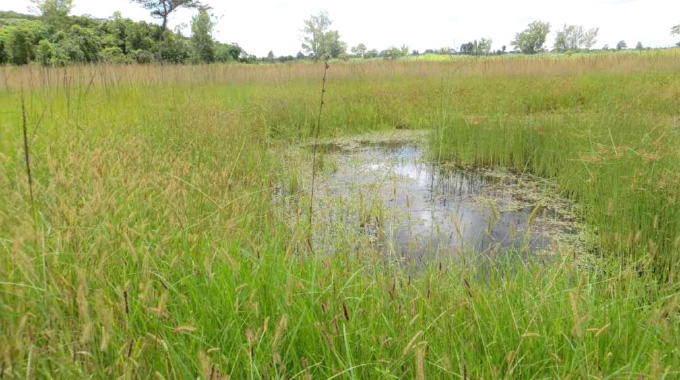
Sukulwenkosi Dube-Matutu, [email protected]
RESOLUTE efforts to preserve the Manhange Wetland in Silozwi, Matobo District, have become a game changer for villagers, who are benefitting through improved access to water for domestic use and community projects.
The wetland had come under increasing threat from human activity until the community, led by elderly villagers, stepped in to preserve it by enforcing cultural customs and rituals that promote sustainable use.
A key strategy has been regulating access to the wetland. Only selected villagers are permitted entry, and the area has been fenced off. Access is granted only after a ritual is conducted to “inform the ancestors,” who are believed to guard the wetland.
Similar to the spiritual Njelele Shrine, visitors must prepare themselves before entering the sacred site. This preparation includes cleansing and abstaining from sexual activities.
One of the elderly locals, Mr Luke Tshuma (90), said enforcing respect and Ubuntu has been central to preserving the wetland, which is also used by selected villagers as a rain seeking site.
“We have continued to enforce a spirit of respect and Ubuntu in both the elderly and young. This has helped us to maintain peace within the community. Peace is crucial if we want to maintain balance within the community. Our ancestors can’t stay in a place, which has discord and violence.
“This place is sacred and not just anyone is allowed here. People who visit this place are also supposed to prepare themselves and get cleansed and this process requires them to abstain from any sexual activities.
When entering this place one has to be barefooted,” said Mr Tshuma.
He said the sanctity of the wetland had been passed down through generations. While it was previously enclosed with tree branches, the community erected a fence after some villagers failed to respect the sacred area.
Mr Tshuma said ignoring customs had led to tragic incidents. He said a young girl recently drowned in the wetland and her body was never recovered, while cattle had also drowned as livestock should not enter the wetland unsupervised.
“The reason why we preserve and respect this place is because we realise its value to our community and we have seen its sacredness. We have visited this place during dry seasons and immediately after conducting our rituals we have received rains. We expect even people who visit this place to respect its sanctity by upholding the customs and traditions.”
Mr Tshuma said the wetland had become a lifeline during dry spells, providing water for both domestic and commercial use. Before water can be collected, a ritual is performed to ensure sustainability.
“When we are in desperate need of water as a community, we gather and some elders visit the wetland and inform the ancestors that we need water and we seek their consent. We don’t collect the water directly from the wetland but we dig some ponds a few metres away and that’s where people collect the water. This water has really helped us during drought situations.
We have also managed to conduct some building projects using water that we get from the wetland,” said Mr Tshuma.
During a visit to the wetland, Environmental Management Agency acting provincial manager for Matabeleland South, Mr Gerald Muchanyerei, said wetlands possess scientific properties essential for the survival of humans and animals.
“Wetlands improve our water quality and improve stream flow by intercepting surface run off and removing any impurities. They also offer flood protection as they store excess water and slowly release the water during dry seasons. They also offer economic benefits from the many plants and animal species found in wetlands.
“They also offer recreational, educational and research opportunities. If we destroy our wetlands we then deprive ourselves of all the ecosystem services I have mentioned. With a loss of our wetlands we then descend into perennial droughts and reduced food security,” he said.
Mr Muchanyerei said EMA does not restrict communities from benefitting from wetlands but encourages safe and sustainable use. He urged communities to integrate wetland management into village planning and land use plans.
“People can embark on community projects instead of individual exploitative projects that bring more harm instead of good for the community. Avoid stream bank cultivation and site your gardens more than 30m from water sources.
Fence off your wetlands to avoid wetland trampling by animals. Do not dig within your wetlands as this disrupts wetland functions and leads to reduced water storage capacity,” he said.
— @DubeMatutu.