admin
admin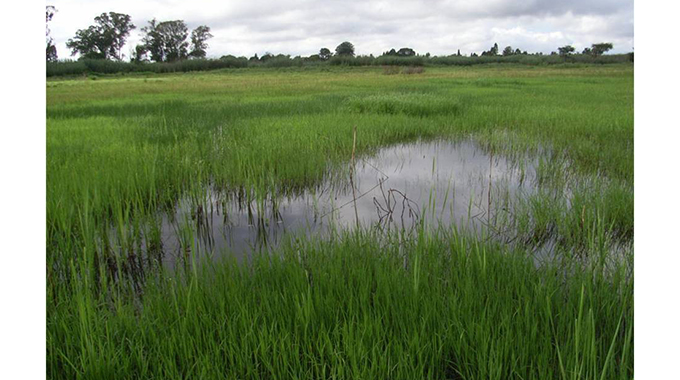
Ivan Zhakata Herald Correspondent
WETLANDS play a critical role as the primary sources of water as they act as sponges that filter clean water to the main sources and enhance biodiversity.
The continued development of residential stands on wetlands has contributed immensely to the water crisis across the country, with Harare being the most affected city in Zimbabwe.
It is believed that 90 percent of Harare is built on wetlands and parts of Borrowdale, Marlborough, Bluffhill, Monavale, Mabelreign, Chishawasha Hills, Vainona, Mabvuku, Tafara, Rugare, Kambuzuma and Budiriro, among other suburbs in the low and high density areas, are built on them.
Wetlands play an important role of storing water, filtering clean fresh water into the main streams, which flow into Lake Chivero, the city’s main source of water.
Development on wetlands has seen the city’s water table being greatly affected, resulting in water shortages across Harare because the wetlands can no longer function as primary sources of water.
This has also resulted in flooding as witnessed by last year’s rains which caused floods in Budiriro, Borrowdale and in Chitungwiza in areas where people had built their houses on wetlands.
The year 2021 saw Community Based Organisations (CBOs) in Harare under the umbrella of Harare Wetlands Trust (HWT) lamenting continued developments taking place on the capital’s wetlands, saying they were under threat and the development will result in Harare becoming a dry city in the coming years.
Wetlands occur where the water table is at or near the surface, or where the land is covered by water.
They are areas where water covers the soil, or is present, either at or near the surface of the soil all year or for varying periods of time during the year, including the rainy season.
Wetlands play a critical role of water filtration and feed into rivers and dams which provide water to the residents and animals, and if development continues, there will be an obstruction in the smooth flowing and filtration of water, resulting in some water reservoirs not receiving adequate water.
Harare residents have said there was a need to reclaim wetlands and resuscitate them for the benefit of future generations.
They have also attributed the current water crisis currently being experienced in the city to continued developments on wetlands.
Some residents have successfully challenged developments taking place on wetlands in the courts and some have successfully stopped these developments.
Among the many issues raised on wetland developments in 2021 was the Monavale Vlei, an internationally recognised Ramsar Site by UNESCO, where a storm brewed, with residents contesting the construction of 121 cluster houses on the privately owned wetland.
In Mufakose, residents went up in arms with their local District Office over alleged rampant allocation of residential stands on playgrounds and wetlands for housing developments in their area.
The residents were upset by the emergence of pegs demarcating stands for housing within play grounds at social centres in Area E, Cherima, Area J and a wetland adjacent to Hweru Road.
The disgruntled residents alleged that the District Officer Mr George Mukodzi was seen issuing stands at a wetland in their area, but Mr Mukodzi denied the allegations, prompting council to launch an investigation into the matter.
In another case, the High Court stopped the City of Harare’s housing development on a wetland between Latimer Road and Greengroove in Greendale.
Former High Court judge Justice Erica Ndewere granted an interim relief stopping the development on the wetlands.
This came after the residents of Greendale successfully challenged the City of Harare who were the first respondents and the Environmental Management Agency (EMA) and Minister of Local Government and Public Works Cde July Moyo, who were the second and third respondents respectively.
The residents argued that they woke up to the shock of seeing land being cleared with cabins being established on the land for development without any consultations.
They said that no communication was made to them and the place was reserved as a breathing space for Greendale and a natural reserve as it houses a bird sanctuary.
The High Court also stopped the development of a wedding venue on a wetland on the Hillside recreational park situated at corner Brooks Drive and Chiremba Road near OK Mart.
High Court judge Justice Joseph Musakwa granted an interim relief stopping the development on the park.
The residents of Hillside had raised alarm over the conversion of their local park into a wedding venue, arguing that the place was a wetland and not suitable for any type of development.
They said they were shocked to see a tractor cultivating on the wetland, without their knowledge and consultation.
The disgruntled residents said after making several investigations on what was taking place on the wetland, they discovered that a company called Glorious All Time Functions (Pvt) Ltd owned by former Government minister Petronella Kagonye intended to establish a wedding venue on the area.
This then prompted the residents to file an urgent chamber application citing Glorious All Time Functions (Pvt) Ltd as the first responded, City of Harare as the second respondent, Environmental Management Agency (EMA) as the third respondent and Upper Manyame Sub-Catchment Council as the fourth respondent.
In June this year, the Cabinet announced the completion of the National Wetlands Master Plan which is being used to inform the development of the National Wetlands Policy.
The inventory of Zimbabwe’s wetlands together with the accompanying maps is now available in hard copy and electronic format.
The master plan was comprehensive and made up of the Zimbabwe National Wetlands Map, 10 Provincial Wetlands Maps and 63 District Wetlands Maps.
It also included Field Wetlands Maps, the National Wetlands Geo-database and the National Wetlands Interactive GIS (Geographic Information Systems) web map.
The wetlands interactive GIS web map provides an interactive platform for wetlands visualisation to the general public, and the mobile application can be accessed online.
Julia Pierini of Harare Wetlands Trust (HWT) applauded the move and said they have worked extensively with the Environmental Management Agency (EMA) in mapping Harare’s wetlands.
Pierini said the Cabinet taskforce gave the job of mapping all of Zimbabwe’s wetlands to Zimbabwe National Geospatial and Space Agency (ZINGSA) under the Ministry of Higher and Tertiary Education.
“As HWT, we have engaged with ZINGSA and have met with the officials who were working on the mapping and were told that they would share the Harare map shape files with us once it had gone through the cabinet,” she said.
“So, basically what has happened is that the Government has identified the wetlands. We still have to see to what extent they have included them all. And then the most critical part will be that all the wetlands be declared ecologically sensitive areas where no development or agriculture can take place.
“That all wetlands be restored to their natural state in order to provide their critically important ecosystem functions and services. The identification of the wetlands is the first very important first step. The national wetland guidelines, the national wetland policy and the gazetting of wetlands as ecologically sensitive areas to be preserved will be the defining factors as to whether the wetlands will be saved.”
CBOs have also applauded the Cabinet for approving the National Wetlands Policy and Guidelines aimed at protecting wetlands in Zimbabwe.
The approval came at a time when the CBOs were working on a documentary on wetland pollution under the auspices of “Accumulative Assassins” investigating where the city went wrong in the provision of sufficient clean water to the people and biodiversity.
They said the approval of the policy was a big step in general awareness, enforcement and a decisive governance standpoint for environmental stewardship.
The CBOs also said the recognition of wetlands as ecologically sensitive areas in environmental management will truly reflect the Ministry on Environment, Climate, Tourism and Hospitality Industry’s intention to engage in nature-based solutions to water purification and climate mitigation.
They said the establishment of localised wetland management institutions and community based organisations can have a channel to contribute to the guidance of the policy.
EMA, the CBOs said, should now complement the policy by adhering to, and tightening its Environmental Impact Assessment procedures.
The Agency, as a regulatory board, is a major player in protection of wetlands.
In the past, wetlands were preserved and protected as main sources of water, and no cultivation of any sort was allowed on them.



 Online Reporter