Online Reporter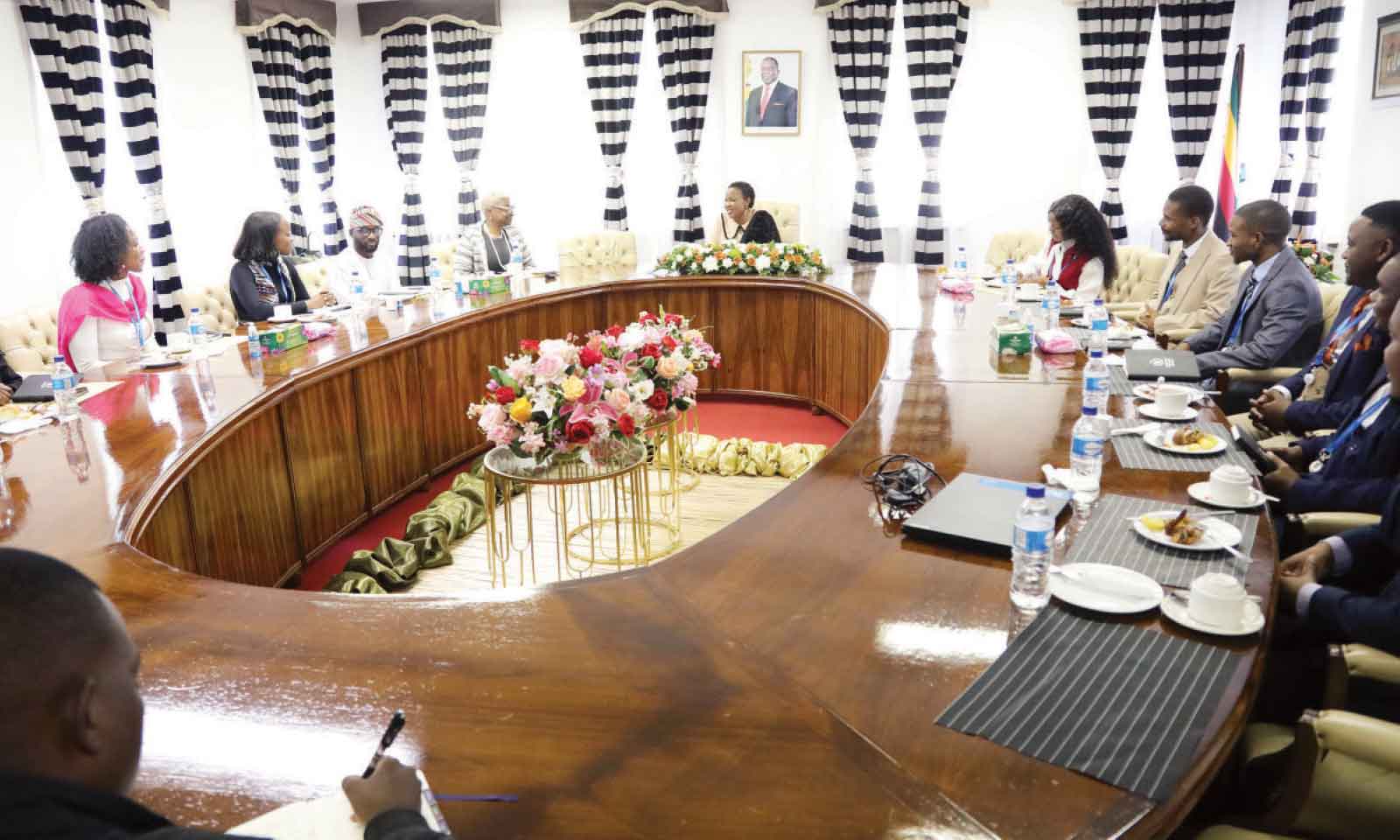
Blessings Chidakwa
Senior Reporter
THE World Food Programme (WFP) Zimbabwe delegation met First Lady Dr Auxillia Mnangagwa to present a Youth Empowerment Leadership Programme, boosting young people’s participation and promoting youth-inclusive collaborations in agriculture, tourism, culture, education, and beyond.
The meeting, held at the First Lady’s Zimbabwe House offices in Harare, aimed to strengthen partnerships and identify areas where the WFP and the First Lady’s initiatives can work together to drive sustainable development.
Dr Mnangagwa shared her vision for empowering communities, particularly youth, through these sectors.
Discussions focused on promoting sustainable agricultural practices among youth, boosting tourism, and preserving cultural heritage through programmes such as Nhanga/Gota/Ixhiba.
Some of these initiatives are being carried out at centres, including Baradzanwa Cultural Village, a new tourism jewel in Mazowe, while also enhancing educational opportunities for young people.
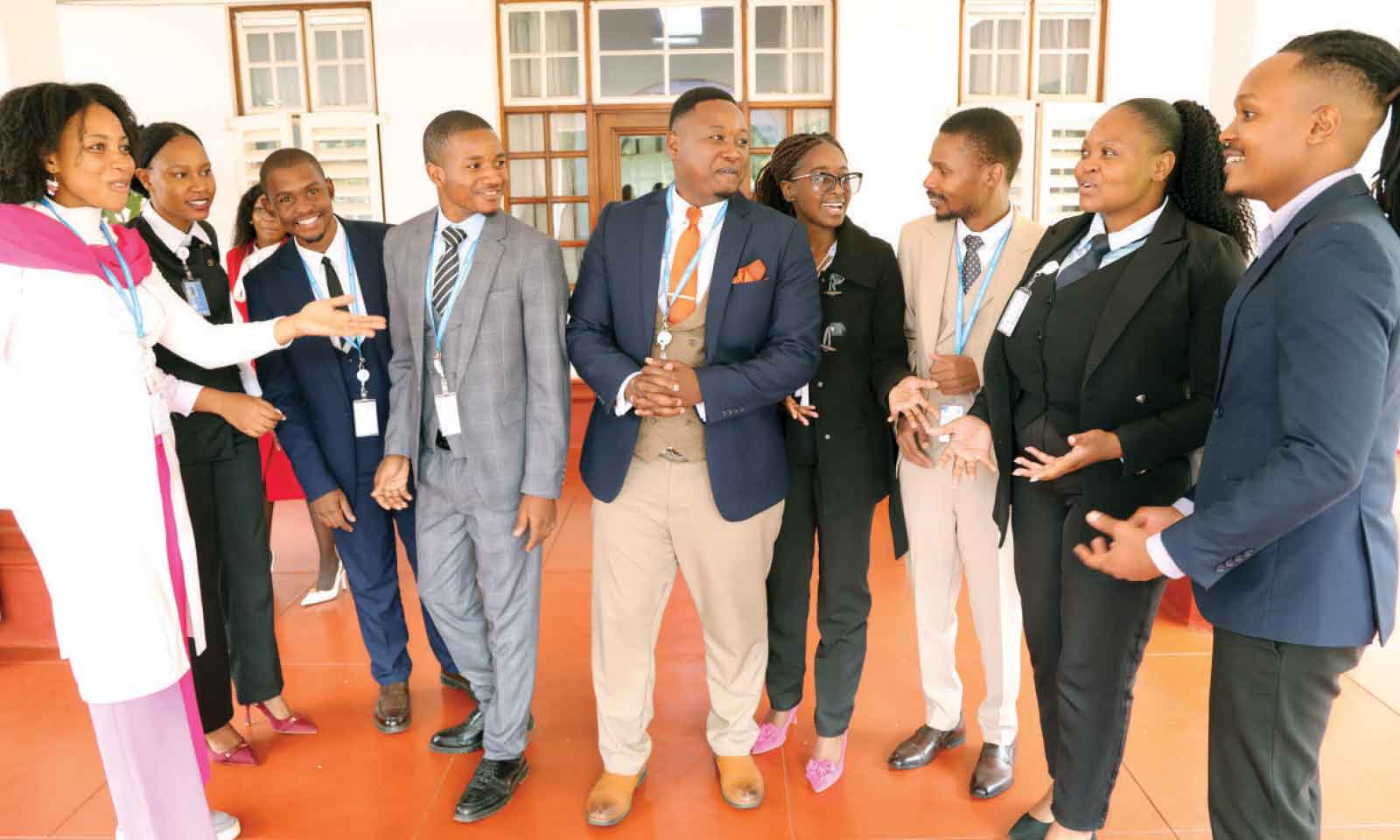
The delegation, comprising youth leaders drawn from various portfolios, including agriculture, economics, and media, briefed the First Lady on the initiative and explored areas of collaboration.
The First Lady, Dr Auxillia Mnangagwa, expressed heartfelt admiration for the World Food Programme youths initiative, commending their determination and reaffirming her unwavering commitment to supporting the nation’s young people.
Dr Mnangagwa highlighted several initiatives she is keen to collaborate on, expressing enthusiasm for partnerships that foster sustainable development and empower Zimbabwe’s youth to reach their full potential, including stronger initiatives with universities.
“I am deeply passionate about the development of young people and will support initiatives that provide them with practical experiences and meaningful opportunities to contribute to our nation’s growth,” she said.
Dr Mnangagwa said the delegation had arrived at an opportune time, as her office is actively seeking stronger engagement with young people and institutions of higher learning across the country.
The First Lady encouraged them to work closely with her office, including participating in the design of programmes that uplift fellow youths and advance the nation.
She called for stronger collaboration with young people, cautioning that some are increasingly at risk of falling into the traps of drug and substance abuse, while saying initiatives like these help them overcome such challenges.
Dr Mnangagwa also urged the promotion of Zimbabwe’s rich culture, emphasising that such programmes would strengthen communities, inspire young people and guide them towards productive and meaningful pursuits.
Giving context of the initiative, WFP Zimbabwe Country Director Barbara Clemens said the Youth Empowerment Programme is a vision about how they can contribute to the youth movement in Zimbabwe.
Ms Clemens said they ran a programme similar to this in Ghana and recruited the coordinator to come to Zimbabwe and start a programme for Zimbabwean youth.
“Our primary motivation is having these young people come in, and we say we are doing youth empowerment relevant to the context of Zimbabwe. I think the key to that is that the conceptualisation of what we do in Zimbabwe should not just be something that we make up on our own.
“It should be led by the people we are hoping to serve, who are the youth. Not only that, it should be led by the leadership of Zimbabwe. We have come here to the First Lady, but one of the things that we are doing is taking the youths around to the various ministries,” she said.
WFP Country Director Ms Clemens said the First Lady also pledged to work with the team while also spearheading the introduction of the team to other ministries as well.
“So we hope that at the end of the day, people see that this is a Zimbabwean-led initiative. We have no preconceived notion of what the youth should be working on, but it should be driven by the needs of the country,” she said.
WFP country director Ms Clemens said from a global perspective, the continent of Africa is one of the only places where the growth in youth demographics is higher than anywhere else in the world, making it a tremendous source of opportunity to harness their passion and their talent to move the continent forward.
“It is my sincere hope that the youth who are involved in this programme really take it seriously. We want their passion to be brought to the work that they do.
“So I wish them all the best and it is not about what WFP would like them to do; it is about what the country of Zimbabwe would like them to do,” she said.
The WFP youths, who expressed their admiration for the First Lady owing to her numerous successful youth-centred projects, showed enthusiasm for the potential partnerships, citing the benefits for Zimbabwe’s development.
Youth coordinator Rutendo Bamhare said the engagement was meant to introduce the programme, which is being rolled out by WFP Zimbabwe for the first cohort of young leaders.
“This is the first cohort of its own. So the First Lady is someone who really values the youth and whose heart beats for the youth,” she said.
One of the youths, a winner in the First Lady’s 2022 gastronomy competitions, a youth leader, Princess Masuku, said YELP consists of 10 youth leaders chosen from a pool of 1 140 applicants, representing different provinces across the country.
“We appreciate your spearheading the cooking competition that has actually put Zimbabwe among the top countries in gastronomy. It is a privilege and an honour for me to meet you face-to-face. I was one of the winners of the 2022 competition held at ZITF in gastronomy, so for me, this meeting is both a privilege and an honour.
“As a team, we are hoping that, since you are passionate about gastronomy, nutrition, women’s empowerment, and youth empowerment, and because the competition included youth participation, our meeting today will open doors for more collaboration and future competitions,” she said.
The youth leader added that they started the programme on December 1, 2025, where they were introduced to organisations, completed mandatory courses, and are currently being deployed to different units.
Some are in management services, others in external relations, media, communications, and more, reflecting their diverse backgrounds.
“Each of us has a project that will not only empower WFP Zimbabwe but will also contribute to empowering Zimbabwe as a nation. So yes, the project is for WFP Zimbabwe, but it extends beyond that.
“It is for other youth across the country. We humbly request to look for possible areas of collaboration, possibly around your initiatives, including Agri-4She.
“We also commend you for the Careers Expo you held earlier this year in Chishawasha. The youth are hungry for opportunities. They are talented. This group, I can say very confidently, is very energetic, full of innovation,” she said.
WFP youth programmes adviser Michael Ige said they engaged the First Lady as someone with youth at heart.
“The First Lady is very passionate about young people and the participation of young people, inclusion of young people in programming, and that is actually linked to what we are doing in the World Food Programme to make young people enablers and improvers of the Agri-food system.
“So she was so passionate about talking about Agri-4She and the First Lady’s movements in the universities, just like an entry point for young people to go into. She is quite open to working with young people, which we are super excited about,” he said.
“We are actually looking forward to greater projects, bigger projects with her. We are looking forward to working with her,” he said.
“Of course, she is also passionate about going to the field for the young people because she is talking about hands-on experience, which we have been talking about, skills, capacity building and skills gap when it comes to youth and employment. I think this is a great opportunity for the youth in Zimbabwe.”
The First Lady has been championing a range of youth-focused projects across the country’s provinces, equipping young people with practical skills through training programmes and initiatives such as Nhanga/Gota/Ixhiba, designed to help youths engage with Zimbabwe’s rich cultural heritage.
Dr Mnangagwa’s deep care and commitment to young people are further reflected in the establishment of the Angel of Hope Drug Rehabilitation Centre, a facility that embodies a shift from awareness to action, demonstrating her hands-on approach in addressing the challenges of drug and substance abuse.