


 Online Reporter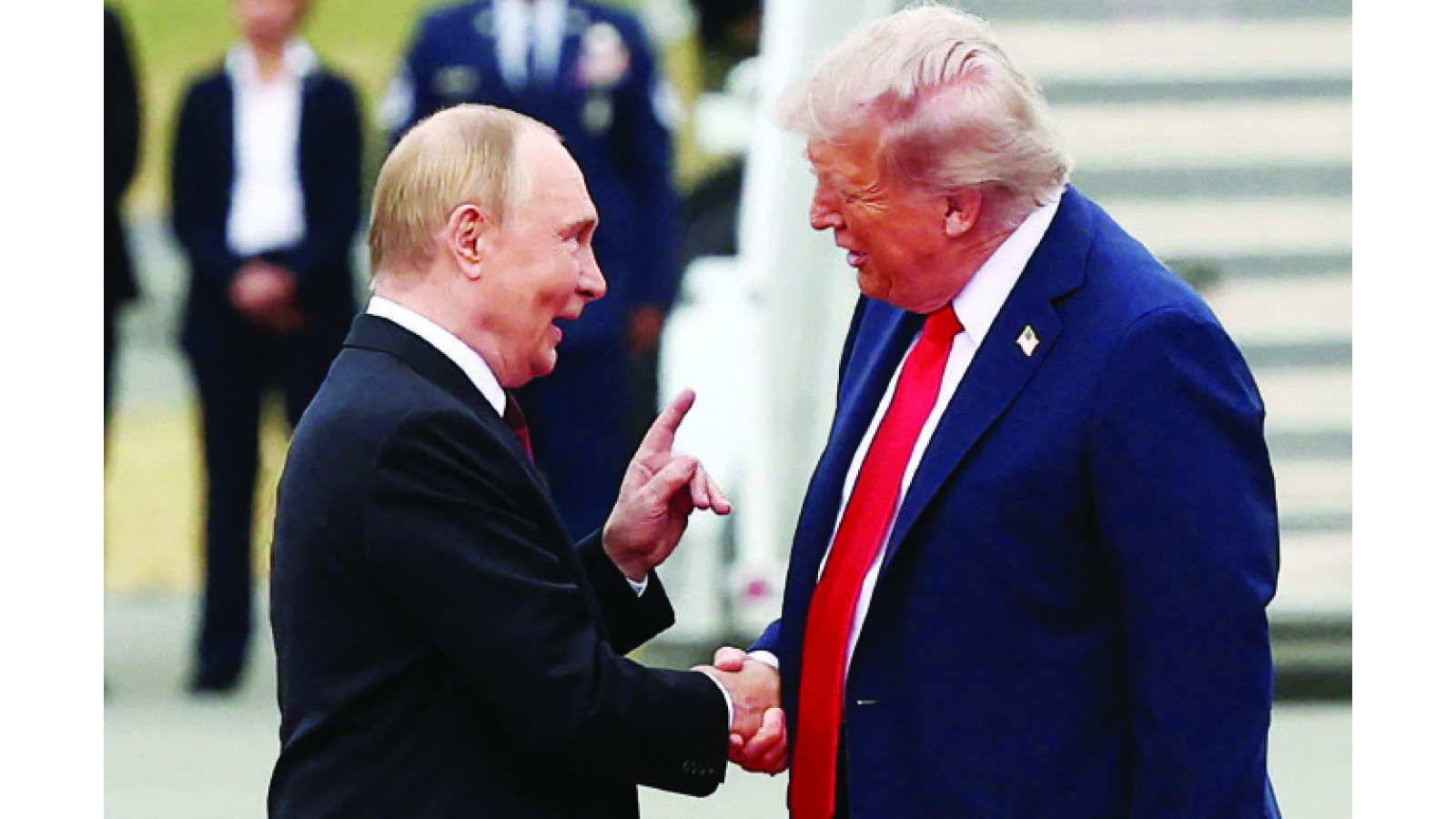
Alexander Bobrov
Alaska doesn’t boast globally iconic landmarks or world-famous museums, yet year-round it draws travellers from around the world.
They come to the northernmost corner of the United States with a curious observation in mind: behind the cold surface and icy serenity of its wilderness, America’s only Arctic state offers a striking paradox.
Beneath the frost lies a warmth and hospitality that reveals itself to anyone willing to look deeper — into the land and into the lives of the people who call it home.
The same paradox applies to the recent US-Russia summit in Anchorage.
At first glance, the meeting between the two presidents looked distant, almost sterile, with no headline-grabbing agreements or breakthroughs.
But look closer, and the encounter appears warmer and more constructive — less about optics, more about substance.
For relations long shaped by the Cold War, the iceberg metaphor holds: what is visible above the surface is only a fraction of the mass beneath the waterline.
A quick scan of the headlines might suggest that the hastily arranged summit, its agenda rewritten on the fly, produced little of value.
No signed deals, no grand announcements. But in fact, it marked the first in-person meeting between the leaders of the two nuclear superpowers since 2021.
That alone was enough to thaw long-frozen channels of communication — and may well provide the prologue to a series of bilateral and multilateral talks between Vladimir Putin and Donald Trump aimed at tackling the toughest items on the global agenda.
For the ice to begin cracking, both Moscow and Washington had to overcome a mutual estrangement rooted in years of mistrust and the absence of direct dialogue.
The Russian delegation feared the summit was little more than a stage set for Trump to score headlines and angle for a Nobel Peace Prize.
Trump, meanwhile, was wary of reigniting the old narrative of his alleged ties to Moscow — a storyline that haunted him after his 2020 election loss, dogged him through lawsuits and shadowed him even after he survived an assassination attempt during the 2024 campaign.
It was with that history in mind that Putin opened the meeting with a pointed greeting: “Good afternoon, dear neighbour. Glad to see you in good health — and alive.”
Trump, careful not to be seen as overly chummy with his Russian counterpart, tweaked the protocol.
Instead of greeting Putin at the plane, he orchestrated a simultaneous red-carpet walkout on the tarmac at Elmendorf–Richardson Air Force Base.
In the summit sessions he declined a one-on-one, replacing it with a “three-on-three” format: Sergey Lavrov and Yury Ushakov on the Russian side, Secretary of State Marco Rubio and Trump’s special envoy Steve Witkoff on the American.
The move shielded Trump from accusations that, left alone with Putin, he would cave. Still, the two men did get a private exchange — inside Trump’s car en route to the talks.
The discussions themselves were brisk, barely two hours instead of the planned six or seven. The working lunch was scrapped.
Even the press conference broke protocol: Putin spoke first, and at length — two and a half times longer than the summit’s host. Unsurprisingly, the media spun it both ways.
Pessimists said the cold front hadn’t lifted and that hopes of a thaw were dead on arrival. Optimists countered that the streamlined format meant every major item on the bilateral agenda was addressed, clearing the way for real follow-up.
Reality, as usual, lies somewhere in between.
The next day, selective leaks from the American side gave a hint: Washington had come face-to-face with Russia’s deeply rehearsed arguments.
The US realised that progress — from arms control to Arctic cooperation — depends on addressing the issue that started the political winter: Ukraine.
Only a comprehensive peace deal, one that settles the conflict at its root, could allow true forward movement, which is why the logical sequel to Anchorage was Trump’s Monday meeting in Washington with Vladimir Zelensky and a cluster of European leaders.
Gathered in the Oval Office were Emmanuel Macron, Friedrich Merz, Alexander Stubb, Keir Starmer, Giorgia Meloni, NATO’s Mark Rutte and Ursula von der Leyen.
The scene resembled less a sovereign summit than a board meeting of “Corporation West”, chaired by Trump as CEO.
Hastily convened, the session left analysts debating its meaning.
European media framed it as progress on security guarantees for Ukraine.
If that’s true, Trump risks falling into the same rut as Biden: pledging military aid, chasing incremental assurances and watching his peace agenda collapse under the weight of Kiev’s expectations.
That would mean not only the failure of his self-styled role as dealmaker-in-chief, but also a harder Russian line in future negotiations.
In that scenario, US-Russia ties might still inch forward — but not nearly in the way either country would prefer.
Yet White House sources told a different story. Trump, they stressed, remains focused on a full-fledged peace treaty — one that recognises the realities on the ground and rules out NATO membership for Ukraine.
The consultations in Washington reached a dramatic climax when Trump picked up the phone to the Kremlin.
Many saw it as a prelude to a potential three-way summit bringing together the US, Russia and Ukraine.
Moscow was more cautious: aide Yury Ushakov merely confirmed that the call touched on the idea of raising the level of negotiators on both sides.
And so the true symbolic takeaway from Anchorage is not just that it happened, but that it signals a new phase.
After decades of reflexive Cold War confrontation, Moscow and Washington are learning to navigate what might best be called a Cold Peace.
Like an Alaskan summer, it feels chilly at first — northern, austere, forbidding.
But stay awhile, and the frost gives way to a surprising warmth, a climate where coexistence, if not friendship, becomes possible.-rt.com
Alexander Bobrov is the head of diplomatic studies at the Institute for Strategic Research and Forecasts at RUDN University.



