Online Reporter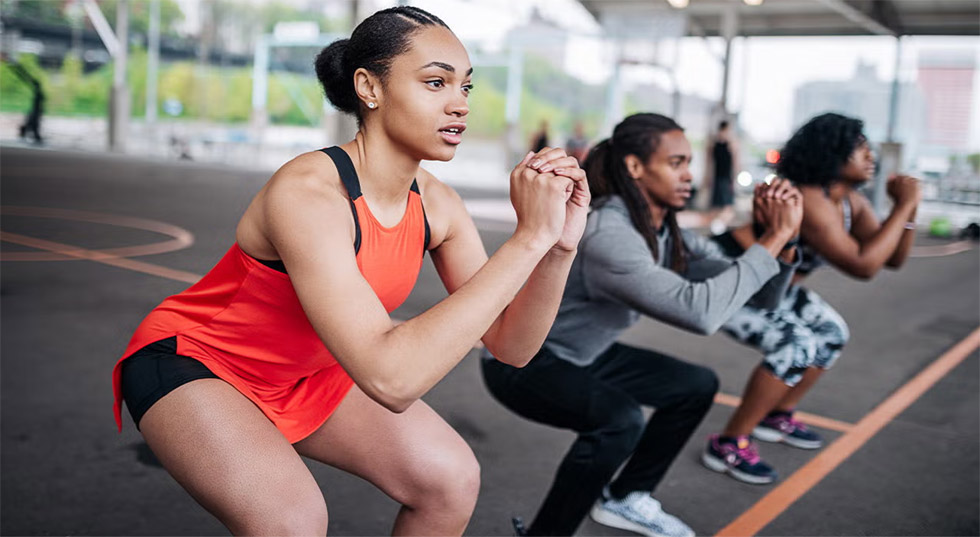
SQUATTING is a popular exercise that targets the muscles in the legs, lower back, and core.
It can help people strengthen their muscles and burn fat.
However, performing a squat without learning the proper form can cause injury.
A wide range of cardiovascular and strength exercises can help people improve their overall health and fitness. Each type of exercise targets specific muscle groups to strengthen them and improve flexibility or prevent injury.
This article discusses the benefits and risks of squatting and explains how to perform several variations of this exercise.
How to perform a squat
People can perform squats in various ways, each of which has different benefits. However, a traditional squat involves the following steps:
Stand with the feet shoulder-width apart and the toes pointing slightly outward. The arms should be straight out in front.
Bend the knees to push the hips backward, keeping the back straight and the torso upright. The movement is similar to sitting back in a chair.
Once the knees reach a 90-degree angle or lower, push back up through the feet to straighten the legs.
Some tips to ensure proper form include:
keeping the knees in line with the feet
keeping the weight on the balls of the feet to avoid tilting forward
keeping the heels on the floor throughout the movement
straightening the back and keeping the torso upright during the squat
What are the benefits of squats?
Experts regard the squat as one of the most effective trusted source exercises for enhancing athletic performance. It is relatively easy for most people to perform because it does not require any equipment.
The specific benefits to the body include:
strengthening the muscles trusted source in the legs, including the quadriceps, calves, and hamstrings strengthening the knee joint
burning fat and promoting weight loss
strengthening the lower back
improving flexibility in the lower body
What are the disadvantages?
People who squat without proper form may experience knee pain. They can help prevent this by ensuring that the knees stay in line with the feet during the squat.
Squatting with weights can increase the risk of injury, including damage to the knees or lower back, when a person does not perform the exercise correctly.
Anyone performing weighted squats for the first time should consider seeking the guidance of a trainer.
Squat variations
Alongside the traditional squat, people can incorporate different squat variations into their exercise regimen. These variations include:
Wall squats
A wall squat is similar to a regular squat, but a person performs it against a wall.
People can follow these steps:
Stand with the feet shoulder-width apart in front of a wall.
Squat down, keeping the back against the wall.
Once the thighs are parallel to the ground, hold the position for several seconds.
Wall squats are a good option for people looking to build muscle endurance in their legs. Leaning against the wall can also take some pressure off the knees, so this variation may suit those new to squats or prone to knee pain.
Box squats
Box squats target the muscles in the backs of the legs, including the glutes and hamstrings. A person needs a box or bench to perform this squat variation.
The box can act as a guide on how low to squat.
This variation involves these steps:
Stand in front of a box or bench, facing away from it.
Squat down until the knees are at a 90-degree angle to sit on the box or bench.
Push back up slowly, keeping the heels on the floor.
Squat jumps
Squat jumps require a person to perform a normal squat until the knees are at a 90-degree angle. At the bottom of the squat, they push up to jump out of the squat with force. They should aim to land with the feet shoulder-width apart so that they can start another squat jump immediately.
Squat jumps can have more cardiovascular benefits than a regular squat due to the explosive nature of jumping.
Goblet squats
A goblet squat involves performing a normal squat while holding a weight in front of the chest. The weight could be a kettlebell, dumbbell, or medicine ball. Alternatively, if a person does not own any exercise equipment, they can use a household item, such as a full water bottle or a thick book.
Goblet squats target the core and leg muscles, with the added weight helping improve strength.
Lateral squats
Lateral squats target the gluteus medius and hip abductors, and they are a great option for people looking to improve their dynamic balance, flexibility, and agility.
People can perform lateral squats by following these steps:
Start with the feet slightly wider than hip-width apart, with the toes pointing forward.
Bend the right knee and shift the body weight into the right leg while pushing the hips backward. The left leg should stay straight, with the torso remaining upright. Holding the arms out in front can help with balance.
Press through the right heel to bring the body back up to the starting position.
Repeat the exercise on the other side.
It is important that the bent knee track directly over the toes, so a person may need to adjust the distance between their feet.
Pistol squats
The pistol squat is an advanced exercise that requires strong legs. It exercises each leg separately and targets several muscles.
It involves these steps:
Start in a normal squatting position and extend the left leg out in front, keeping it straight with the heel just above the floor.
Raise the arms out in front and bend the right leg, pushing the hips back into a squat.
Squat down as low as possible, aiming to rest the right hamstring on the right calf.
Drive back upward by pushing through the right leg.
Repeat on the other side.
Pistol squats offer several benefits. They work each leg individually, engage the core more intensely than a normal squat, and improve flexibility and balance.
Safety tips
Tips to reduce the risk of injuries while squatting include:
warming up properly to prevent muscle injuries Trusted Source
keeping the back straight at all times
ensuring that the knees stay in line with the feet
avoiding sudden or large increases in weight
hiring a personal trainer to practice good form, if new to squatting or using weights
The squat is an effective
Exercise for strengthening the leg and back muscles. It can also improve core strength. The exercise requires practice to learn proper form that will reduce the risk of injury.
There are many variations of squats, each of which offers different benefits. The types include box squats, squat jumps, and lateral squats. The right choice of squat variation for a person will depend on their current level of ability and training goals.
Squats and big bums now that is a power duo. If you are aiming to sculpt strong, round glutes, squats are a foundational move but not all squats are created equal, and they are just one piece of the booty-building puzzle. Let us break it down with some expert-backed guidance and killer workouts:
Why squats work for glutes
Squats target the gluteus maximus, quads, and hamstrings. But to really emphasize the booty: Use a wider stance (like sumo squats)
Go deep full range of motion activates more muscle fibres. Add resistance (barbells, dumbbells, or bands). — Online