Online Reporter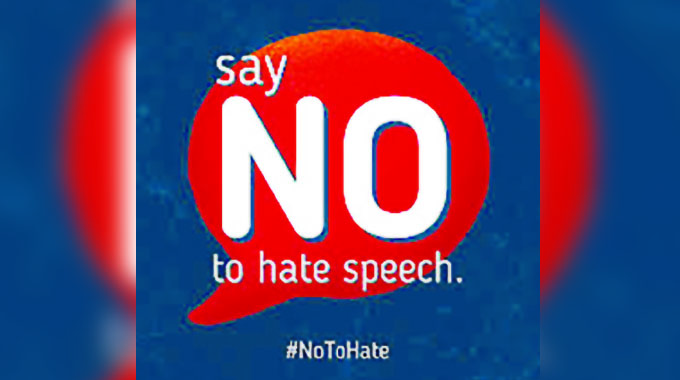
Nomagugu Nyathi
INSULTS, jokes, and heated opinions are part of everyday life. But where do we draw the line between free expression and speech that causes real harm? The Zimbabwean Constitution is clear — everyone has the right to express themselves, but this does not extend to hate speech.
Hate speech is not just general rudeness. It’s a much more serious issue involving words, writing, or behaviour intended to deliberately attack, offend, or incite violence, hatred, and discrimination against people based on their identity — such as religion, ethnicity, nationality, race, gender, or disability. What is concerning is that hate speech tends to create a social environment which is ripe enough to normalise discrimination.
Examples of hate speech in real life may include:
— A teacher using hurtful language to describe a student living with a disability.
— A comedian joking about sexual violence against women in a public setting.
— A musician releasing a song encouraging attacks on members of a particular faith.
— A podcaster hosting a show designed solely to spread racist ideas.
— A social media influencer circulating a meme likening a certain group of people with animals.
Whatever the case may be, the United Nations calls on governments around the world to take strong measures against hate speech. Recognising that many conflicts, wars, and deadly social tensions are often fuelled by such speech, the UN adopted a Strategy and Plan of Action to address it. Part of this effort includes the formal establishment of June 18 as International Day for Countering Hate Speech.
While Zimbabwe does not have a specific legislation dedicated to hate speech issues, it has established institutions where citizens can report hate speech. The Zimbabwe Human Rights Commission (ZHRC) is empowered by law to investigate a wide range of human rights violations, including hate speech.
Zimbabwean citizens can also engage with platforms created by the National Peace and Reconciliation Commission (NPRC), which regularly hosts dialogues across the country. These spaces offer people the opportunity to speak openly about identity, social divisions, and how we can work towards mutual understanding and peace.
While local avenues for reporting hate speech exist, regulating it — especially online — remains a growing challenge. Social media platforms such as Facebook, X, and YouTube have policies in place, but they often rely heavily on users to identify and report harmful content. This makes it even more important for individuals to recognise hate speech when they see it and take action.
In sum, it seems that combating hate speech requires more than policies; it demands awareness, responsibility, and collective effort. Whether in the classroom, on a stage, behind a keyboard, or on the streets, each person has a role to play in choosing respect over ridicule, and robust debate over discrimination.
l Nomagugu Nyathi works in the humanitarian sector and is trained in International Human Rights Law. She has a wide range of interests including equality laws, social policy and migration.