admin
admin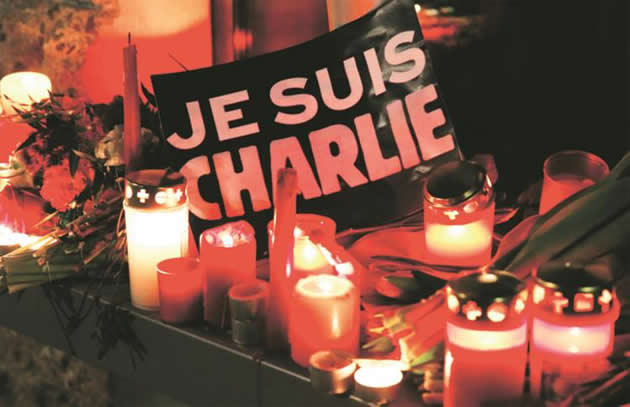
Tichaona Zindoga Political Editor
The world is currently spellbound by the story of 12 people who were killed when two gunmen stormed the offices of a French satirical magazine, Charlie Hebdo. For journalists, especially, the outrage is great and local scribes are as mortified as any in the profession.
The very thought of some jerk storming the office and opening fire on everyone sends shivers down the spine.
It is more horrifying because newsrooms are by design relatively small, crammed hovels served by one entrance.
Such attacks make distinct possibilities because journalists often rub everyone except their immediate betters the wrong way.
(Someone once said something to the effect that, journalism is publishing what someone out there does not want known: everything else is public relations.)
It is often touted that the pen is mightier than the sword, but honestly, shorn of the magic of powerful mediums, journalists are ordinary, if timid, men and women.
There has been considerable debate over freedom of speech/expression, a debate which could be as old as the profession and art itself.
Journalists, writers and artists detest being shackled and in Zimbabwe journalists have been crying to high heavens over such pieces of legislation as AIPPA and POSA, which place limitations on gathering and disseminating information and the scrapping of a law proscribing publication of falsehoods was universally welcomed.
Journalists, writers and artists are free spirits and as for cartoonists and satirists, they are even freer spirits that seek to poke fun at anyone and everyone.
Which, those at Charlie Hebdo did, as for them “nothing was sacred, especially the sacred”.
This is because the satirists at Charlie believed in an ideal called freedom of expression.
The attack has been construed as an assault on the same, which is why mourners in Paris held up pencils, crying for freedom of expression.
The question that begs an answer then becomes, to what extent should one exercise such freedom of expression?
In Zimbabwe journalists do not have to worry much, because society somewhat does not wholly savour full enjoyment of the freedom the way Westerners do, especially so social democratic France.
In the West, there has been rampant “Islamophobia” in the media and this mirrors what politicians there believe as a threat to Western civilisation.
Muslims are considered irrational and uncivilised people.
The purity of their belief, especially in the Prophet Muhammad, is frowned upon and mocked.
Newspapers like to portray the Prophet Muhammad in all sorts of unreligious manner, from eating pork to, in the case of Charlie since 2006, mourning Islamic fundamentalism, being gay and lately being beheaded by the Islamic State militants.
The Islam allegedly poses is captured by scholar Samuel Huntington who believes that “Western ideas of individualism, liberalism, constitutionalism, human rights, equality, liberty, the rule of law, democracy, free markets, the separation of church and state, often have little resonance in Islamic societies.”
Stephen Lendman, quotes “hatemonger” Ann Coulter as writing: “We should invade their (Muslim) countries, kill their leaders and convert them to Christianity. We weren’t punctilious about locating and punishing only Hitler and his top officials. We carpet bombed German cities and killed civilians. That’s war. And this is war.”
All this hate-mongering and hate speech is permissible by law and “human rights” in the West and countries such as the United States want such tenets of democracy replicated everywhere on the globe.
It is part of the “civilising” mission by Westerners to lesser peoples.
The International Covenant on Civil and Political Rights, which was adopted by the United Nations General Assembly on December 19, 1966 and has since been localised by states, is held up as the cardinal rule.
It states, in Article 19, that “Everyone shall have the right to hold opinions without interference” and “Everyone shall have the right to freedom of expression; this right shall include freedom to seek, receive and impart information and ideas of all kinds, regard less of frontiers, either orally, in writing or in print, in the form of art, or through any other media of his choice.”
Freedom of expression, and in a special case, freedom of the media/press is provided for.
Zimbabwe’s new Constitution expressly guarantees freedom of the media, and this has been hailed, expectedly by liberals amongst us.
What is often lacking, and perhaps unclear or ignored, are the “special duties and responsibilities” that go with the enjoyment of the said rights.
ICCPR states such special duties and responsibilities, meaning restrictions, “shall only be such as are provided by law and are necessary: (a) For respect of the rights or reputations of others; (b) For the protection of national security or of public order (ordre public), or of public health or morals.”
Further, “Any propaganda for war shall be prohibited by law. Any advocacy of national, racial or religious hatred that constitutes incitement to discrimination, hostility or violence shall be prohibited by law.”
Rampant Islamophobia and propaganda which make Western media should in the ordinary sense be illegal, even if the same media may occasionally attack other religions; the latter argument being fallacious, non sequitur.
One may not even have to venture into “propaganda for war”, which has lately become the hallmark of the Western media in its stand-off and completion with Russia and China, all but dating from the days of the Second World War.
The UK government’s Foreign and Commonwealth Office last year produced a paper entitled “Hate speech, freedom of expression and freedom of religion: a dialogue”, which sought to deal with the case.
“Can I provoke? Can I be offensive?” it asks dialectically.
It explains that states “are afforded a margin of appreciation to decide whether and how to protect religious convictions and beliefs”.
“For example, a State can stop you showing on its territory a film which gratuitously offends religious sensibilities (cf. Otto-Preminger Institut v. Austria, Wingrove v. UK. Both, incidentally, about anti-Christianity films) or stop you publishing a passage in a book that constitutes an abusive attack on the Prophet of Islam.”
That is, depending “on the circumstances of the case and the situation in the country concerned” but “a State does not have to prohibit speech that is merely provocative or offensive about a religion.”
The paper also clarifies that “certain cases of extreme speech may forfeit the protection of FoE (freedom of expression), for the sake of protecting the rights of others (Norwood v. UK, I.A. v. Turkey. In each of these cases, the ECtHR (European Court of Human Rights) upheld the States’ concerned right to punish the applicants for making inflammatory statements about Muslims and Islam respectively.)”
For some reason, countries in Europe and America do not feel obliged to outlaw “extreme speech” and punish Islamophobic offenders.
The outrages such as Charlie Hebdo, which cannot be acceptable, are bound to occur, especially with the radicalisation of marginalised communities.
Only the results are interesting: it gives the governments reason to pursue the Islamic terrorists at home and abroad and clamp down on the civil liberties of citizens.
It has happened in America and Britain and in the past few months Canada and Australia; lately France.
What really do writers, journalists and artists have to do with their “freedom”?


 Online Reporter