

 Chronicle Editor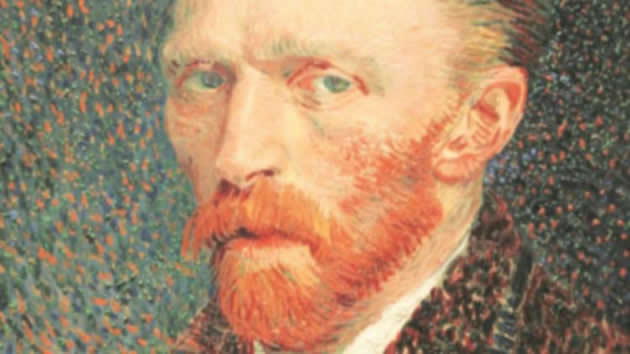
Knowledge Mushohwe Correspondent
Teaching art to a wide range of students is not an easy task. A tutor may be tempted to start with the basics such as basic lines and shapes, but that may disadvantage the group of students that already knows or understands the elementary language of visual communication.
Even when all students are on the same wave length, those that have more passion for developing creative products always gain some advantage in the long term.
In fact, in any art class, there is always a clear distinction between those that have a natural talent and those that continuously struggle, regardless of how much work they put in.
This may be because art classes are less about learning how to create an image, and a lot more about improving the technical and theoretical aspects of a gifted student.
It is just like business school, where one is presented with a platform to understand possibilities and the potential of the smaller ideas already in the head.
Schools and parents, however, often view art as a hobby or a stress relief in between the “actual” subjects that are widely viewed as the stepping stones to “real” jobs. But pushing a born artist towards the conventional office jobs cannot be a solution.
Similar to how mathematicians see the world in digits, artists’ thought patterns are almost always made up of images.
While some concede that their artworks are a direct result of the tripartite relationship between the eye, brain and the hand, for most, at least those I know and including me, the hand is only the outlet. The image in this case is made through a combination of observation and imagination, and it becomes part of the big “gallery” inside the head.
After, the image is transformed into a physically perceptible product by the hand.
That process is perhaps the most difficult as the quality of the end product is determined by many variables, including medium, style, time, value and emotion.
The work of 19th century abstract expressionist Vincent Van Gogh, the way its brushwork transformed over a long period, is a clear testament of how emotion can dictate physical appearance of works of art.
The way an artist puts pen to paper after bereavement, or a break-up or when broke, is different from when he or she is in a happier mood.
When younger the thought patterns of an artist are not as vivid and creative as later because of experience.
The artworks are usually low in quality, devoid of detail and the line work is indecisive and bold. However, the potential is always there.
More practice, a clearer understanding of how things around them work and the creation of a better relationship between the hand and the processes around the head may bring better results.
Many have found the images that they create to be good communication tools and have made careers out of their thought patterns.
Advertising agencies and the media are finding out that information packaged with creatively arranged images carry an emotional message that is very important in data dissemination.
Image is part of communication and the need to present a visual equivalent of what can be said in words has opened up career opportunities for visual artists.
Image presentation has the added advantage of having the ability to capture imagination in a direct and immediate manner.
Editing done through the mental process and sometimes combined with digital manipulation ensures that visual information is specific and well suited to a targeted audience.
The creative process starts with an idea and moves into a realm with multiple images moving into many directions.
Depending with the individual, the extension of idea the raw idea may bring fresher ideas that encourage further probing.
But because the extensions move into different directions, some thoughts are abandoned in pursuit of the stronger and more interesting visions.
This process takes up a lot of time and space in the head. This is why visual art cannot be rightly considered to be a hobby.
The visions are so strong that thinking about how to assemble the images into a comprehensible composition becomes a full-time adventure.
In contrast to formal white-collar employment where there is a clear distinction between office work, social time and sleeping, the creative process continues all through the entire experience of the artist.
There are times that the visual mind is occupied by thoughts unrelated to the idea process but interestingly, there are lots of “handles” all around that can trigger the mind to initiate or resume the fine tuning of a visions.
Visual ideas may come from anywhere. Inspiration is provided by anything, including the lived experience, family and friends, or even dreams.
Some artists go to sleep with sketch books on the side of the bed and occasionally get up to put to paper whatever comes to them in their sub-conscious state.
But the biggest resource for creative ideas is the day-to-day experiences of the artist.
A normal conversation, for example, may create layers of thought extensions or alternative meanings that continue to grow and end up creating a composition that has a clear intent.
Images may be informative, entertaining, educative or amusing but the process that ultimately creates them is the same. The transformation from a blurry assortment of images to one complete composition with meaning and purpose is not meant to be a hobby.
It is not meant to be a process for one to discover themselves when holed up in employment or identity crisis. It helps, but its definitive objective is to help the creative mind to decode visual information.
It is also about aesthetic appeal, but beauty without purpose means nothing.



 Online Reporter