admin
admin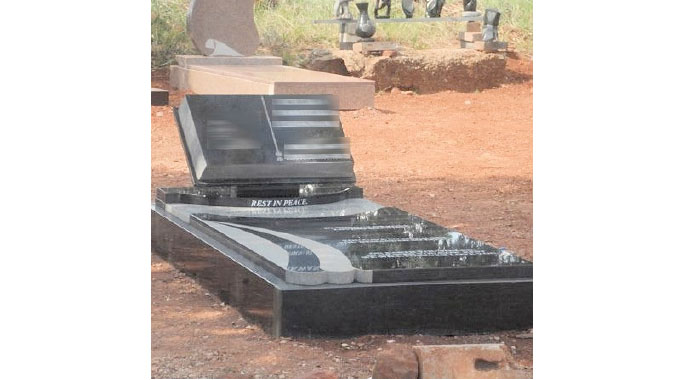
Rejoyce Sibanda, Chronicle Reporter
As the remains of the deceased are interred to their final “resting” place, a remembrance is left behind for people to uphold and acknowledge what they were known for and their role in society.
A headstone is the last marker of tribute after a person dies. The words and symbols on the grave capture the spirit and life of the deceased forever. While some people may guess what gravestones signify, not all interpretations are the same.
The engraved details are a small part of any tombstone design. What upholds the sole design is an inspiration that the deceased was passionate about.
Mr Tryman Sibanda, a tombstone maker from Bulawayo said tombstones are the evolved, modern way of having inscriptions at a grave site.
He said long back, they used to have steel boards where the deceased’s details would be written using paint.
Mr Sibanda said there were also tombstone like structures made of cement that were often used.
These, he said, were soon disregarded because they were not durable.
“The old and rough tombstone-like pieces of cement which had the deceased’s details were hard to work with. This is because once they were subjected to different types of weather, they would fall and break. Another challenge was that they were not smooth and pleasing to the eye and one couldn’t be creative with them because they were very fragile. Tombstones are the modernised way of remembering the deceased. I’ve been making tombstones for over 20 years now and they last for a lifetime,” said Mr Sibanda.
He said the good part about tombstone designs is that there is no limit to the designs relatives can choose.
Mr Sibanda said different designs can be drafted on paper and the ideal stone is selected and carved into the design of choice.
He said various tombstone designs depend on the beliefs of any particular group of people.
For example, he said, Jewish tombstones always have their form of writing and symbols on the headstone while the Roman Catholics also have their own.
He said there are tombstones that are accompanied by certain artefacts such as a small lion or elephant statue to represent the totem of the deceased.
In separate interviews, families explained why they had chosen certain designs for their deceased.
Ms Lorraine Dziva (56) from Selbourne Park suburb said the family chose a heart-shaped design for their great grandmother to show how deep the love they had for her ran.

“The reason why we chose the heart shape design was to show the deep love we had for our great grandmother who passed on when she was 92 years old. That heart shape, as most people may relate was to clearly symbolise love. Not only is the heart shape representing the love we had for her but also the abundant love that she had for us, the community and the church. We also had doves engraved on the tombstone to symbolise Christianity, love and peace. This went well with what our great grandmother believed in because she was a Christian,” said Ms Dziva.
She said everything about the tombstone design and the inscriptions represented their great grandmother’s character and what she liked during her time on earth.
Ms Dziva said the tombstone also had her great grandmother’s favourite verse on it and a heartfelt message from all the family members.
Mr Meluleki Moyo (49) from Nketa 9 suburb said his mother chose her own tombstone design before she died.
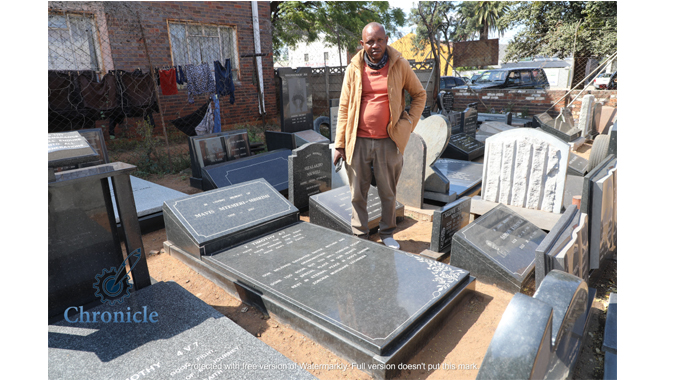
“My mother was a very brave woman so it doesn’t surprise me that she took the courage to choose her own tombstone design before she even passed on. Of course the family was shocked by this and thought she was dying soon but her response was that “ukufa akuhlaleli mntanami”. She chose the tombstone she wanted when she was still in good health and then passed on five years later in a car accident. I’ll always remember her for such bravery. She chose a headstone that had a house-like shape and accompanying it was a form of tombstone bed that was open in the middle. She told us the reason for choosing such a design was that the house like structure represented her final resting house and the bed where she will rest. To her, this was perfect so we adhered to her wishes,” said Mr Moyo.
He said his mother’s tombstone had clasped hands inscribed on it, which signified a final farewell.
Mr Moyo said the tombstone also had inscriptions of dates of when his mother was born, when she died and a message from the family.
“The reason why the tombstone was left open in the middle was that my mother believed that when someone has passed on, they shouldn’t be fully covered in their resting place. The tombstone also has her picture inscribed which she said would help relatives to constantly remember her. She said this was also going to make it easy for her grandchildren and great grandchildren to see or have an idea of how she looked,” said Mr Moyo
Mrs Lungelo Nyathi (32) said her uncle’s tombstone design was that of an open book to represent a life cut short.
“We chose an open book tombstone design to represent a life cut short in the sense that my uncle left us when we still needed to spend more years with him. The tombstone also signifies his faith and love for the Bible because he was a very religious man. We went the extra mile of even buying a small carved lion artefact that was put on the bed of the headstone to represent his totem. I know he’s happy with what we did for him wherever he is,” said Mrs Nyathi.
She said the tombstone design was the best way of remembering her uncle and appreciating him for everything that he did for her when he was still alive.
According to research, the primary function of a headstone is to provide identification of the grave. In a cemetery, without headstones, it becomes very difficult to identify the grave of a specific deceased person, even if you were there yourself when the casket was lowered.
Chances are that, after a while, you may forget which exactly was the grave of your loved one.
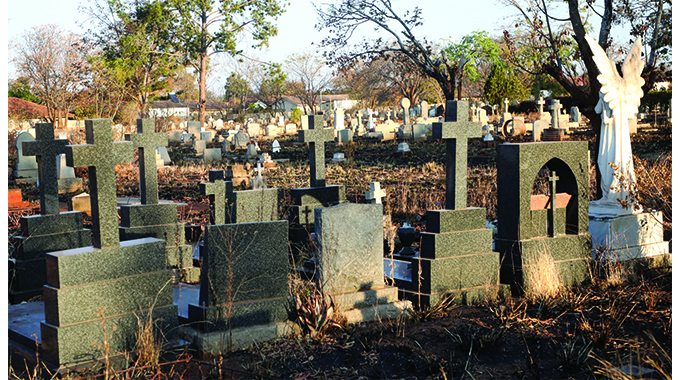
The identification of the grave of a loved one is not only important for the close relatives of the departed soul. It also can help friends, relatives, and other people who know the person and come from other cities or countries. It makes it easy to identify the grave on their own. It is, after all, not always possible to take the children or close relatives of the departed soul with you to the cemetery.
Another reason why having a headstone is important is to make sure no one thinks that there isn’t anyone to take care of the grave and to restore it. It can make sure that your loved one’s grave remains valuable not only for you but also for the authorities managing the cemetery. It’s very important to keep the value and importance of the grave because it’s one of the only ways you can physically be there with your loved one. — @ReeSibanda


 Online Reporter