daniel chigunwe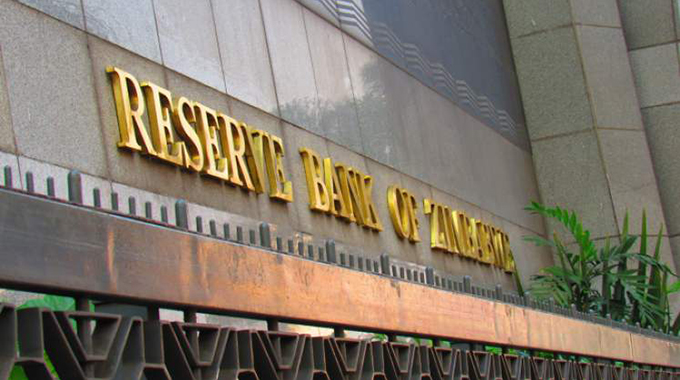
Business Writer
The Reserve Bank of Zimbabwe (RBZ)’s Monetary Policy Committee meets this week for its bi-monthly gatherings to take stock of developments in the economy and proffer the necessary solutions.
This comes as Zimbabwe has recently seen a spike in the parallel market exchange rate, which prompted the bank to hold discussions with captains of the industry to map out a solution to tame exchange rate disparity between the official and parallel market rates.
Among the burning issues the MPC will seek to dissect and proffer suggestions for corrective action will likely be the need to adjust its bank policy rates to curb what they call ‘speculative borrowing’.
This is borrowing to either buy foreign currency; anticipating an immediate rise in rates and make a profit on sale, or debt contraction expecting higher inflation so the loan could be repaid at a marked discount.
The current bank rate is pegged at 40 percent while the Medium Term Bank Rate stands at 30 percent.
At the next meeting of the MPC, it is expected interest rates would be revised upwards by about 1 000 basis points, back to 2019 second quarter levels of 50 percent and 40 percent respectively.
Speaking at the recent pre-budget seminar in Victoria Falls, RBZ Governor Dr John Mangudya said the bank might increase interest rates in the short term in order to curb unscrupulous behaviour, although the bank looks set to reduce borrowing rates in the long term to around 10 percent.
Renowned economist Professor Tony Hawkins said he expected the interest rates to increase but not to positive returns territory.
“The bank knows what needs to be done but it is very unpopular and a back-clash will
be expected. In order for the interest rates to help the currency, they need to be above the inflation level and that’s what we need but we will not see such an increase,” Prof Hawkins said.
The 5 percent statutory reserve requirement for demand and call deposits and the 2,5 percent reserve requirement for time deposits, would likely be maintained at the bank’s fourth coming meeting.
The bank contends that the differential reserve requirement system is necessary as an incentive structure for banks to promote savings in the economy.
A cap on the interest rate at which banks lend the proceeds from the Medium- term Lending Facility is also likely to be maintained at 10 percent above the borrowing rate to ensure recovery of the productive sectors of the economy.
At a recent emergency meeting with business, the bank undertook to continue tightening money supply under its conservative monetary targeting framework to ensure money supply would not drive exchange rate volatility.
This email is confidential and may be legally privileged. It is for the intended recipient only. If you have received it in error, please immediately notify the sender and then delete it. Please do not copy it, disclose its contents or use it for any purpose whatsoever. Zimbabwe Newspapers (1980) Ltd and its subsidiaries do not accept any liability whatsoever for the contents of any e-mail. Please think environment before printing emails


 Online Reporter