admin
admin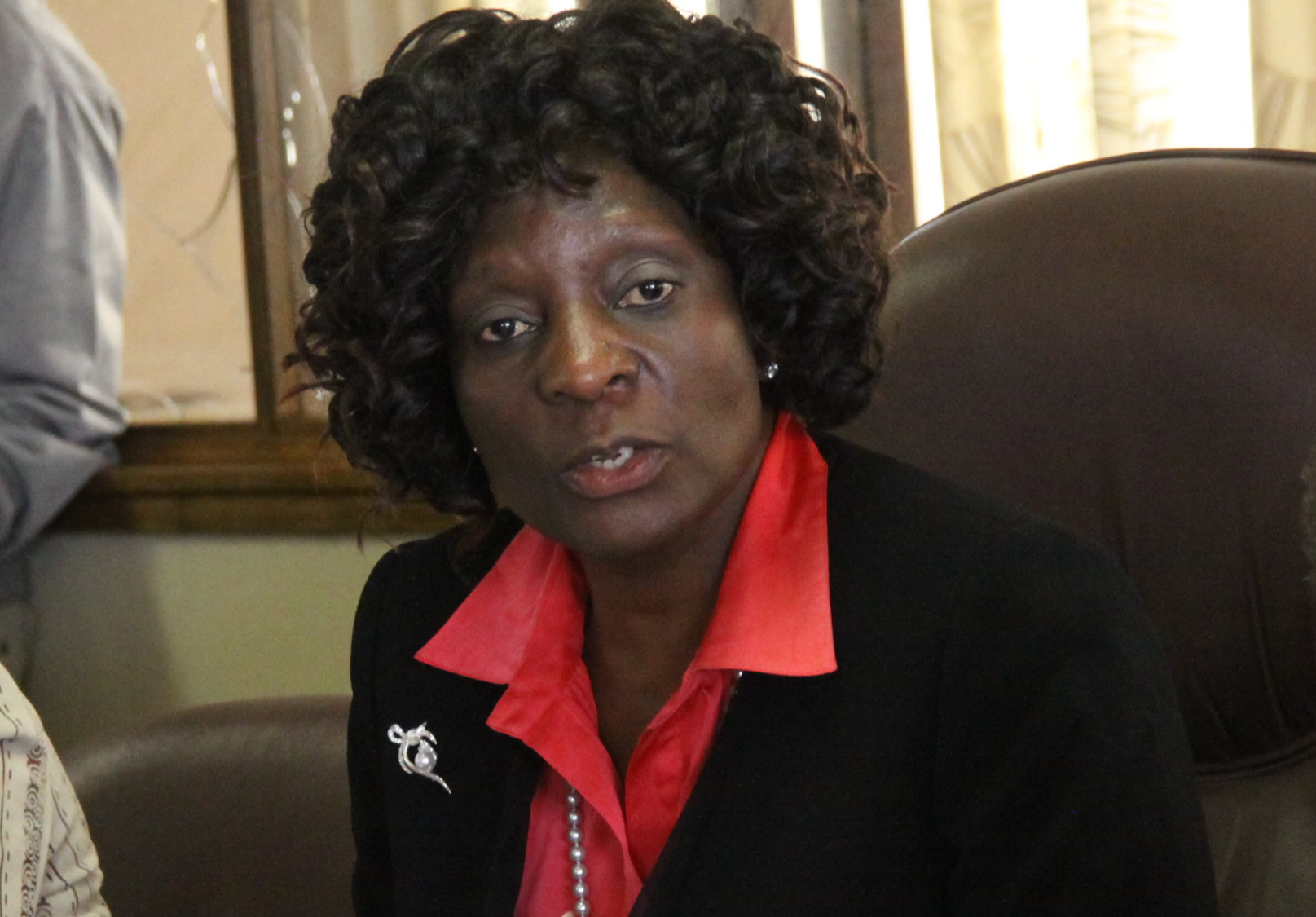
Darlington Musarurwa, Levy Mukarati and Sifelani Tsiko
AS the torrent of approvals of Zimbabwe’s electoral process continue to pour in, there is a consistent noise in the background focusing mainly on the voter registration exercise that preceded the poll and the condition of the voters’ roll.Observers across the board are agreed that the recently concluded polls were credible, free and fair.
Most importantly, the African Union, through its head of mission, Retired General Olusegun Obasanjo, Sadc, through the Electoral Commissions Forum of Sadc (ECF-Sadc) countries, including a cross section of religious groupings have since endorsed the process.
But then there are sceptics whose claims need to be reviewed in order to establish the question of whether the purported discrepancies that are said to have emerged during polling day are enough to warrant an illegitimate outcome.
Civil society groups claim that almost two million voters were “systematically disenfranchised” by a system that was deliberately manipulated to ensure that there was high voter registration in Zanu-PF strongholds relative to registration in urban centres that are perceived to be an enclave of the Movement for Democratic Change (MDC).
We must not fool ourselves into thinking and believing that voter registration is a sacred window that is only opened before elections.
In fact, voter registration is always a continuous exercise. The law in its considerate nature only affords an intensive voter registration exercise, especially in a period before the polls.
Every stakeholder in this election, particularly the contesting parties, was well aware that the inclusive Government was a political construct that was modelled to prepare for a poll that would be fair and credible.
So, where were all those potential voters?
It is often said that those who wait for the 12th hour usually die at the 11th hour.
Those concerned stakeholders should have mobilised their voters.
Again it is crucial to ask: Were these people failed by the system or they failed themselves?
To date, we continue to be told that there were “thousands” of potential voters who were turned away from polling stations either because their names did not appear on the voters’ roll or they were referred to other wards.
Zimbabwe is, however, not a banana republic; it is a functional democracy that continues to reform its processes, and during the life of the inclusive Government the Electoral Act was amended to fine-tune it to meet the expectations of all the stakeholders.
This law also addresses these anomalies.
Section 56 (1) (a) of the Electoral Act clearly states that “ if the name of any voter does not appear on the ward voters’ roll, he or she shall be entitled to vote upon production to the presiding officer of a voter’s registration certificate issued to him or her’’.
In legal lexicon they say ignorantia juris non excusat or ignorantia legis neminem excusat, which is translated to mean ignorance of the law excuses no one.
Zimbabwe Electoral Commission chairperson Justice Rita Makarau ably put the matter into perspective in an interview yesterday.
“The voters’ roll does not vote. It is but a material that is used in an election and cannot be used to drown the voice of the people and where the people have spoken, they have spoken clearly. You cannot say they (the people) have not spoken and because they are coming from a voters’ roll that you allege has irregularities.
“During voter registration, I was calling upon all stakeholders to bring any irregularities in the voters’ roll to our attention, and quite a few people did that. We then referred this to the RGV (Register General of Voters) for correction and nobody thereafter came to us to say they have not been corrected. So, our assumption was that they had been attended to,” explained Justice Makarau.
And there were allegations of manipulation of the voters’ roll.
It must be appreciated that all those making these claims are not giving specifics of any anomalies that they would have noticed.
President Mugabe, on the eve of the elections, challenged media practitioners to report objectively everything that they see.
Unfortunately, of the 840 journalists that were accredited for this year’s poll, no one has been able to give specifics about these claims.
It then makes it difficult to establish the veracity of the claims.
Crucially, before the elections, the Attorney General’s Office noted that the country had adhered to all the 10 Sadc principles governing democratic elections.
A run down of all the 10 major principles all show that Zimbabwe has complied fully with all the Sadc guidelines.
Sadc itself recognises in its Principles and Guidelines Governing Democratic Elections that Sadc member states must create an electoral environment conducive to:
(i) Full participation of all citizens in the political process;
(ii) Freedom of association;
(iii) Political tolerance;
(iv) (iv) Equal opportunity for all political parties to access the state media; and (v) Regular intervals for elections as provided for by the respective national constitutions. Zimbabwe’s compliance of the guidelines according to observers is tabulated below as follows: (l See table below)
In addition to these guidelines, Sadc member states must also provide equal opportunity to exercise the right to vote and be voted for; independence of the judiciary and impartiality of the electoral institutions; voter education; acceptance and respect of the election results by political parties proclaimed to have been free and fair by the competent national electoral authorities and challenge of the election results as provided for in the law of the land.
The regional electoral guidelines were approved at a Sadc summit which was held in Mauritius in 2004.
Zimbabwe was the first country on which the guidelines were used to test the credibility of polls.
The reportage that has come out of these elections, especially from the legion of foreign journalists, shows that nothing much has changed about how the western media, by and large, sees and views Zimbabwe.
Veteran Pan African journalist and editor of the London-based New African magazine Baffour Ankomah noted yesterday that indications on the news, opinions and analysis pieces by the Western media towards Zimbabwe were outrightly biased.
He said most of the news houses were now fiercely peddling propaganda to attack the 31 July vote as a ‘farce,’ ‘sham,’ with a huge dose focusing on irregularities and other challenges which were similarly experienced in both African and Western countries.
Also, he pointed out that this skewed perception of Zimbabwe and its people was appalling.
There is never a perfect election anyway in the world.
During the November 2012 election in the United States of America, the Washington Post newspaper reported that voters at some Virginia polls waited for five hours to cast ballots. Florida voters received phone calls from an election official telling them the wrong day to vote, and dozens of
Republican poll workers in heavily Democratic Philadephia needed a court order to get into election locations.
All this happened in America’s backyard, which regards itself as a paragon of democracy.
One then gets curious when this country continues to be judged unfairly.
However, Zimbabwe has proved after a decade of being under siege that only history can judge her.



 Online Reporter