

 admin
admin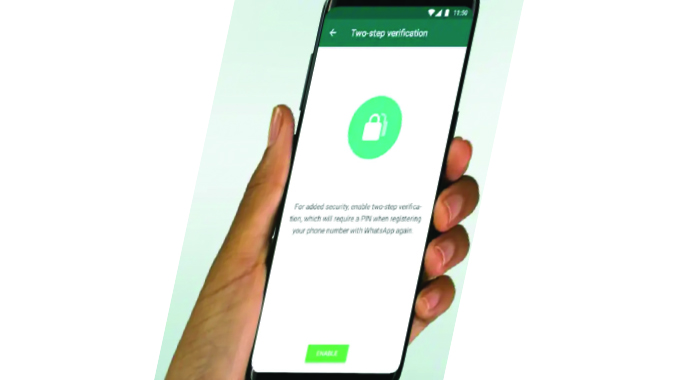
Tom Muleya
Fraud Insight
Following the publication of an article on WhatsApp hacking in The Herald of Saturday August 21, 2021, I received a number of calls from different kinds of people.
Among the callers were victims that had fallen prey to the scam, those who suspected they might have been hacked, but had no idea what to do next.
Others who felt the article was informative, and those in private security that are concerned with public security also contacted me.
Below is what some callers said:
Hello Detective! I saw your article in The Herald Newspaper on WhatsApp hacking. I was hacked through that scam and lost money. Where should I go for help? Am I going to recover my money?
Hi Detective! I read your article on WhatsApp hacking in the newspaper. I was sent the six-digit code request and quickly responded and sent it. Shortly after responding, I received a feedback message that my details were genuine. I have since received another code now different from the first one, what should I do?
Hi Detective! Thank you for your article on WhatsApp hacking, it was spot on. The public needs more of such informative and educative articles.
Hello Detective! I saw your article about WhatsApp hacking. What should I do?
Based on the response the article attracted, I suppose WhatsApp hacking crime is still a grey area that needs to be further explored. I guess they are still so many millions of Mobile and WhatsApp users who are still not aware of WhatsApp hacking.
According to statistics published by S O’Dea on March 8, 2021, on mobile use in Zimbabwe, the mobile-cellular subscriptions in Zimbabwe from 2000 to 2019 are depicted to be 13,2 million.
The number is obviously larger than this and the implication is that the bulk of WhatsApp users stand in danger of being hacked by new WhatsApp scams.
In view of the above, WhatsApp users should reconsider the following tips:
WhatsApp users must immediately report to the nearest police station any suspicious hacking on WhatsApp.
WhatsApp users must act responsibly. To act responsibly entails exhibiting proper and sensible behaviour when using WhatsApp. Users must avoid being complacent, but act thoughtfully in handling messages that come on mobile phones or WhatsApp platforms. The very thought that WhatsApp platforms are home to good and bad things is the first or primary line of defence against these scams.
WhatsApp users must activate a “two-step verification” process. This entails that as soon as the suspicious message is received, purporting to be coming from a friend or one of the contacts asking for a six-digit code, the user should first contact the friend in question to confirm whether it is indeed them who sent the message. The user should, however, do the confirmation from another application other than WhatsApp (because it is already intervened) to confirm the identity, and only then should the code be shared, best if it is shared over a voice call. Any six-digit code sent without prior confirmation will result in being hacked.
WhatsApp users must immediately switch off the mobile phone and or delete any suspicious message. Mobile phones are mischievously known for erroneously sending messages even to wrong destinations. Hence switching off the phone and or deleting the message will prevent accidental sending of six-digit code to the hacker.
WhatsApp users must take total control of their mobile phones and secure passwords. Some people don’t protect their passwords and like their mobile phones playing in the hands of other people. Such actions will result in other people responding to six-digit code request without even informing the mobile phone owner.
Get empowered by Fraud Insight and minimize Whatsapp fraud scams. Watch out for the next issue.
Tom Muleya is a Detective Assistant Inspector working under the Criminal Investigations Department. Harare.
Feedback, WhatsApp line: 0772 764 043
or e-mail:[email protected]



 Online Reporter