malvernmugadzikwa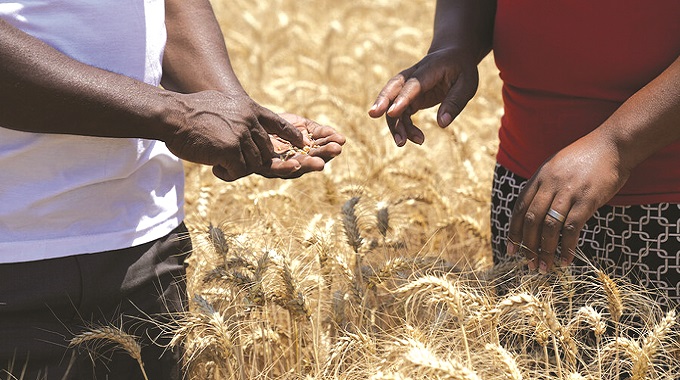
Oliver Kazunga
Senior Business Reporter
WHEAT farmers are upbeat over uninterrupted power supply following the ring-fencing of 100 megawatts (MW) by the Zimbabwe Electricity Supply Authority (Zesa)where 121 769 hectares have been put under the crop.
The area under wheat this season has surpassed last year’s hectarage by 34 percent.
An increase in wheat production over the past two seasons, from 375 000 tonnes in 2022 to a record high of 467 905 tonnes last year, has resulted in a 26 percent drop in durum wheat (pasta wheat) imports.
Statistics from the Zimbabwe National Statistics Agency show that the value of raw durum wheat imports decreased by 26 percent to US$24,9 million in the first quarter of this year, compared to US$33,5 million in the corresponding period in 2023.
The Government is targeting to produce over 600 000 tonnes of the cereal this season, on the back of a shared vision with the private sector and other stakeholders on the need to reduce imports to curtail expenses.
The expected harvest will not just meet the annual requirement of 360 000 tonnes, but would also result in a greater range of wheat products to be manufactured.
It is believed the expected surplus of 240 000 tonnes will contribute towards the Strategic Grain Reserve that currently stands at about 400 000 tonnes to ensure food security in the country.
In a recent interview, Energy and Power Development Minister Edgar Moyo said 100MW have been ring-fenced for the winter wheat programme to secure national food security.
“We have ring-fenced 100MW for winter wheat.
“Other key economic sectors such as mining, industry, commercial, water pumping, hospitals and critical institutions are key sectors being prioritised, alongside winter wheat farming,” he said.
Hwange Units 7 and 8 are consistently producing over 600MW. At the same time, units 1-6 are performing fairly well, producing an average of 300MW from the enhanced maintenance and prioritisation of critical spares.
“Kariba dispatch is being optimised to produce an average of 250MW, with peak supply up to 400MW,” he said.
As of last Thursday, the Zimbabwe Power Company indicated on its website that the country was producing a total of 1 211MW, with the Hwange Power Station generating 919MW and the Kariba hydroelectric plant 292MW.
Hwange and Kariba have an installed capacity of 1 520MW and 1 050MW, respectively.
Zimbabwe Commercial Farmers Union president Dr Shadreck Makombe said since the beginning of winter wheat planting in April, they have had interesting meetings with Zesa, where the farmers have been encouraged to form clusters through which they can raise their electricity concerns.
“At the same time, it will also help Zesa, whatever it will be doing due to faults or whatever, to quickly trace the clusters.
“It’s not to say other farmers have been abandoned but we are saying these ones have been prioritised because of the need they have in terms of wanting energy,” he said.
“I would say they (Zesa) are doing the same thing (ring-fencing electricity) as last year but continuously improving.
“We need enough energy for our wheat and they have assured us that they will do so.
“We have had some power issues like faults since the start of the winter wheat season, but I am glad to say whenever we have such challenges, Zesa this time are different from last year.”
At a recent wheat-based food security conference in Harare, Zimbabwe Electricity Transmission and Distribution Company commercial director Engineer Ralph Katsande said Zesa had put in place several interventions to ensure the success of the wheat crop.
“First and foremost, 100MW of power have been committed to the major wheat clusters. This means the wheat cluster belts will receive priority supplies, alongside the essential services sector (horticulture, mining and other productive sectors of the economy such as industry),” he said.
“Powerline maintenance and faulty transformer replacement on winter wheat feeders will be prioritised.
“Weekly virtual key stakeholder meetings are being held to monitor power supplies during this planting and germination period and beyond to ensure that corrective action is taken timely in the event of challenges.”
Engineer Katsande said WhatsApp groups were created for the various wheat clusters to ensure effective communication.
“The farmers have been engaged to form community groups to curb alarming theft and vandalism of electricity infrastructure, which is disrupting farming operations.”
Meanwhile, Eng Katsande urged farmers to settle electricity bills amounting to ZiG139 million and US$5 million so that Zesa ensures uninterrupted power supply for winter wheat.


 Online Reporter