malvernmugadzikwa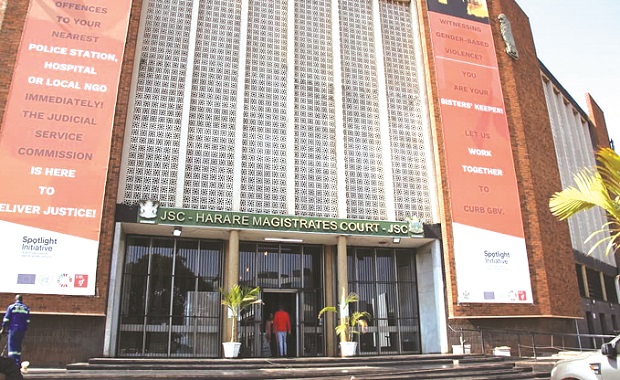
Nyore Madzianike
THE Judicial Service Commission (JSC) recently celebrated its 14th anniversary as an independent body, marking the occasion with the announcement of its digital transformation plans. Established in 2010, the JSC commemorated the milestone with nationwide celebrations under the theme “Phase 4 is coming: The Magistrates’ Courts going digital”. The theme reflects the commission’s plans to expand its Integrated Electronic Case Management System (IECMS). The fourth phase is expected to be launched on January 1, 2025.
******************
What is an IECMS?
The IECMS is a web-based system designed to track court cases electronically, from filing to finalisation.
It seeks to eliminate paper records in both lower and upper courts across Zimbabwe, regardless of location. Developed through years of research and collaboration, the IECMS aligns with the Government’s National Development Strategy 1 (NDS1) by promoting a digital justice system.
Through the platform, lawyers and litigants can submit court documents and serve them to other parties electronically, eliminating the need for paper copies and trips to the court. The system tracks the progress of each case through the court system, allowing judges, lawyers and parties to see the latest developments.
Users can also pay court fees and fines electronically. The IECMS can facilitate virtual hearings, where judges, lawyers and witnesses can participate remotely via videoconferencing. Experts say this can be especially helpful in reducing delays and increasing access to courts for people who live far away or have mobility issues.
The system creates a centralised electronic record of all court proceedings and documents.
When was the system introduced?
The system’s rollout has been phased. The first phase was launched in May 2022, covering the Constitutional Court, the Supreme Court and the Commercial Court Division of the High Court.
Subsequent phases expanded the system to the Labour Court, the Administrative Court, the General Division of the High Court, the Sheriff’s Office and various High Court divisions. The fourth phase marks a significant step towards a fully digitised court system.
JSC spokesperson Mr Daniel Nemukuyu said the commission was presently procuring high-tech equipment ahead of the rollout.
“As we celebrate our 14th year, we are excited to announce the fourth phase of the Integrated Electronic Case Management System that will be implemented on January 1, 2025, when the Magistrates’ Courts will go digital,” he said.
The JSC will be undertaking awareness campaigns through roadshows, radio, television and online advertising before implementation.
“We are also in the process of procuring the necessary gadgets and installing the system until the implementation of the fourth phase of IECMS. Since we have about 60 permanent Magistrates’ Courts countrywide, we cannot afford to implement the fourth phase at once.
“Implementation will be done province by province, starting from January 1, 2025,” he said.
Streamlining court operations
The Magistrates’ Courts, like the higher courts, will immensely benefit from the introduction of the IECMS.The system automates tasks and improves record-keeping, leading to faster case processing and greater accountability. In addition, paperwork is eliminated, saving on printing and photocopying expenses.
Virtual hearings will help cut travel costs for parties. And because parties receive case updates and developments electronically, communication is streamlined. Crucially, it is envisaged that the system will help reduce the risk of corruption. Lawyers must be registered and verified by the Law Society of Zimbabwe to use the platform, minimising the risk of encountering fraudulent legal practitioners. It is also believed that the system will help reduce case backlogs because of quicker dispute resolution. Because judgments are readily available online, this also promotes transparency and easier access to justice. Lawyer Mr Ephraim Ndlovu from Ndlovu Dube Legal Practice said the system was the future of legal practice in Zimbabwe.
“The IECMS or e-system is the future of legal practice in Zimbabwe and the world,” he said.
“It may very well have problems, but these are teething problems. Its introduction in lower courts will increase process accountability.”
Challenges
While the IECMS offers innumerable benefits for the justice delivery system, its rollout in the Magistrates’ Court faces considerable headwinds.
Limited internet access and computer literacy, particularly in rural areas, could hinder public participation in the e-filing and e-services system. Reliable and consistent internet connectivity across the country is, therefore, crucial. Power outages or unstable internet could disrupt court operations. Training court staff, lawyers and the public on navigating the IECMS is essential for successful adoption of the system. This may require overcoming resistance to switch from traditional practices.
Robust cybersecurity measures are needed to protect sensitive case information and prevent cyberattacks. Building trust in the system’s data security is crucial. The system’s accessibility depends on its availability in Zimbabwe’s local languages, in addition to English. The JSC may need to offer some of the services on the platform in vernacular given that Zimbabwe has 16 official languages.
Some of these issues plagued the initial rollout of the IECMS in the higher courts, prompting some lawyers to call for the withdrawal of the system.
Harare lawyer Mr Tawanda Tandi believes it is premature to introduce the e-system to the lower courts. The JSC, he said, was supposed to first address challenges bedevilling the platform in the superior courts.
“The IECMS has made filing and access to courts easy; that is, if you are connected to the internet,” he said.
“Courts are now easily accessible as you can do your filing any time of the day, although the filed documents will be approved later.
“But I think it is too early to introduce it to the Magistrates’ Courts. I think they (JSC) must first address issues that are there in the superior courts and once those are addressed, they can then introduce it further . . .”
Infrastructure upgrade
Rollout of the IECMS will require a significant upgrade of infrastructure at the Magistrates’ Courts.
The JSC will need to equip courtrooms and offices with computers, scanners, printers and reliable internet connectivity. Servers with adequate storage capacity will be needed to manage case data.
The IECMS software also needs to be installed and configured across all Magistrates’ Courts.
Also crucial will be a stable and high-speed internet connection across all court locations.
This may involve upgrades to existing internet infrastructure or exploring alternative solutions in remote areas. Establishing secure local area networks within each court station will facilitate data sharing and communication among court personnel. Crucially, robust cybersecurity measures are needed to safeguard sensitive case information. Also required is a reliable backup and disaster recovery plan to ensure system availability in case of outages or technical failures. Considering the potential of power cuts, implementing a backup power solution like generators or solar systems is crucial to maintaining uninterrupted operation. For those lacking personal devices or internet access, designated kiosks with internet connectivity could be established within the court station to facilitate the public’s access to the e-services portal. The system interface should ideally be available in local languages to ensure inclusivity.
At the superior courts, the JSC has installed two internet links per station using the IECMS and e-filing centres for litigants without access to requisite gadgets.
Internet hubs have also been set up at the High Courts in Bulawayo and Harare to cater for those who require free internet access for filing cases and attending virtual hearings.
Regional impact
Rollout of the IECMS in Zimbabwe’s superior courts has not gone unnoticed by its regional peers.
Malawi and Mozambique have both sent delegations to Zimbabwe to learn about the system.
A six-member delegation led by Malawi’s Supreme Court judge Justice Frank Kapanda visited Zimbabwe.
They met with Chief Justice Luke Malaba to discuss how Malawi could adopt a similar system.
A five-member delegation from Mozambique, headed by Chief Justice Adelino Manuel Muchanga, also visited Zimbabwe to explore the potential implementation of the IECMS in their own country.
Unanswered questions
While the JSC gears up for digitisation of Magistrates’ Courts, a crucial question remains unanswered: What happens when one party to a case is unwilling or unable to participate electronically?
The JSC has yet to finalise a clear mechanism for handling situations where one party is not digitally equipped.
Will paper-based filing remain an option in such cases? How will the court ensure fair and balanced proceedings when one party operates at a technological disadvantage? Experts say addressing this gap in the plan is crucial for ensuring inclusivity of the new system.
The JSC will need to develop a clear and transparent policy that balances the efficiency of the IECMS with the right to access justice for all, regardless of their technological capabilities.



 Online Reporter