Online Reporter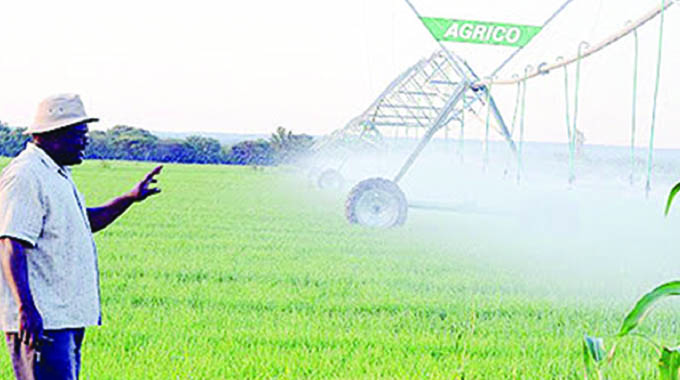
Patience Maturure
Agriculture Reporter
FARMERS have started planting wheat in some parts of the country, as harvesting of summer crops and land preparations for the winter cropping season intensify.
The country is targeting 600 000 tonnes of wheat this season.
Some farmers who had an early summer crop have finished harvesting and are now planting their winter crop.
Zimbabwe Farmers Union operations director Dr Prince Kuipa said those planting early would maximise on the winter window and ensure a timely harvest.
“Some farmers have already planted their wheat while others are preparing the land. Early planting will maximise use of the winter window and enable the crop to be harvested before the onset of the rainy season.
Dr Kuipa said some farmers were, however, facing challenges with tillage services.
“As usual the bottleneck is access to tillage units for land preparations,” he said.
Dr Kuipa said the Agricultural Finance Corporation (AFC) and the Agricultural Rural Development Authority (ARDA) were offering tillage services, but demand was significantly outstripping supply.
“Demand for tillage services far exceeds supply. Despite this challenge, the Zimbabwe Electricity Transmission and Distribution Company (ZETDC) has assured farmers of uninterrupted electricity supply to power their irrigation systems, while dam levels remain good following the rainfall season.
“Input suppliers have confirmed the availability of seed, fertilisers, herbicides, and insecticides while farmers have access to finance through contract farming or bank loans.
“Outstanding payments to farmers from the Grain Marketing Board (GMB) are, however, affecting growers’ ability to procure inputs and this may impact the area under wheat production,” he said.
Zimbabwe National Farmers Union president Mrs Monica Chinamasa said winter wheat planting and preparations were going on well adding that some farmers had taken advantage of the recent rains to expedite preparations.
“Preparations are in progress in a good way and the rains over the Easter holiday were God sent,” she said.
ARDAS acting chief director Mr Leonard Munamati said Government had set a target of 600 000 tonnes of wheat this season that is going to be achieved through increasing the area under wheat to 120 000 hectares and improving productivity from 4,7t/ha to 5t/ha.
The Wheat-Based Food Security Strategy aims to meet national wheat demand, generate surplus for export, and establish a strategic wheat reserve of 250 000 tonnes, as approved by the Cabinet.
“Last year the country achieved a historic national record-breaking wheat harvest of 563 961 tonnes, surpassing the previous year’s 467 00 tonnes. This marked the highest wheat yield since the advent of commercial wheat farming in 1996, securing Zimbabwe’s wheat self-sufficiency for the third consecutive year,” he said.
Zimbabwe used to be a wheat net importer and could not meet its national requirement of 360 000 tonnes per year.
The country is now self-sufficient after the intervention by Government and the private sector.
The attainment of wheat self-sufficiency is premised on Government’s agricultural transformation strategies anchored on active private and public sector participation.
Wheat production had been affected by several challenges that included interruption of power supply, high costs of production and unavailability of funding, as most financial institutions were not willing to fund the crop due to high risks associated with the cereal.
The Second Republic has been targeting to increase wheat production to meet the national requirement in line with the Agriculture and Food Systems Transformation Strategy, the Agriculture Recovery Plan and the National Development Strategy 1 and in pursuit of the vision of becoming an empowered and prosperous upper middle income society by 2030.
Government through the Ministry of Lands, Agriculture, Fisheries, Water and Rural Development introduced a number of strategies to boost agricultural production and wheat has not been left out.



 Bongani Ndlovu