Online Reporter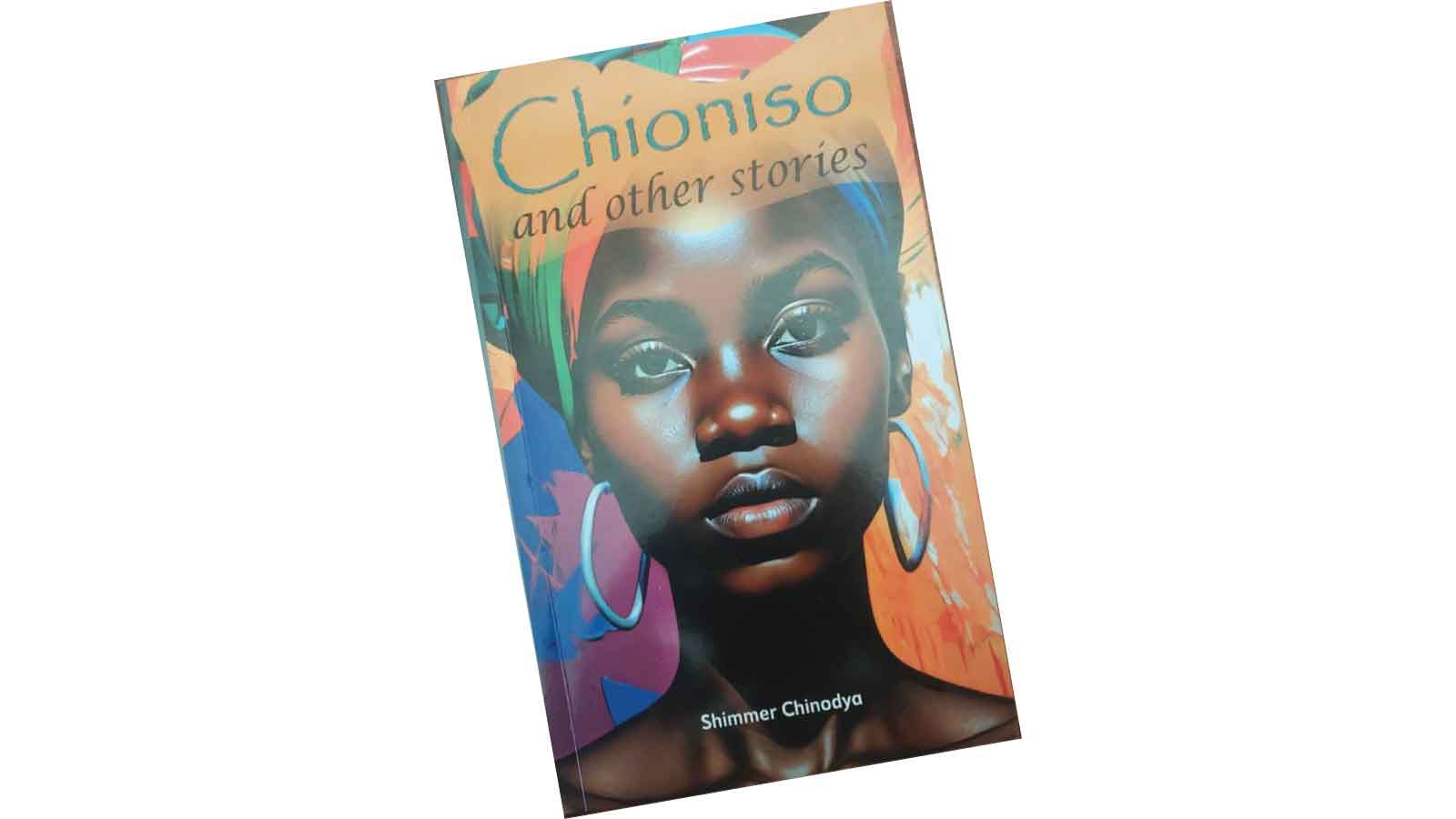
Elliot Ziwira
At the Bookstore
“I didn’t marry you because you were perfect. I didn’t even marry you because I loved you. I married you because you gave me a promise. That promise made up for your faults. And the promise I gave you made up for mine.
“Two imperfect people got married and it was the promise that made the marriage. And when our children were growing up, it wasn’t a house that protected them; and it wasn’t our love that protected them — it was that promise,” writes American playwright and novelist Thornton Wilder.
“If you get a good wife, you’ll become happy; if you get a bad one, you’ll become a philosopher,” so reasons the philosopher Socrates.
But might there be an ideal partner somewhere for every one of us, or is marriage merely coincidental, controlled by fate? Can a woman change a man, and in what way; or is she simply the one expected to change or be transformed by Time?
True, “he is poor indeed that can promise nothing” (Thomas Fuller), for “everyone is a millionaire where promises are concerned” (Ovid). Yet, “one must have a good memory to be able to keep the promises that one makes” (Friedrich Nietzsche).
There is much truth in the idea that whatever one promises brings joy to the recipient, regardless of fulfilment. Fulfilment only doubles, trebles or multiplies seventy-times-seven times the exuberance in the heart of the recipient, together with the honour of the promise kept.
Promises make it possible for us to endure the burdens of this world.
They allow us to see the silver lining in that dark cloud crouching like a monstrous mountain on the horizon of our hopes.
We promise ourselves that all shall be well; that we will live happily ever after, notwithstanding the hurdles strewn along our way.
In relationships and marriages, we promise each other heaven, roses and orchids; at our workplaces we promise and are promised in return; and as citizens we are promised a lot for our commitment.
Oh, this world of promises!
There is nothing as distant as a couple that promises each other nothing, and there is nothing as ruinous as a marriage built on unfulfilled promises.
There is much more to marriage than two people brought together by fate or destiny. Yet, to many, the institution evokes images of a battlefield where cannons are unleashed on supposed foes.
“As to marriage or celibacy, let a man take which course he will, he will be sure to repent,” Socrates reasons.
Literature is awash with promises, in the positivity of their presence, the negativity of their lack and the bane of their non-fulfilment.
It sometimes appears as though marriage is doomed from the outset, pitting two individuals with different backgrounds and little in common against each other, as if humanity is devoid of multiplicity, tolerance and compromise.
It is against this backdrop that Shimmer Chinodya’s collection of short stories, “Chioniso and Other Stories”, first published by Weaver Press in 2012 and republished by Secondary Book Press in 2025, alongside his other works, remains intriguing, informative and evocative.
The autobiographical mode that pervades the anthology, as in “Chairman of Fools” (2005), “Can We Talk and Other Stories” (1998) and “Dew in the Morning” (1983), may limit creativity through its inclination towards artistic self-justification, but it also lends authenticity to the struggles individuals endure in their search for love and, eventually, marriage, separation and divorce.
Using his doppelganger, Godfrey, Chinodya purveys a plethora of thematic concerns, from religion and its oppressive and hypocritical nature and its impact on the individual psyche, to cultural limitations on individual aspirations, corruption, individualism, materialism and marriage.
Through the autobiographical mode, the writer hoists the reader onto a familiar landscape of deceit, hypocrisy, frustration and despondency, where promises remain just other promises. The familiar stories depicted in “Queues”, “Tavonga” and “Indigenous” leave the reader askance.
However, it is the portrayal of marriage as claustrophobic, depressing, uncompromising and retrogressive that is the focus here. Stories that immediately come to mind are “Queues”, “Tavonga”, “The Car” and “Chioniso”.
Having first appeared in “Writing Still” (2003) and “Writing Now: More Stories from Zimbabwe” (2005), respectively, “Queues” and “Tavonga” have already been exhausted At the Bookstore.
And because “Chioniso” carries the burden of the autobiographical mode already explored and also obtains in the other two stories, the focus falls on “The Car”.
Because of its metonymic portrayal and symbolic significance, “The Car”, told in the third-person voice, reminds one of Tennessee Williams’ play “A Streetcar Named Desire” (1947).
It is the story of two teachers, Baba Lydia (Petros) and Mai Lydia, who receive, through their only child Lydia, a Christmas gift from Roderick, their son-in-law, in the form of a car: “a sparkling white VW Golf with sea grey wind deflectors, silver sports wheel covers, black mudflaps, and of course, a blue and white South African number plate.”
As a status symbol, the car immediately captures Mai Lydia’s heart, while their high-density neighbourhood ogles at the rare beauty. Yet, instead of bringing joy, the car undermines the couple’s marriage.
It must be noted, however, that the car does not create their problems; it merely exposes them. The fissures have always been there, and the simmering anger within finally finds an outlet through the gift.
Baba Lydia forgets that a gift horse should not be looked in the mouth and subjects the car to scrutiny. In the first place, a car was not his idea of a bride price for his daughter. Secondly, he does not have a driver’s licence, while his wife does.
Roderick reneges on his promise to pay roora, and now his wife is pregnant with their third child. What does he do? He sends them a second-hand car from his base in South Africa.
As Baba Lydia sees it: “A proper son-in-law pays proper lobola and doesn’t try to evade his dues with flimsy second hand presents.”
But the couple’s marriage has always been on the rocks.
They constantly fight over individual achievements in their competition against each other.
The promises they made at teachers’ college decades earlier remain unfulfilled, and now, in their 50s, they allow a mere car to expose whatever still remains of their marriage.
Petros feels that perhaps the 18-year-old girl he got pregnant at college and married because of that was never meant to be his wife.
Academically, his wife is degreed, while he still has a teaching diploma.
He boasts that he teaches Grade Sevens and will soon be promoted, while chiding his wife for teaching Grade Ones. She, in turn, takes him to task for doing little to raise the status bar in his favour like a man.
As attention shifts from the husband to the car, Mai Lydia abandons her duties as a wife is wont to. She becomes so smitten with the vehicle that it turns into a challenge to the marriage, just as the jalopy becomes a burden on their pockets.
It needs a guard, alarm, high precast security wall, secure garage and guard dog — all things they cannot afford. Money to run the household becomes a visitor, while the wife acquires new friends.
Therefore, the car, like their marriage, is exposed to the vagaries of human nature and individual foibles.
As Mai Lydia escapes the restrictive and competitive nature of the marriage through the car, her husband finds an elixir in alcohol and women of questionable morals.
Then thieves pounce on the controversial gift, stripping it of its wind deflectors, wheel covers, mudflaps and wipers.
When Baba Trevor, the deputy headmaster at the school where they both teach, who lives up their street, offers them his unused garage, Baba Lydia begrudgingly allows his wife to accept the offer.
Yet, despite the seemingly tight security of the garage, high precast wall and guard dog at the good man’s disposal, thieves break in and strip the car to its shell, relegating it to the scrapyard, much to the awe of the neighbourhood.
It is in this moment of loss that the deeper meaning of the car emerges.
The realisation that no form of security can beat the inner security shared by two individuals, brought together by a promise to protect each other and fight from the same corner, brings the couple together.
Mai Lydia remembers to fall back into her husband’s hands as she sobs and hiccups “against the wall of his chest”.
One is reminded of Jean Rostand, who writes in Le Mariage (1927): “Never feel remorse for what you have thought about your wife; she has thought much worse things about you.”
Perhaps, then, “many marriages would be better if the husband and the wife clearly understood that they are on the same side” (Zig Ziglar), and not antagonists thrown onto a battlefield where the stronger part emerges bruised and triumphant, though not victorious.
“The Car” compellingly reminds readers that material possessions can expose, instead of resolving the fractures within relationships.
In an age where status, possessions and appearances increasingly shape how individuals measure success, Chinodya’s story asks us to look beyond what shines in the driveway and examine what is happening within the home.
Therefore, the car is more than a vehicle.
It becomes a symbol of materialism, wounded pride, unmet expectations and the fragile boundaries between marriage and individualism.
Indeed, Shimmer Chinodya is a grandmaster at this kind of story, adeptly examining both the literal and metaphorical perils of individualism in marriage, and how it can make the institution claustrophobic and oppressive to the individual psyche.
For an immersive reading experience, visit the DigiHub Retail Shop at Herald House, corner George Silundika Avenue and Sam Nujoma Street in Harare. Contact Leon on 0772739306.