Online Reporter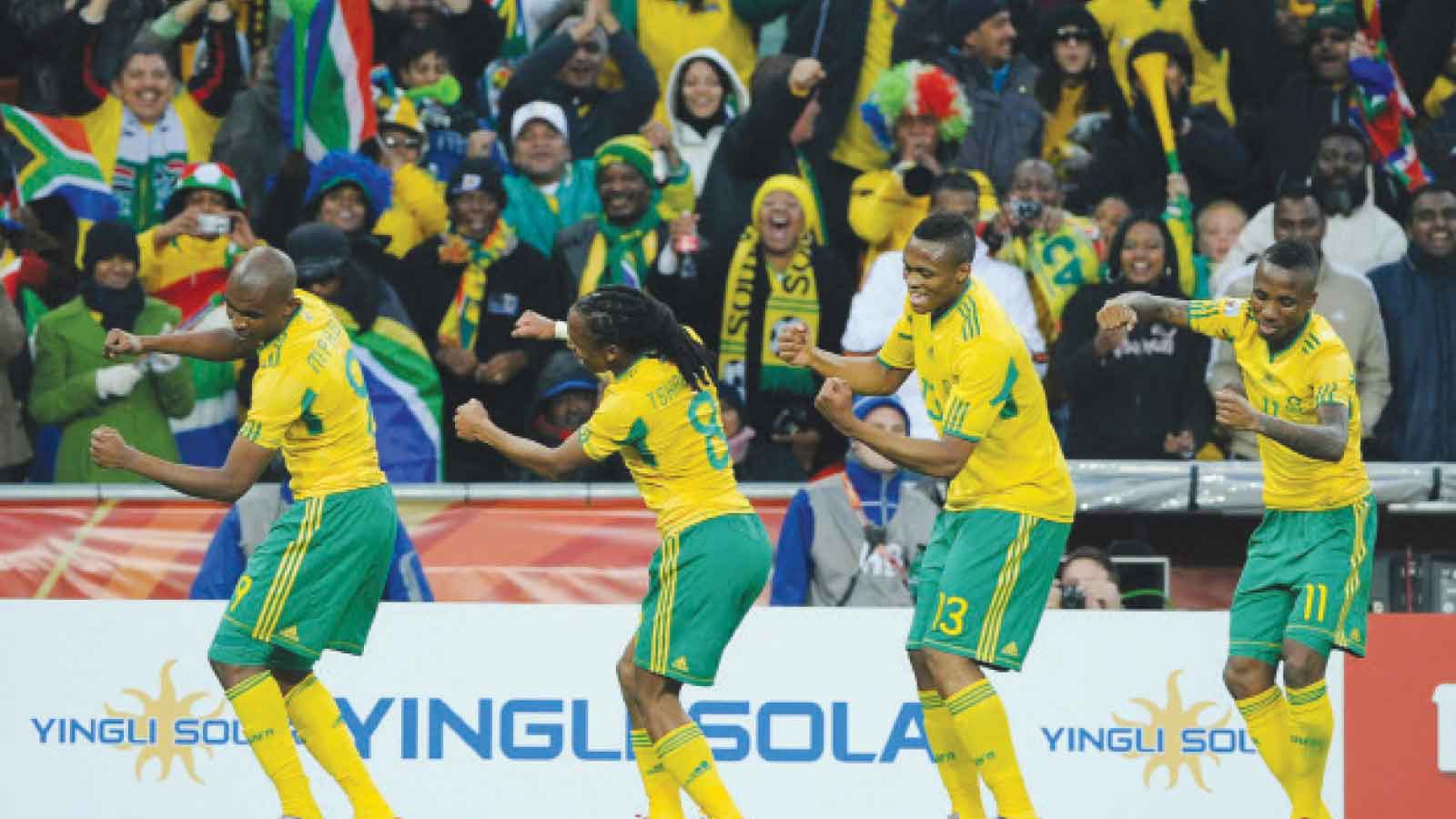
Sharuko on Saturday
SIXTEEN years have passed, but some things just can’t be erased by the passage of time.
I still remember it very well as if it happened yesterday:
Soccer City packed to the rafters, transformed into an ocean of gold-and-green, the world watching and the vuvuzelas providing the motion picture soundtrack to the drama.
It was an historic occasion.
Eighty years after the first ball was played at the FIFA World Cup, a World Cup match was being played on African soil for the first time.
There were 84 490 fans at Soccer City and, thank God, I was one of those who were inside the biggest stadium in Africa.
Chakari, the little gold mining town where I grew up, where our stadium can, at most, accommodate 2 000 fans, looked like a world far, far, far away.
Nelson Mandela was inside the stadium, making a rare and emotional public appearance – three years before his death.
Jacob Zuma and Felipe Calderon, who were then the presidents of South Africa and Mexico, were also in attendance.
Prince Albert of Monaco provided the touch of royalty, Ban Ki-moon, then the United Nations Secretary-General, provided the symbol of global power, which was gracing the grand occasion.
Actress Charlize Theron provided the golden Hollywood touch to the occasion and Sepp Blatter, before his spectacular fall from grace, was basking in the spotlight of being the first FIFA boss to bring the World Cup to Africa.
Then, there was an elite group of some of the greatest footballers of all-time – Roger Milla, Lothar Matthaus and Franz Beckenbauer.
And, there I was, the guy from Chakari, inside the same theatre of dreams with these powerful men and women on the day that, for us Africans, the beautiful game finally came home.
Then, nine minutes after the break, the stadium exploded.
Siphiwe Tshabalala burst down the left channel of the Mexican defence, his deadlocks were flying, his heart was certainly pounding, the fans were screaming, a whole nation was waiting, and an entire nation was dreaming.
He swung his left foot, the connection was sweet, the ball was hit with so much power and precision that when it left his boot, expectations exploded inside Soccer City as it began its flight for its date with destiny.
It was a clean strike, the product was a thunderous shot and as it crashed into the top corner, the noise that erupted at Soccer City, in particular, and South Africa, in general, was loud enough to be measured on the Richter Scale.
For the first time since the World Cup was first staged, we had just witnessed a goal being scored on African soil for the first time.
And, it wasn’t just an ordinary goal. It was even a contender for the Goal of the Tournament and it was only the tourney’s first goal.
“Goal Bafana Bafana! Goal for South Africa! Goal for all Africa,” thundered Peter Drury in his television commentary.
I’m not a Bafana Bafana fan.
My loyalty to the Warriors makes it, in a way, taboo for me to find anything romantic about Bafana Bafana.
But, on this one special occasion, I exploded with ecstasy as I celebrated Tshabalala’s golden goal from my ringside seat inside Soccer City.
SIXTEEN YEARS LATER, IT ALL CHANGED
Fast forward to 2026 – same month, same tournament, same opening game of the tourney, same opponents: Mexico versus South Africa. And, just like in 2010, there were two goals in the match and the only difference is that instead of the 1-1 draw at Soccer City, the Mexicans won 2-0 at the Azteca on Thursday night.
And, this time, unlike in 2010, the Mexican goals were something to celebrate, while Bafana Bafana’s defeat felt good not only for me, but for tens of millions of Africans who were watching that game.
It feels unAfrican, isn’t it?
Yes, it does, we should never find ourselves, as Africans, finding something good in the defeat of a fellow African.
Generally, as Africans, we tend to throw our full support behind our fellow Africans when they are competing against representatives of other continents – be it in sport, politics or whatever.
Brotherhood runs very deep among us Africans, and for a good reason, too.
Millions of our brothers and sisters were sold as slaves in the greatest crime against humanity in our history as humans. The 2010 World Cup in South Africa was a grand exhibition of our brotherhood among Africans.
Even among South Africans, there was an appreciation that this was a grand celebration of African brotherhood and when Bafana Bafana went out in the first round, they shifted their support elsewhere.
Fittingly, the football gods made sure that the first sub-saharan African nation to win its Independence, Ghana, would provide the team which excelled the best during that World Cup.
The Black Stars of Ghana reached the quarter-finals of that World Cup and came within just a last-minute penalty conversion to become the first African nation to reach the semi-finals of the tournament.
By the time Asamoah Gyan missed that spot-kick, the South Africans had embraced the Black Stars as their own team and nicknamed them “BaGhana BaGhana”.
This was a very powerful display of our brotherhood, as Africans, and the pain of Ghana’s elimination was felt throughout the continent and there were tears in Accra as much as there were tears in Harare.
We all hated Luis Suarez, the man who had deliberately handled the ball on the line to ensure that Ghana would not score, leading to the penalty that Gyan missed, not only for Ghana, but for all of us as Africans.
We cursed fate.
We hated football, for all its beauty, because we felt that the football gods had conspired against us and, somehow, ensured that we should never proceed beyond the quarter-final stage of the World Cup.
By the time Spain won the World Cup, a lot of us Africans had divorced ourselves from the tournament, which we were hosting on our soil, our emotions had been destroyed, a long time ago, when “BaGhana BaGhana” lost.
BAFANA FEEL THE WEIGHT OF ANGER
On Thursday night, it felt different.
The united front, which we proudly showed during the 2010 World Cup, which led us to celebrate Tshabalala’s goal and saw us getting crushed by BaGhana BaGhana’s heartbreaking loss, was nowhere to be seen.
It’s something which even the BBC noted.
“The normal display of African unity in the early stages of a football World Cup was notably absent from social media as many fans from across the continent backed Mexico in the tournament’s opening match against South Africa,” the BBC reported.
“The normal display of African unity in the early stages of a football World Cup was notably absent from social media as many fans from across the continent backed Mexico in the tournament’s opening match against South Africa.”
The divisive issue has been the attacks on African nationals, including Zimbabweans resident in South Africa, by some militant groups who say they want them out of that country by the end of this month.
While authorities in South Africa have warned the militant groups that they should not take the law into their hands, their calls have not been heeded and the attacks have continued.
Africa played a big part in helping South Africa destroy the pillars of the evil system of apartheid.
Such was the global nature of the battle that when a rebel team of West Indian cricketers toured South Africa in 1982, which was in opposition of the boycott which the world felt was needed to exert pressure on the South African leaders, it marked the end of their careers.
They were banned for life and, even though the life bans were lifted in 1989, only one of them ever played for the Windies again.
They faced intense social stigma, they were dubbed mercenaries and traitors, and many of them were forced to flee the Caribbean islands and were forced to live elsewhere.
Lawrence Rowe, the captain, and Everton Mattis struggled badly with depression and lifelong public isolation and Collin Croft, who was a star of the Windies team before this rebel tour, never recovered.
That the Windies team was made up of predominantly black players magnified their sin, in the eyes of those who were fighting for the fall of apartheid, for the benefit of black Africans.
Against that background, it becomes difficult for millions of black people across Africa, and the world, to understand why black Africans are being pushed out of South Africa by these militant groups.
That is why many turned against Bafana Bafana in their battle against Mexico on Thursday. Of course, Bafana Bafana players can argue that it’s not fair to punish them for the actions of some people, which they don’t condone, and which they cannot control.
That’s true, too.
But, that’s the way it is.
History will record that, for one week in June, a Somali referee became more popular, throughout Africa, than Bafana Bafana.
To God Be The Glory
Peace to the GEPA Chief, the Big Fish, George Norton, Daily Service, Sitting Bull, Crazy Horse and all the Chakariboys still in the struggle.
Come on Warriors!!!!!!!!!!!!
Antoniooooooooooooo!
Text Feedback: +263772545199
WhatsApp : +263772545199
You can also interact with me on Twitter (@Chakariboy), Facebook, Instagram (sharukor)