admin
admin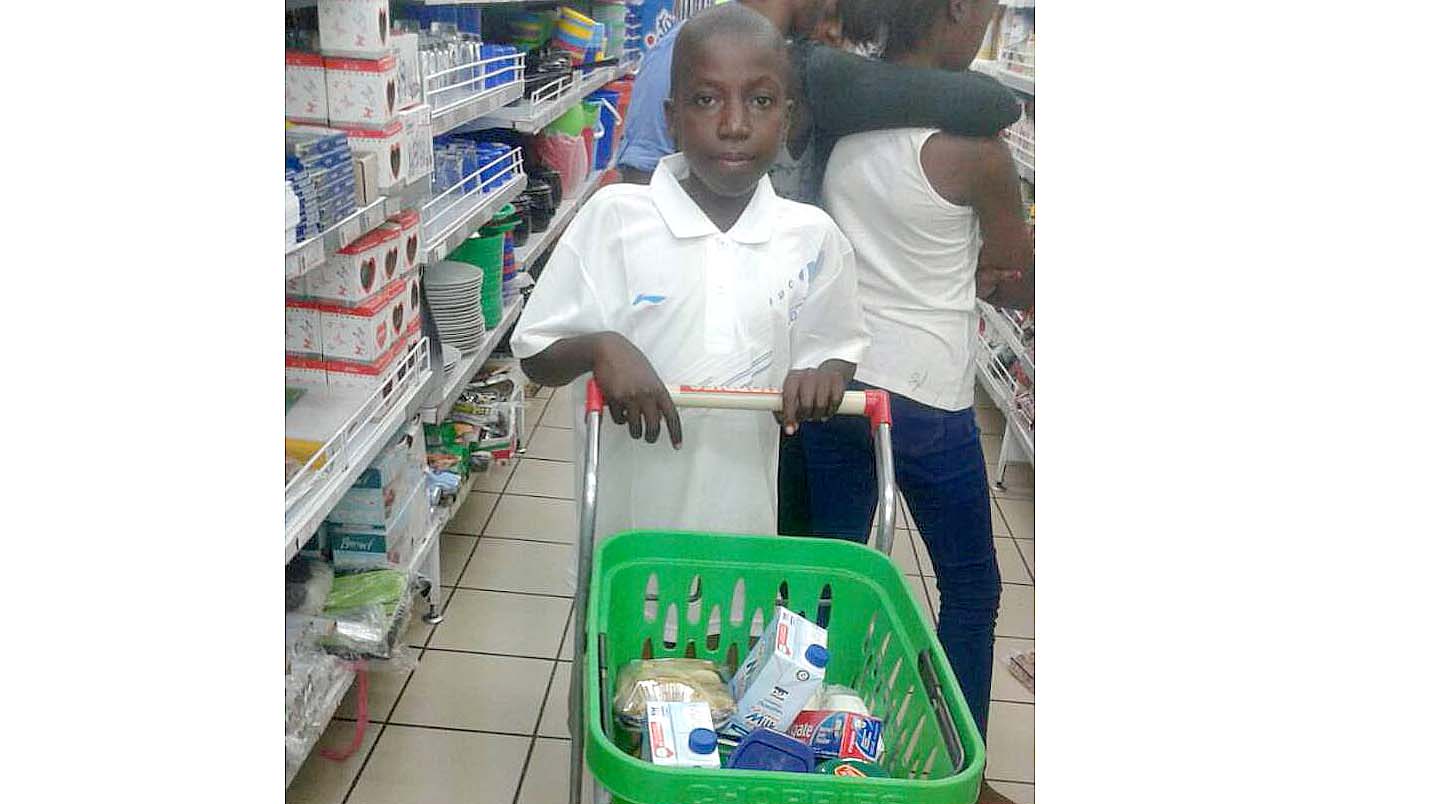
Freedom Mupanedemo Features Writer
It’s an amazing tale that the boy Amazing (11), from Mberengwa in Zimbabwe’s Midlands province, will live to tell. For an orphaned boy turned bread-winner to wake up one day to catch an early morning bus from his semi-arid village in yonder Mberengwa for a long and winding journey to the capital, Harare was only a far-fetched dream.
Having left with the unthinkable task of looking after his 77–year-old visually-impaired granny and a mentally challenged 56-year-old uncle following the death of his parents, 11-year-old Amazing Phiri’s life revolved around his grand parents’ pole and daga homestead and the school.
It needed an article by this publication highlighting the boy’ plight for well-wishers to reach out to the boy and come to his rescue. And his dream board a bus to town, let alone to a big city like Harare, came as a shocking reality for the boy thanks to the newspaper article which highlighted his plight.
The article opened the world for him building some links with well -wishers who are keen to transform his life for the better. Since then, well-wishers who came to know of the boy’s predicament after flipping the newspaper, have been scrambling to support him.
And for the first time in his life, a well- wisher invited him to Harare for a short excursion. Amazing had to ask a neighbour to accompany him in his maiden trip to the city, he never thought he would visit one day.
“It was like a dream, a well-wisher who had read about me in a newspaper traced me down after getting contacts from my school. The well-wisher sent bus fare but I had to ask her to send bus fare for two people because it was my first time to get into a bus to travel to a city,” narrated the excited boy during an interview with The Herald recently.
Burying one rustic village after the other. Skipping one town after the other passing through farms and large swathes of land on a long but unforgettable journey is one thing that will remain etched in his mind.
“It was a rare journey of my life, a journey that changed my world view. I can’t tell the feeling but it was just something else. To see myself in the middle of a big city with beaming lights and traffic, cars of different shapes crisscrossing in a rather confusing pattern was rather a spectacle,” he said.
He said he was taken on a breathtaking journey around Harare and had the chance to push a trolley in a big supermarket in the heart of the capital city.
While in Harare, Amazing said he met with various well-wishers some who pledged to pay his fees up to university level while others pledged to buy monthly groceries for his visually-impaired granny and mentally challenged uncle. The journey to Harare was one amazing journey for the boy Amazing.
Finding himself in the middle of Harare, pushing a trolley in one of the city’s spacious supermarkets, picking up groceries of his choice and throwing them into an equally amazing three wheeled stainless steel trolley was just something unbelievable to him.
“I can’t even explain it. I am still out of words. I am really grateful to the people who are assisting me. I get monthly groceries from various people,” he said.
He said he has since secured a Form One place at a local school with well-wishers paying fees for him.
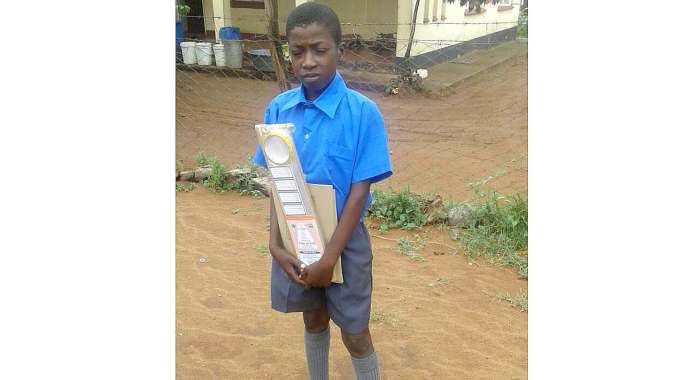
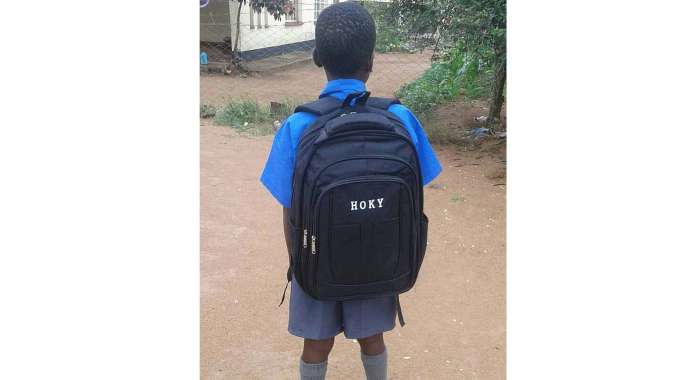
“I am now doing Form One and for the first time in my life, I went to school with a full uniform, putting on shoes and my fees fully paid,” he said.
Amazing said well-wishers have also cleared his fee arrears at the school where he did his primary education.
“I enjoy going to school now, leaving my grandparents with food and going to school in full uniform. It feels good.”
Mr Sorton Shumba a neighbour who has since assumed the role of a guardian to Amazing after he accompanied him to Harare to meet with well-wishers thanked the well-wishers for the help they were giving to the boy.
“The boy is receiving overwhelming support. It’s unbelievable how the boy’s life has just changed for the better. He has been struggling to lead the family at his age,” he said.
Mr Shumba said some of the well-wishers were considering adopting the boy.
“When I accompanied him to Harare, some of the well-wishers we met were even suggesting to adopt the boy and stay with him in Harare but they later considered that his granny and uncle needed some care giver given their condition,” he said.
Amazing has been taking care of his two ailing relatives after the death of his parents five years ago. Child-headed households are common in most parts of the country.
Amazing’s story is just one of the many touching stories of child-headed families in the country as most parents have succumbed to the deadly HIV and Aids pandemic leaving most children vulnerable.
The Zimbabwe Early Learning Assessment (ZELA), a local NGO, estimates that the number of orphaned and vulnerable children (OVCs) is around 25 percent of the entire children’s population.
Child-headed households (CHH) are increasing not only here in Zimbabwe but across the entire African continent mainly due to increased deaths of parents succumbing to HIV and Aids and other non-communicable diseases.
Difficult economic circumstances have made it difficult for families and communities to support the children using traditional supporting mechanism such as the extended family concept.
The National Action Plan for OVC estimates that there are about 50 000 households headed by a child under 18 years in the country. In most remote parts of the country, orphans such as Amazing face numerous hardships when it comes to accessing food, water, education, shelter and health services.
Some find it difficult to get important documents such as identity cards. Stigma has often compounded the problems for them.
Orphaned children in rural areas are often the most disadvantaged. They have no capable adult relatives or guardians to support them. Some households also include adults incapacitated by age, disability, ill-health or dependence on alcohol.
Children such as Amazing coming from poor families end up performing poorly because they cannot afford text books, fees, uniforms and other needs.
With support from well-wishers, he can at least be able to excel with his education and hope for a brighter future.



 Online Reporter