Online Reporter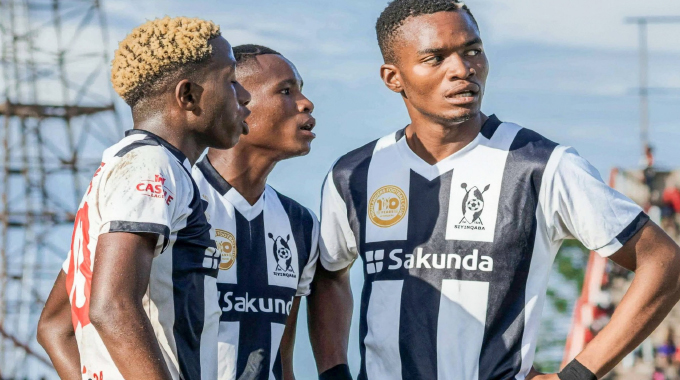
Innocent Kurira, [email protected]
SCORELINES usually decide how a football match is remembered. They colour the conversations afterwards, dictate the headlines and shape the emotions of those who were there. But every now and then, a match escapes that narrow framing and becomes something else entirely. In Maphisa, even after Highlanders were edged 1–0 by Scottland in the Independence Cup final, the dominant feeling was not heartbreak or regret. It was gratitude. Gratitude for the moment, for the access, and for an experience many believed they might never live to see.
For the people of Matobo District, this was never an ordinary fixture. When the Government elected to stage such a high-profile final in Maphisa, it did something quietly powerful. Away from the noise of the result, the decision acknowledged a community that has supported Highlanders loyally and patiently, often from a distance. For years, Bosso had existed here as a symbol carried through radio commentary, fading newspaper photographs and hand-me-down stories. This time, they were real, present, breathing the same air.

Maphisa rose to the occasion.
From the early morning hours, the town stirred with a kind of energy usually reserved for rare celebrations. Shop doors swung open earlier than usual, vendors set up with purpose and anticipation, and the growth point slowly transformed into something almost unrecognisable. The streets buzzed. Everywhere there were conversations about Highlanders — predictions offered with conviction, debates sharpened by loyalty, laughter stitched through it all. There was an unspoken understanding that this day mattered.
By the time kick off approached, the mood had thickened with excitement. The crowd was fully invested, every touch of the ball greeted with noise and belief. Each time Highlanders moved forward, hope surged through the stands. Even when the match tilted away from them and Scottland found the decisive goal, the spirit in Maphisa did not collapse. There was disappointment, of course, but it never overwhelmed the day.
Because winning, for many, was never the central point. What mattered was connection.
Watching Highlanders up close changed something fundamental. Children who had grown up hearing about Bosso could now see the players with their own eyes and place themselves inside the story. Older supporters, who had carried their loyalty quietly for years, finally experienced their team without the usual distance and expense that keeps elite football out of reach. The stadium became a place where generations met, bound by shared emotion rather than results.
Nkosilathi Ncube was one of those supporters, and his joy was unmistakable, even in defeat.
“We lost, yes, but for me this was a dream come true. I have supported Highlanders all my life and never thought I would see them here in Maphisa. Today is something I will never forget,” he said.
His words captured a feeling many struggled to articulate. Another resident, Mbusi Moyo, spoke about what the occasion meant beyond the pitch and beyond one club.
“This is bigger than football. Our children have seen something special today. Even if Highlanders did not win, we are happy because they came here. It makes us feel part of the game,” she said.
Even among those who travelled from Bulawayo, the day carried a significance that stretched beyond the scoreboard. The journey itself felt important, an act of solidarity with a community finally being embraced by the game they love.
“I had to be here. When you hear that Bosso are coming to a place like Maphisa, you don’t think twice. This is what football is about, taking the game to the people. The result hurts, yes, but seeing this kind of atmosphere, the passion from the community, it makes you proud to be Highlanders,” said Themba Siziba.
That sense of shared ownership, of football belonging to everyone, mattered far more than a trophy. It built a bridge between players and people, between the club and those who have loved it faithfully from afar.
Evans Chigona, popularly known as “refree we Bosso”, felt it too, absorbing the moment simply as it unfolded around him.
“It was a good rare experience. People came in their numbers it was really a good experience.”
In the end, Maphisa proved that football’s deepest victories are not always measured by goals or medals. Sometimes they are found in full stands, wide smiles, and memories that will be retold long after the final whistle has faded.