Online Reporter
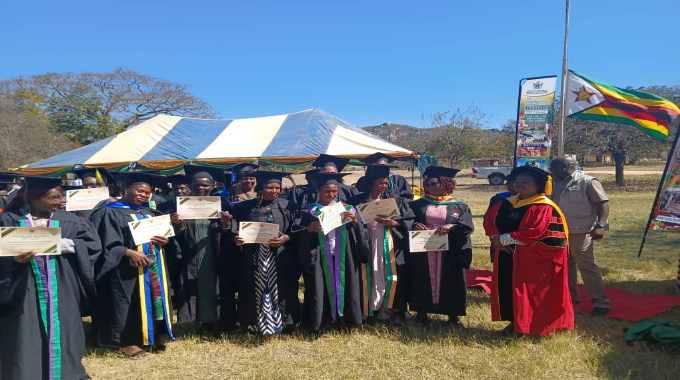
MATABELELAND SOUTH has every reason to stand tall after hosting Independence Day celebrations that were not only dignified, but deeply memorable, and at the heart of this achievement stands Maphisa – a town that carried the weight of national attention with grace and quiet assurance.
What unfolded there was more than a ceremony marked on the calendar; it was a powerful affirmation of inclusion, belonging and shared ownership of the nation’s story.
For years, communities in Matabeleland South have often engaged with national events from a distance, watching history unfold elsewhere. This time, history came home. The choice of Maphisa as host was not accidental, nor was it merely symbolic. It was recognition of a province whose contribution to the liberation struggle, to nation building and to cultural continuity runs deep. By hosting Independence Day, Matabeleland South was acknowledged not as a peripheral observer, but as a central participant in Zimbabwe’s journey.
Maphisa rose to the occasion in a way that felt natural rather than forced. Preparation was visible long before the day arrived, but what truly distinguished the celebrations was the atmosphere – orderly yet warm, festive without excess, proud without arrogance. Visitors encountered a community that understood the moment and treated it with the respect it deserved. That balance is not easily achieved, and it speaks to strong local leadership and collective commitment.
Independence Day, at its core, is about people. It is about citizens gathering to remember sacrifice, to honour resilience and to recommit to a shared future. Nowhere was that spirit more evident than in the crowds that converged in Maphisa, not as spectators to a distant display, but as participants in a living national moment. Children, elders, families and visitors stood together, reminded that independence is renewed each year by collective presence and shared memory.
The success of the celebrations also highlighted the wisdom of decentralising national commemorations. When Independence Day is hosted beyond traditional centres, it strengthens unity in a practical, visible way. It allows communities to feel seen, trusted and valued. In placing Maphisa on the national stage, the country affirmed that unity is not forged by repetition in the same spaces, but by rotation that embraces diversity and geography alike.
For Maphisa itself, this moment will linger well beyond the speeches and parades. Hosting the nation reshapes how a place sees itself. It instils confidence, reinforces civic pride and leaves behind a legacy of capability. The town demonstrated that it can handle national responsibility, welcome visitors with dignity and reflect the values of the country at large. That impression will endure, influencing how Maphisa is perceived and how it perceives its role in the national landscape.
Matabeleland South, too, emerges strengthened by this experience. The province showcased its organisational capacity, its hospitality and its readiness to be entrusted with events of national significance. It reminded Zimbabwe that development, pride and patriotism are not confined to a few familiar locations, but are woven across the country, waiting to be acknowledged and celebrated.
As the colours of Independence Day fade back into everyday life, what remains is a sense of shared achievement. Maphisa did more than host a celebration; it held a mirror up to the nation, reflecting unity grounded in respect, inclusion and ordinary people doing extraordinary things together. In doing so, Matabeleland South reaffirmed a simple but powerful truth: independence gains its deepest meaning when every part of the country is given the space to host, to belong and to shine.