admin
admin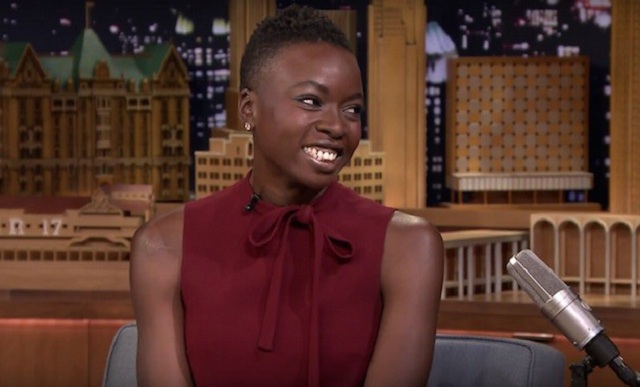
Peter Matika, Senior Life Reporter
United States-based Zimbabwean TV star and playwright, Danai Gurira wants to make sure women of colour don’t search in vain for stories they can relate to.
Her latest play, Eclipsed, which is premiering on Broadway in America offers her brief but spectacular take on growing up in Zimbabwe and telling African stories on American soil.
In her most recent interview, with America’s Judy Woodruff, she emphasised the need for Africans to tell their own stories.
Judy: Tonight, we hear from playwright and performer Danai Gurira. Her latest play Eclipsed opens on Broadway next week. And you may also recognise her from her starring role in AMC’s The Walking Dead.
Gurira: I want women and girls of African descent and of colour to be able to not have to keep searching for stories about themselves.
I couldn’t find any monologues and stories and plays that I really felt I could take and work with. And I find much connection in Shaw and Ibsen and Chekhov, but if you are constantly, only dealing with stories that are not of the people that you’re from, not from where you’re from, not from your heritage, that can function as a disadvantage.
I went to grad school because I wanted to learn the rules, so I would know how to break them. Breaking the rules is saying, I’m breaking in, OK? I’m breaking in your very comfortable little house over here, and I’m going to take a room.
I wrote a play called Eclipsed. It grapples with the experience of five different women in the war zone of Liberia in 2003, three women who have been abducted at different stages of their lives and become the forced “bush wives” — sex slaves to a commanding officer.
It’s an astounding cast. Lupita Nyong’o is in it, as well as Pascale Armand, Akosua Busia, Zainab Jah, also the wonderful Saycon Sengbloh.
I grew up in Harare, Zimbabwe. And I had a pretty idyllic childhood. I felt that I was kind of this outspoken girl, I was considered. I was a girl who talked a lot and didn’t think my voice had any less value than anyone around me.
Apparently, that was strange.
Moving here really did strike in me the desire to tell the African story on American soil. The stories about Africans always somehow miraculously had a Western protagonist. And I was, like, wow, do we not merit our own ability to tell our own stories?
So, I started to write plays that literally were like, if you come into this theatre, you are going to sit down and you’re going to spend two hours or so with an African woman and you’re going to get to know her.
You are going to see a full person, just like you see when you go watch all them other things.
I often feel like a nutty professor, like I’m going to try this experiment and see if it works.
My hypothesis is, people in the West can absorb African women stories without any shaken or stirred mixer. It can come directly from the source.
I create, so that you can see women like this shine and get to do their “thang”!


 derick.khumalo