Online Reporter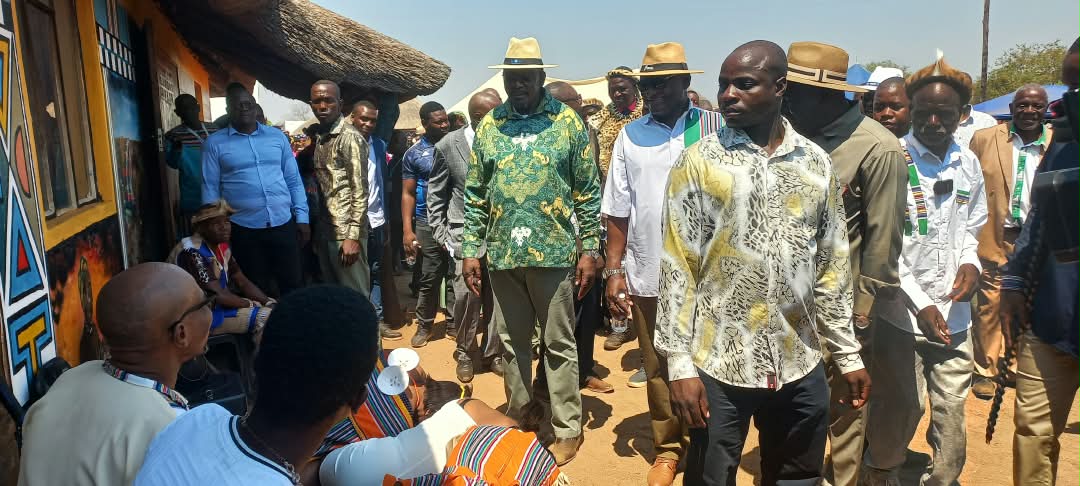
The most dangerous misconception surrounding Zimbabwe’s worsening drug and substance abuse crisis is perhaps the persistent tendency to regard it primarily as a problem afflicting young people when mounting evidence and lived experience increasingly suggest that addiction has become a wider social crisis cutting across generations, families and communities.
Vice-President Kembo Mohadi’s intervention at the inaugural Tshiṱaudze Heritage Festival in Beitbridge should therefore, stimulate a much broader national conversation about the nature of the crisis, because his observation that drug and substance abuse is “no longer just a youth problem” challenges society to confront the consequences of addiction beyond the familiar narrative of vulnerable teenagers and unemployed young people.
The significance of this argument lies in its recognition that the damage caused by drugs does not end with the individual consuming them but extends into families, schools, workplaces and communities, gradually weakening the social institutions through which values are transmitted, relationships are maintained and productive citizens are prepared to contribute to national development.
This is why Zimbabwe’s response cannot depend exclusively on arrests, seizures and prosecutions, important though these measures remain in disrupting the supply of dangerous substances because a society confronted by addiction on such a broad scale must simultaneously strengthen the systems that prevent dependency, support recovery and address the circumstances that allow substance abuse to become entrenched.
The Vice-President’s call for greater investment in counselling and rehabilitation therefore, deserves attention because it broadens the national response from enforcement towards prevention, treatment and reintegration, recognising that individuals who have fallen into addiction require structured assistance if they are to recover their health, dignity, relationships and capacity to participate meaningfully in society.
There is also a compelling economic argument for treating rehabilitation as an investment in Zimbabwe’s human capital because every person whose education, employment, productivity or family life is disrupted by addiction represents a cost that extends to households, communities, the health system, the justice system and the wider economy.
The setting in which VP Mohadi made his remarks introduces another important dimension to the national debate with the Tshiṱaudze festival creating an appropriate platform for examining the relationship between cultural preservation and the social conditions necessary for communities to sustain their heritage.
Culture encompasses the transmission of knowledge between generations, the teaching of values by parents and elders, the preservation of collective memory and the creation of a shared sense of identity through which communities understand where they have come from and where they are going.
When addiction disrupts these relationships, the consequences can become intergenerational and where parents are unable to provide stable guidance, elders become disconnected from younger generations and children grow up in environments where substance abuse, violence, neglect or criminality increasingly compete with traditional mechanisms of socialisation and moral instruction.
This provides a persuasive basis for considering the role of cultural institutions in prevention, particularly where traditional leaders, families and community organisations can create spaces in which young people receive guidance on responsibility, life skills, relationships, self-respect and the consequences of substance abuse before experimentation develops into dependency.
Traditional leaders thus have an important role to play in mobilising communities against drug abuse through cooperation with schools, clinics, the police, churches, community organisations and local media, because the effectiveness of prevention depends considerably on whether communities can identify emerging problems and respond before they develop into crises requiring expensive and often difficult interventions.
The same principle applies to families, which must be supported to recognise addiction as a condition requiring intervention rather than merely a source of shame because secrecy and stigma can allow substance abuse to deepen while relatives remain uncertain about where to obtain counselling, treatment or other forms of professional assistance.
Government has already intensified its national response to drug and substance abuse, including measures aimed at strengthening rehabilitation, psychosocial support and community interventions but the success of these efforts will depend on communities embracing the fight as their own responsibility
There is also a responsibility for the media, which must report the drug crisis with sufficient seriousness to expose trafficking networks and social consequences while avoiding narratives that stigmatise recovering users, because journalism can contribute to prevention by informing communities, challenging misconceptions and directing vulnerable people towards available support services.